
If you listen to the title track of the Jimi Hendrix Experience’s debut album, “Are You Experienced?”, you’ll hear him ask “have you ever been experienced?” And then the answer: “well, I have.”
You and me both, Jimi.
The tree of experience bears many fruits, and among them is discernment. The ability to make distinctions. When you have experience with something, you can differentiate between the many forms of that something. The many contexts in which one engages with it, and therefore, the range of responses that might be offered.
Discernment is critical to success in any endeavor, because it’s an example of a foundational virtue.
I like to discuss foundational elements, because everything on top of the foundation is up to you. It’s your life, and you should direct the course of it based on an internal locus of self worth, an inner sense of self and purpose. I try not to provide input there – it has to come from you.
What makes for a strong or weak foundation, however, is not up to you. These are the non-negotiables nobody can get around. My working definition of a failure is someone who pays attention to everything but the fundamentals, thinking they understand them already, or barely thinking about them at all, and always having a rationalization for why this time is exceptional and exemptive.
You might say I’m being pedantic here. I would say that conceptual groundwork is better verified than presumed.
See, like Hendrix, I also ask and answer questions to myself.
I would like, then, to better distinguish between three things that people often confuse, and unlock the potential growth that might spring from better understanding each of them.
Specifically, I’m going to spend some time defining each of them, and then provide some guidance about how to cultivate them.
These three are:
Technique
Creativity
Artistry
I see people conveying deep confusion about all three, so often, and in ways that clearly represent self-limiting beliefs, that I would like to spend some time delineating each of them.
Becoming the best you you can possibly be does indeed require all of these virtues. I spend a lot of time on all three, and, wow does it pay off.
A quick overview
Technique, skill, and productive capacity are all, in this context, synonymous: your ability to do something. The difference between walking down a sidewalk and climbing up a mountainside is one of technique.
Charisma, the ability to make eye contact, smile, intone one’s voice, and carry oneself in a way that elicits attention, consideration, admiration and deference from others, is a technique.
The ability to sew, type, play guitar, or use an Eisenhower Matrix – all techniques. All craft, all skill.
The word technique comes from the Greek tekne, “to know how to do.”
Creativity is related to, but distinct from, technique. Creativity is defined by Oxford Languages as “the use of imagination or original ideas, especially in the production of an artistic work.”
I have little to add to this definition, except to draw attention to the word “especially,” and point out that it does not mean “exclusively.” I’ll come back to this.
Artistry is defined, also by Oxford Languages, as “creative skill or ability.” While in no way inaccurate, I find it quite insufficient, especially in this context. The difference between being creative and being artistic is something which, again, I’ll spend some time outlining.
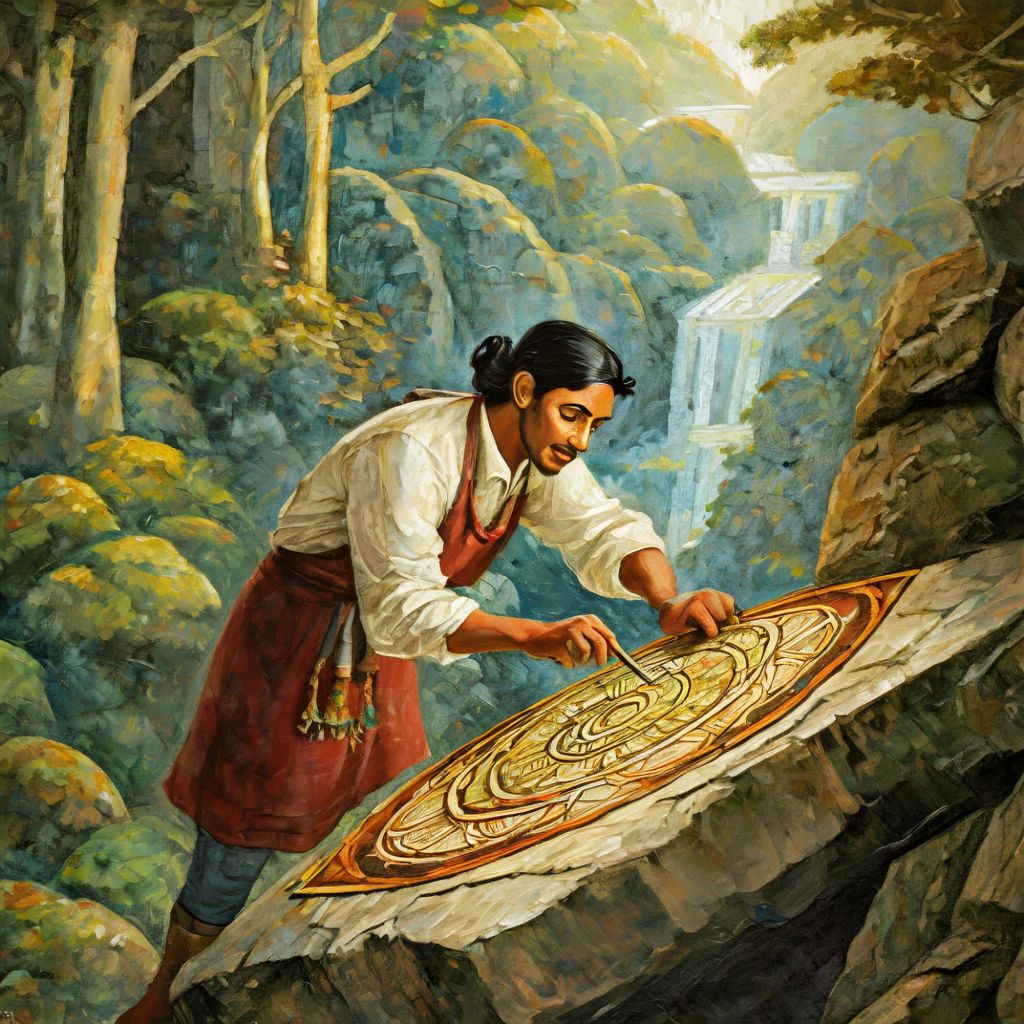
First, what is technique?
Exactly what was said moments ago: tekne, or how-how.
Let’s expand on this by introducing a new idea: signal-to-noise ratio, henceforth “SNR.” “Signal” equates to what is intended, “noise” to whatever substance accompanies the signal, but is unintended and perhaps undesired. In speech, the various parts of the sentence are the signal, while the ums, ahs, likes and y’knows, are all, like, totally just noise, ya know?
Technique is the ability to deliver as much signal with as little noise as possible.
Some more examples:
If someone makes valid points, but does so in a rude manner that ultimately eclipses the argument being put forth, noise has drowned out the signal, and this is bad technique.
If I buy a meal that contains ideal amounts of protein, fat, and carbohydrates, but is heavily processed, gives me indigestion, has little bioavailability, and gives me constipation, this, too is an example of signal (the macronutrients that my body needs) getting drowned out by noise (all the negative effects of mass production on the quality of the food). The manufacturer is technically bad at feeding me.
If I sit down to write my newsletter, the amount of time I spend typing words into the doc would be “signal,” and the time I spend clicking away to respond to texts, or scroll through social media, would be “noise,” from a time management perspective. Good technique, then, means spending my time productively.
Now it’s time for an important distinction:
The best possible technique is not equivalent to zero noise. A degree of noise is desirable, and, in many cases, necessary.
Examples:
The difference between my voice and your voice is not one of signal, but noise: the different shapes of the roofs of our mouths cause a variance in overtone distribution, which make our voices unique and easily distinguished from one another.
The same process of audio physics, variance in overtone distribution, is the reason a clarinet, oboe, violin, and timpani all make recognizably different sounds.
The difference between the bullet-point plot summary, though totally correct, and the experience of reading the entire novel, is one of signal to noise. Style is noise! Individuality is noise! Strip away noise and you have something totally robotic, alien, and devoid of feeling.
Finally, a so-called “bedside manner” from a doctor, versus someone blurting out “you’re gonna die,” is the difference between desirable noise and unbearable signal.
A good technician, then, maximizes signal within the range of productive returns.
I just brought in another concept, the law of diminishing returns. In short, it refers to the point at which more of a particular resource begins to confer less benefit. The point of negative returns indicates the point where more of the same resource now begins to strip away benefits, not merely cease adding to them.
Technique is about maintaining the SNR that confers maximum benefit.
Logical arguments brought to life by emotion, not hijacked by them.
Meals that are both nutritions and palatable, not hyper palatable with zero nutrition.
Time spent productively, but regularly punctuated by periods of rest, inactivity, and even boredom.
How to cultivate technique:
In any activity, clearly define what constitutes signal on the one hand and noise on the other.
Repeatedly practice producing signal.
In the beginning, there will be a lot of noise. In my case, as a writer, my earlier newsletters have weaker arguments, non sequiturs, unclear wording, and a lack of formatting.
Refinement of technique leads to a greater command of signal production, and, concordantly, noise reduction. One day, you will notice you’ve removed too much noise. You’ll feel empty and alienated by your own work.
Now you know where the line is.
In order to properly maintain the right balance of signal to noise, you need to consume material that exemplifies a good SNR.
Read good writing. Read the western canon, not blogs. There is a saying: great film composers listen to classical composers. Bad film composers listen to film composers.
I write blogs, but I read the classics. And my girlfriend’s text messages. Promptly. See how I threw in some noise right there?
If you’re always going to be a few steps behind your heroes, at least pick heroes who are ahead of your own competition.
Read, watch, and listen to the masters. And then iteratively participate in the fundamentals of the craft.

Now for creativity.
If technique is the productive application of skill, creativity is the inventiveness that selects the correct technique in the absence of outside direction.
Driving is a technique; improvising a new route when you hit a roadblock is creativity.
Playing in an orchestra requires technique; playing through the same parts without the use of your right index finger requires creativity.
Writing coherent sentences and paragraphs requires technique; deciding what to say next requires creativity.
I could go on, but I think you see the point. When you have to forge a path yourself without outside input, or with merely suggestive guidance, this is creativity. Having an idea and then struggling to bring it into material form is the process of creative endeavor.
Jobs that are not repetitive, where every day is a journey unto itself, are creative jobs. Maintaining mystery and romance in a marriage requires creativity. Correcting people without embarrassing and discouraging them is creative. Coaching people is creative. Software engineers and people who write code, contrary to the opinions of some, are highly creative.
The bottom line: knowing how to do something is not the same as being able to figure out what to do. The difference between technique and creativity is the difference between execution and selection.
The reality is that technicians who lack creativity will always require the supervision of creative people: they cannot think on their own. Similarly, creative people often rely on the sheer manpower of technicians.
Can you raise your level of creativity through intentional activity? I say yes, because I have increased mine, and fairly systematically.
To point you in the direction of greater creative expression, I’m turning now to the work of Carl Rogers, a pioneering psychotherapist. Why? Because creativity is about the flow of ideas, not linear and mechanical thinking. The flow of ideas is amorphous, and that makes people uncomfortable. Why does it make people uncomfortable? Because, for many, whatever cannot be controlled, or easily defined, or shut off, is seen as threatening. Things that are unlike you, or unlike your inflexible notions of who you are and what you do, are threatening.
Creativity is about openness, welcoming what is different, and being willing to undergo change in the process of engaging with that new and different something, whatever it is.
In order to think and act in new ways, you have to be able to trust yourself, and locate a source of inner guidance. This is more than instinct, but something at the core of personhood itself.
I mentioned Carl Rogers. In writing about his decades of clinical work, he links an increase in openness, in fluidity, flexibility, and creativity, with becoming more psychologically mature.
Essentially, people who better understand themselves, and don’t use rigid intellectual constructs as a means of holding the complexity of reality and of their selves at an arm’s length, are both more authentic and more creative.
They look for much more specific and novel ways to use language from one moment to the next, preferring not to follow well-worn repetitive grooves and instead to respond inventively to all that is unique to this present moment.
How to be more creative
Enshrine the qualities that, according to Rogers, promote psychological maturation:
Authenticity: start to care more than you do right now about the words you say and how you say them. See what happens if you actually admit to being bored during a conversation, or that you don’t know what to say, or that you’re feeling uncomfortable.
Do not tactlessly blurt out whatever comes into your head, but pay attention to when your words and your thoughts are veering away from each other, and speak in a way that brings them into alignment.
That the outer is reflected in the inner is what is required, not that everything on the inside be brought out. Lord, no.
Unconditional Positive Regard: do you like yourself? Do you encourage, support, and advocate on behalf of yourself? Or do you do the opposite in some way? Are you living life like it’s a game that can be won fair and square, or do you, beneath the surface, think of yourself as a kind of loser? Someone who’s already defeated?
For a long time, I thought that the best of what life has to offer is meant for people very much unlike me, and my best bet was to just get lucky. This had very negative consequences on my willingness to try, and to face challenges, and to put myself out there.
I’m happy to say that’s no longer the case, and that I’ve made a full recovery, so to speak. Part of that change was that I adopted an attitude of unconditional positive regard toward myself. Meaning, I’m fundamentally operating from a place of self advocacy: being a good person, doing good, and receiving good from others and from life is something I now view as completely normal and expected.
You’d be amazed at how much falls into place when that belief is truly operant within a person.
How do you cultivate that? By learning to keep promises to yourself, and treating yourself like someone who’s future has value. Little by little, day by day, you acquire more and more self regard in this way.
Understanding: this is downstream from authenticity. Understanding yourself means parsing what you really want and value, who you really are, from all the ideas about yourself that have been foisted on you by others. These others aren’t limited to your parents. Your teachers, peers, romantic partners, messages from television and social media – they can all become examples of introjection – ideas about life and selfhood that come from someone else, but are adopted so uncritically that they are mistaken for your own.
Social media tells you to be outraged about, say, an event happening all the way around the world in a country you’ve never heard of and know nothing about. Suddenly, social acceptance seems to hinge on parroting the new slogan that’s circulating around – no blood for oil, believe women, silence is violence – and now you believe it, too!
That’s introjection. You have no idea what you believe – beliefs are whatever the evidence has convinced you of. The apparent contagion of social values is called introjection. The real you may or may not share those beliefs, but how would you know?
To understand yourself, start by finding the contradictions between rigid ideas of who you are, and actual examples of your behaviors, words, and thoughts that contradict “the narrative.” Have the courage to admit them to yourself. Just like you gain credibility, rather than lose it, by admitting to a mistake, owning up to these contradictions in the moment you observe them earns you a great deal of credibility with yourself, and the channels of understanding only continue to open as a result.
Finally, you need acceptance.
Acceptance, in this context, means relaxing whatever rigidity has hitherto prevented you from engaging fully with the information that the enterprise of understanding has confronted you with.
The water in a river does not maneuver around the rocks in its path – it makes contact, and the contact itself is what guides the water around it. As tired of a metaphor as “be like water” might be, the notion that you cannot simultaneously avoid and integrate something is not a tired observation.
By definition, you are enhanced, not diminished, by accepting new information. Again, definitively, you have only diminished yourself to the extent to which you have shut out reality.
Acceptance is the embrace that annexes more of the knowable into your domain. It is not resignation, but acquisition of resource and, therefore, power.
Now to address the glaring objection:
Why approach creativity from this angle? Why not simply prescribe some linear but effective exercises to develop creative thinking, like beginning each day by making a list of 25 new ideas, all addressing some area where your thinking has been stuck (you’re welcome to use that!)?
Because the method I’ve just outlined represents a hardware upgrade, or an investment in your systemic capacity, rather than merely handing you newer and better software, or thinking tools, to run on your otherwise unchanged hardware.
Ultimately, the various thinking exercises that foster creative problem solving are themselves techniques.
To invest in psychological maturation is to widen your mind from a trickle to a river, and from a river to a vast ocean.
I got serious about this kind of work, and, a few short years later, almost nothing feels like “work” anymore. This is the difference between “mindset hacks” and actually growing up. One is a content creator’s gimmick, the other is what your dad was trying to impart to you.

At last: what is artistry?
If technique is knowing how to do something, and creativity is knowing which of the things you know how to do to do(forgive me), then artistry is here defined as knowing why you are doing what you do in the way that you do it.
Artistry is vision: not merely being able to know how to use tools, and how to select the right ones, but having a vision of oneself as participating in the continuity and development of civilization.
The apex of this mentality, as I have here defined it (which obviously differs greatly from the conventional working definition, which I say is meaninglessly similar to “creativity”) was put forth by Friedrich Nietzsche:
“I know my fate. One day my name will be associated with the memory of something tremendous — a crisis without equal on earth, the most profound collision of conscience, a decision that was conjured up against everything that had been believed, demanded, hallowed so far. I am no man, I am dynamite.”
Artistry, here, is categorically beyond creativity. In the same way that my approach to creativity is not an extension of technique, but an enhancement of the entire technical capacity, artistry is an enhancement of the entire creative capacity. Creativity governs the way in which technique is exercised, and artistry governs the way in which creativity is exercised.
There is no sense in avoiding it: artistry is for those who dare to work as the authors of culture. My approach to creativity involves an expansion of the sense of self, so my approach to artistry expands the concept of the world. You see yourself the way you do, in part, because of your beliefs about the world.
Let me be a bit pedantic: you are a person living in a world.
If you were to just get better at being the sort of person you are in the sort of world you’re in, that’s technique.
If you expand your sense of self to the point where being a good person means more than it did yesterday, that’s creativity.
If you expand your concept of the world in which your person is operating and expanding, that’s artistry.
Growing in technical capacity is about daily habits.
Growing in creative capacity is about striving to unlock the locked doors within yourself, and may take time. For myself, I would clock the process at about two years.
Growing in artistic capacity is a lifelong enterprise because it is limitless.
So, how do you grow in artistry?
As a technically competent creative person, set about expanding your horizons.
Read more.
Learn more about the world.
Read philosophy, read history, and study art, music and literature, rather than merely consuming them (consuming them is still necessary!).
Ask yourself questions like how did the world come to be as it is now?
Go and read Plato and Aristotle, and then go read the criticisms of both of them. Read about the Persian War, read biographies of great composers, and the history of whatever artistic movements you’re fond of.
Start asking why, and dig for answers.
Whatever you hear people talking about, go and pull the data: go beyond accepting the opinions of others and try to come face to face with actual information as often as possible.
Strive to live in objective reality, and let the fire of knowledge consume the deadwood of groupthink.
The best advice I ever received, in this context, came from Munir Beken, a former professor and mentor of mine: a composer is interested in everything.
Be interested in the world in the way a God might be interested: this all belongs to me.
The world isn’t your property, but it is yours to explore. Permit yourself a bit of grandiosity, but make sure not to become smug and arrogant. Be grandiose in the sense of daring to take on the eternal projects of humanity: making sense of ourselves and our place in the world.
Form ideas of your own about where meaning is located and how it is communicated. Imagine yourself as someone after whom your chosen enterprise can never be the same.
The Bach cello suites languished in anonymity for years after his death, and Nietzsche was not widely read during his lifetime. If you need instant gratification and reinforcement, seek it in the application of technique, where the daily victories are made.
Artistry is for the long haul. Artistry is eternity and immortality.
Forgive the greatly expanded tirade I’ve set before you today. See it, perhaps, as a prospective cosmology for you to adopt. A ladder taking you from human to angel to God. Dare to create a world from which you will one day retire and leave to others, who may or may not ever know you existed: you will be a better person today and tomorrow and every day unto death if you choose this for yourself.
Thank you for reading. Talk to you soon.
-Jas

 Make Beautiful Choices