This is the part of the movie when everything stops – facial expressions are fixed, the overturned coffee, flying bullets, or an impudent domestic cat is suspended midair, and we have a chance to stare at what would normally be over in an instant. Cue the voiceover saying, “how did I get here, you ask?”
There is a reason we’re stopping in place, mid action. A reason we’re not zooming out to show the big picture, or zooming in to show some microscopic occurrence secretly causing everything.
We stop in freeze frame fashion because it proves that all the information you need is in front of your face. To clarify: not, all the information, but all the necessary information.
Freeze the moment and it all becomes clear: where you are, what you’re doing, how you got here, where you’ll end up. You need to do nothing more than look.
Look until you see. Until you understand. Until you know exactly what must be done, and why.
You need no specialized knowledge, only the information presented to you by your physical eyes, conveyed to your thinking mind. And the most direct form of thinking is to ask a question. To inquire into the nature of something.
This is the spirit in which I’d like to approach chapter 10 of the Tao Te Ching: you are being given a questionnaire by a wise sage. All of the questions are strange. They require you to come to a complete stop in order to answer them. Let’s have a look:
Carrying body and soul and embracing the one,
Can you avoid separation?
Attending fully and becoming supple,
Can you be as a newborn babe?
Washing and cleansing the primal vision,
Can you be without stain?
Loving all men and ruling the country,
Can you be without cleverness?
Opening and closing the gates of heaven,
Can you play the role of woman?
Understanding and being open to all things,
Are you able to do nothing?
Giving birth and nourishing,
Bearing yet not possessing,
Working yet not taking credit,
Leading yet not dominating,
This is the Primal Virtue.
Six questions, each so opaque as to border on nonsensical. When I was memorizing the text, brooding over it daily and hourly, I returned to these questions again and again, for over a year. Little by little, they began to make sense. Some of them yielded their meaning quickly, others slowly, but the meaning of each word arrived in the same way: as an inevitable consequence of repeated exposure. I looked at nothing outside of the words themselves to interpret them. I didn’t assume I was missing information that an academic or scholar would have, but resolved to make the absolute best use of my own mind. Just as someone lost in the woods pays attention to the environment in ways someone possessing a map, or driving down a paved road does not, I attended to Lao Tzu’s words with a kind of life-or-death earnestness.
I will now attempt to distill the insights born of such a process: a map of the path I took out of the wilderness.
Carrying body and soul and embracing the one,
Can you avoid separation?
Can you be, at all times, a loving steward of your inner and outer being and the world which houses both?
Can you reconcile every apparent conflict between any and all of these elements?
It sounds like an impossibly high standard, and the sentiment is all too easily dismissed out of hand. When I hear trite drivel to the effect of “all is one,” I know I am talking to someone who, at the very least, has abused his or her capacity for magical thinking, someone hopelessly ignorant about the realities of life and yet convinced he or she is above it all.
The sentiment expressed here is the opposite: grounded in reality, soberly owning up to the inherent challenge of living.
It is made clear by the poignant question, “can you avoid separation?”
Can you live your life in such a way as to never feel alienated or dehumanized? To even ask the question is to acknowledge the countless forms of emotional suffering that often dominates people’s lives.
When you separate yourself from the depths of your conscience, avoiding the unanswered questions for the sake of superficial pleasantries, you cheat yourself of the moral sophistication and maturity you could have realized.
Even worse, you will not know yourself, and will be painfully aware of that. Not directly, not clearly, but it will be felt in the dread that surges up like the roar of the wind when opening a window in a car going over 80mph.
Avoid your mind and you become its prisoner, confined to the surface, like a guest forced to wait in an antechamber or foyer, hearing footsteps through the floor above but never being privy to the goings on.
The mantra of people like this is always forget, forget, forget…
And they have tools for forgetting.
What of those who are lost in the attic of the mind, and have forgotten about the yard of the body? Who are separated from the physical?
One version of this person might be the “absent minded genius.” Inattentive to time, inattentive to appearance, opaque in language, a foreigner to consistency, an enemy to “normality.”
Another version of this person is the monastic type. Regimented, austere, and entirely too attentive to everything of which the brilliant disaster above is utterly oblivious. The monk, the ascetic, the devout person is aware of the physical and despises it, wants it brought to heel, believes it can be silenced by deprivation of both resources and sympathy.
And what is the meaning of “embracing the one?” What does a failure to do this look like?
It must be said straight away that “the one” is not comparable to any religious notion of God. Its meaning is simple: life itself. The world as a single and singular world, and not a disconnected series of finite but innumerably numerous objects. The one world, with its endless facial expressions that we call situations, circumstances, moments in time. It is the same world, unimaginably the same and unchanged, from moment to moment.
Return to the language of Lao Tzu: “carrying body and soul and embracing the one,/can you avoid separation?” Can you, in a fully integrated body and mind, integrate fully with the world? Can you “avoid separation?” Can you avoid discontinuity, avoid making self serving exceptions, and live in a state of carrying and embracing all?
To clarify: you are not responsible for the world! But wherever you go, whatever you do, however you feel, you are continuously responsible for yourself. Neither anger, fatigue, horniness, self-conferred superiority, the protection or rejection of the group, or the vagaries of any niche ideology excuse anything, ever.
Can you avoid separation? It means – can you never do anything you know to be wrong, and when you err, can you acknowledge the error and submit to instruction that you might improve?
More specifically, you cannot neglect your innermost self, the outer form that is not just the vessel for “the soul” but a living thing with a life and intelligence all its own, or the world in which both body and soul live.
If you lose yourself in one, you abandon the others, and the more sensitive among you will feel the pangs of remorse once you have come to your senses. For the rest, something will simply be missing: the conscious experience of integration. The fullness of containing all of your thoughts and feelings, all of your physical being, all of your external commitments, and a well-wishing regard for all existence, simultaneously, will elude you.
A life characterized by a wealth beyond reckoning: this is what it feels like to move through the world without any part of you drifting out of reach. This is what it means to “have it all.”
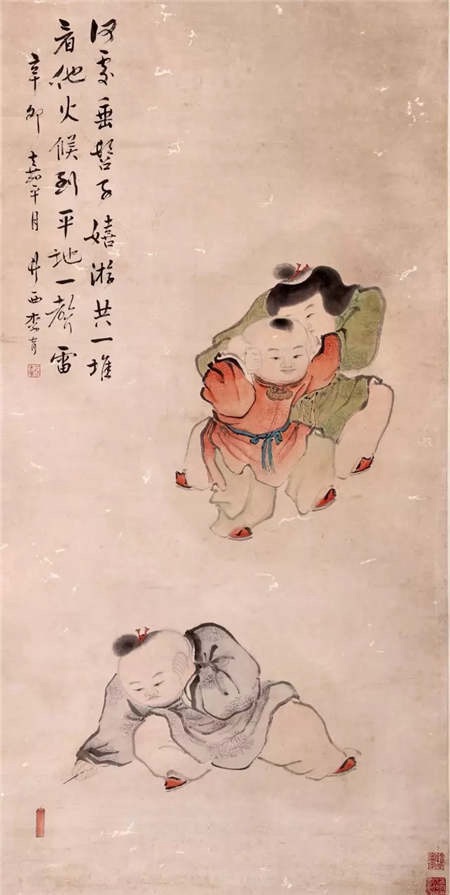
Attending fully and becoming supple,
Can you be as a newborn babe?
What does the body lose over time? Flexibility. And why is this? Because we gradually shy away from our full range of motion. Again, why? Because we gradually settle into increasingly narrow routines. We go from being playful and curious children to purposeful, transactional adults. We once roamed freely; now we are set upon both a clear and confined path.
I mean this in every sense: our movements become prescribed, our thoughts become prescribed, our speech becomes prescribed, and our perceptions become prescribed as well. Everything narrows, everything occupies less and less of its full range of motion.
Continue this way for a few decades, and much of you is old, curmudgeonly, and the prisoner of a rigid mind and body.
What do people over a certain age miss more than anything else? Their youth. Their innocence, purity, imaginations, and, above all, their energy.
And what we can do about this apparent loss of self, of what made us precious to ourselves?
Attend fully, and become supple: thus shall your innocence be returned to you by your own hand.
To “attend fully” is to become a diligent student toward everything in your life: looking at everything done automatically, halfheartedly, and superficially, and laboring to reach its deeper layers. Rather than living with an unexamined “good enough,” handling things as a physician who is responsible for making a sober assessment of a patient, diagnosing a problem accurately, and prescribing the precise method that will restore it to full and healthy functioning.
I “attend fully” by asking myself, does this seem healthy and normal? Is this supposed to be, look, and feel like this? Is this as orderly and organized as it should be? Is my understanding of this where it should be? Do my interactions feel genuine and life affirming to myself and my counterpart? Am I openly acknowledging what is going through my head, or running from it, chastising it, or pretending it isn’t there?
At the level of the body, am I taking complete responsibility for my health, or am I ignoring whatever feels daunting, inconvenient, or minor enough to justify dismissal? Am I putting myself through my full range of motion daily? Am I digging into and opening anything and everything that feels tight until it loosens? Am I diligently strengthening everything that holds me together?
In other words, have I become, through examination, recognition, and effort, so cultivated, skilled, strong, and adaptable, that I eagerly open myself up to life and its moment-to-moment challenges? Am I curious, earnest, forthright, and tenacious?
A baby is unselfconscious because it is unaware, lacking experience, and lacking a basis of comparison. For adults, for you and me, we can only become less self conscious by increasing our self confidence. Whatever we think we can’t handle, we avoid. Whatever we avoid, we gradually lose the ability to handle. This background feedback loop of passive deterioration can continue, unexamined, for decades. We begin reversing this by refusing to avoid anything, no matter how awkward or inept we feel at first. This is the essence of “attending fully and becoming supple.”
Washing and cleansing the primal vision,
Can you be without stain?
What has Lao Tzu been rhetorically asking us so far? Can you keep all your responsibilities in view? Can you do everything you were born capable of doing? Can you, now, wash not your hands but your eyes of the past? Can you free yourself from the corrupting influence of all the wickedness, stupidity, mediocrity, boorishness, and sheer error that you have witnessed and partaken of?
“Washing and cleansing the primal vision,/can you be without stain?” It means that you are stained by what you have seen. You have seen too much to see anything correctly, and you have become an unseemly sight as a result.
My language sounds hyperbolically stern, but consider whether the mirror feels like a flattering friend, or whether your conscience feels like someone you keep close and who smiles at you from across the room wherever you go.
Being without stain means seeing clearly, but what does “clear” mean in this vastly general sense? Rejecting the examples offered by others. Everything you see proposes a way of being. Everything you can encounter invites you to imitate it. “Look at me! Do you see? What you see is my answer to the question of life, and if you have yet to find your answer, perhaps mine will suit you.”
Whether you realize it or not, everything that exists is, almost by definition, offering itself as a suggestion for how to exist. How to handle disagreement. How to take a compliment. How to give and receive criticism. How to think about work, money, sex, relationships, children, humanity, god, the truth, the value of time, and so on.
Let me ask you then: is what you’re doing now the consequence of rigorous inquiry and revision, or is most of it haphazard? It’s some blend of the two, and this describes just about everyone: a mishmash of thoughtful and thoughtless. The most thoughtless thing would be to thoughtlessly adopt thoughtless behaviors, and this is exactly what the injunction to wash and cleanse the primal vision is about.
To be stained is to become something we would never have chosen, which means to have some remnant of an experience stick to us in a way that makes us uglier.
Removing the influence of the thoughtlessness of others: this is “washing and cleansing the primal vision.” Clear vision means the ability to ask, how would I best like to live? Where is my opportunity to act with dignity and virtue in this moment?
You will never achieve this kind of clear eyed innocence by unthinkingly following the examples of others, because the way of imitation is the way of accumulation: letting everything leave its mark until you are an aggregate of influences.
To be without stain is to be without anything that doesn’t belong, without any sign of mismanagement – ultimately without anything that draws negative criticism.
Not that you should be perfect, and not that there aren’t people out there who criticize poorly and inaccurately, but there is a difference between the mistakes and limitations of someone who is earnestly striving for excellence, and somebody who has grown cynical about life, about humanity, about themselves.
Cynics see the world poorly, having learned all the wrong lessons from life. The cynic rhetorically asks, “why bother?” To the clear eyed person who can feel right and wrong internally, there is neither questioning nor hesitation – wash away the grime of relativism, and see for yourself.
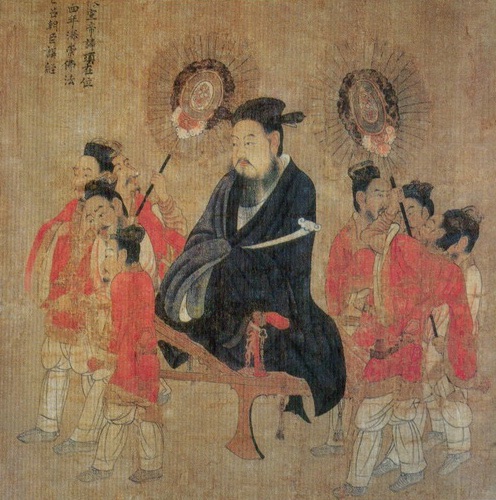
Loving all men and ruling the country,
Can you be without cleverness?
If anyone is still confused about the meaning of seeing clearly and living without stain, look no further than this: “loving all men and ruling the country.”
Everything implied by those six words is just about everything you need to redeem yourself from every accumulated instance of moral compromise: maximum compassion and goodwill married to maximum agency, duty, and personal risk.
Simply take a moment to consider the reason to become a ruler would be your love for your fellow human. To invert a tired cliche, great responsibility demands great power. What is power, but the capacity to shoulder responsibility?
One of the unmistakable themes of the Tao Te Ching is personal responsibility: not to transcend the world, not to go to heaven after death, not to convert or subjugate non-believers, but to learn how to live in the world. How to live with yourself in such a way that the world begins to make sense.
A life of cleverness, of cunning, of striving to win, is not the path of a great ruler: a ruler is responsible. Think of yourself this way wherever you are, whoever you’re with: your job is to hold the happiness and fulfillment of others firmly in view.
The way of cleverness is the way of getting, but the way of love is clearly giving. When you feel small, you seek. When you feel large and significant, you give. And what of those who are indeed small, who are clearly in need? Is it either sensible or kind to say that they should somehow be expected to give? Yes. Yes, because necessity is better than sympathy. It is better to contribute, better to be a pillar of stability in someone’s life, better to engage their instinct for reciprocity by being the first to be generous.
Better than what? Better than making sure others feel sorry for you. Better than eliciting charity born of pity. The truth is that we despise what we pity, and we intervene because we cannot bear to see something so pitiful.
We give to the pathetic in order to change them into something we find palatable: a broken window, a graffitied wall we must fix. And if it proves unfixable, if it stays perpetually in need of repair, of aid, of pity and sympathy, it puts the lie to our pretenses of efficacy; it proves we are useless. How long can you tolerate the presence of anything or anyone that advertises your impotence?
Therefore, no matter what you have, strive to be useful to others. Be an unclever, loving ruler over your life: whatever you have, put it to use. Whatever falls to you, strive to make it better. The compensation will come. The competence and discernment will develop. The unselfish fastidiousness will develop. The promptness will develop. But it never develops when you see yourself as a victim, a beggar, or an object of sympathy. Reject sympathy, and earn respect.
What do you think happens when someone who sees himself as a pitiful victim somehow gains power? Somehow gets the girl, the money, and the authority? Let me put it this way: what happens when someone who only understands how to exploit the sympathy of others with their own wretchedness no longer elicits sympathy? Nothing good!
Carefully examine every word of Lao Tzu’s verbal monument and you will not find a single word about the nature of a human. The nature of the universe, yes. The “way of nature,” yes. When it comes to thinking of ourselves, he only speaks in terms of how we must respond to the world. One might go so far as to say he sees us as not as human beings, but human “doings.” His subtlety is directed toward attitudes, actions, and observation of processes: what brings about peace within the heart of a person, thereby promoting peace in his or her society? In this way, we must repeatedly put aside what we believe we are owed, must put aside an insistent self concern, and, instead, look about our lives and begin to care for what is around us, with love and without cleverness. In precisely this way, we achieve the importance for which we yearned: to become the rulers of our private worlds.
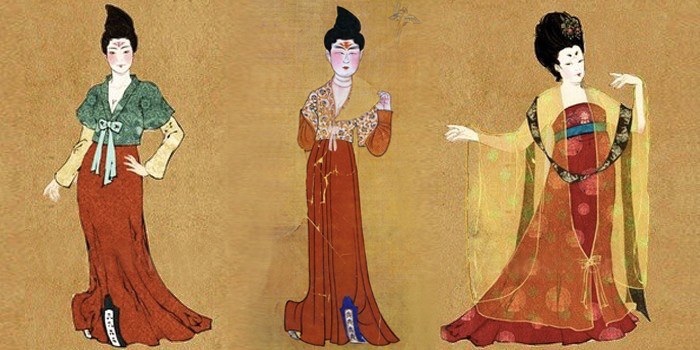
Opening and closing the gates of heaven,
Can you play the role of woman?
Something I’ve learned to appreciate over the years is the mental challenge of empathizing with a text that occasionally transgresses our contemporary sensibilities: in other words, I read these words and recognize there is much here that “you can’t say anymore.”
Let’s say what is uncomfortably obvious – opening and closing the gates of heaven means two things, in this context: the act of childbirth and the act of sex.
What does it mean to be directed toward these behaviors, these functions, and be challenged by a great sage in our ability to adopt this role, the uniquely female role?
It means: can you bring ideas into form. Can you materially contribute to the world? Can add to the sum of humanity? Can you usher in something precious and delicate, filled with energy and potential? Can you make the world a more beautiful place?
The gates of heaven swing both ways: mortals are lifted up to it, and the material world descends from it. Women are here identified as facilitating that process symbolically but also in a very literal way. There is more or less nothing more pleasurable than sex and there is nothing more awe inspiring than the birth of a child. Life comes into this world through women, and women do a great deal to make life what it is. Therefore anyone who reads “can you play the role of woman” and recoils in offense is nothing but a churlish prude: Lao Tzu has quite literally recognized women as having divine purpose.
Also, remember that it was not uncommon for women to die in childbirth. Can you, therefore, summon the fortitude to sacrifice yourself for the sake of the future? For the sake of our collective continuity? Can you conceive of something more important than you, meant to outlast you, meant to literally replace you, and commit everything you have to its development? Can you pay the ultimate price for the sake of what will die without our continued care and attention?
The “role of woman” is here defined by answering the terror of our own mortality with the sacrificial act, in both big and small ways, of creating the future.
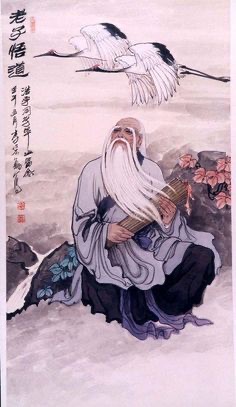
Understanding and being open to all things,
Are you able to do nothing?
Doing nothing becomes an option to the person who has achieved understanding. Without openness and understanding, there is only discomfort with what is not understood. There is only the threat of what you don’t understand and cannot control, and the countless ways people flail about in their frustrated confusion.
Much of this activity doesn’t look frustrated or confused on the surface – often enough, it looks and many ways is perfectly orderly and elegant. A job, a career, a relationship, a family, even a healthy, active, scholarly or meditative way of life – these are all constructive and worthwhile things that are nonetheless likely to be used as distractions from the deeper mysteries we feel unfit to face.
We busy ourselves being industrious, or leisurely, or artistic, or sociable, to some degree, because we are not truly at peace just as we are. I have to insist that this is not meant to, nor does it diminish the value and the benefits of living in these ways – but all I have to do is ask you, do you understand and accept the world?, and just about anyone is short-circuited by this.
To be fair, it’s a highly unfair question! A person isn’t meant to go asking this of others, and no acceptable answer or explanation could possibly be given! Nor is do nothing meant to be taken for the Sage’s prescription to the aspirant! What you are meant to do is ask yourself.
Calmly and quietly, search for the still reservoir of calm and quiet inside yourself. Look for the understanding already present within yourself, give yourself permission to acknowledge it. But, rather than jump up to act on it, thereby spoiling it, simply accept that you know whatever it is that you know. Don’t tell others, don’t write it down, don’t try to change your life. Simply admit to yourself that you understand. Accept your own knowledge, and do nothing but accept it.
Once you have learned how to want to understand rather than want to change something, your day to day thoughts, words, and actions will change. They will change in the sense that they will gradually adjust and reflect your growing understanding, just as they currently reflect the understanding you have now.
There is a lag time between the new understanding and it’s reflection in your actions, because you have to learn how to behave in accordance with new knowledge. The lag time is enhanced by the fact that if you are truly seeking understanding, from a place of complete openness, you are certainly not preoccupied with yourself. You’re not thinking of how you look, how you sound, or how to impress or convince others. What you’re thinking about is the object of your understanding – whatever it is in your life that you have truly begun to investigate and care about. You are earnest, sincere, and diligent, and will not be rushed or dissuaded by anything or anyone: this is the path of understanding, as contrasted with the path of preoccupation and performance.
Preoccupation? Performance? By this I mean that many of us can do the right things well enough, but the motive is not totally right – we perform our morality because we are preoccupied with our own standing in our social milieu, or preoccupied with our own discomfort in the face of what life presents to us, and so we act out the prescribed behaviors to make the discomfort go away.
You can live your entire life this way, to the point where the discomfort in the face of what is not truly understood is buried beneath all conscious recognition. No one is castigating anyone for this, but Lao Tzu simply asks, “are you able to do nothing?” Can you be still and resist the compulsion to manage things into their cubbyholes, can you be still and mentally investigate the meaning of the events unfolding around you? Can you welcome reality in a gentle and benevolent way, seeking to see beneath the surface and to truly get to know your world?
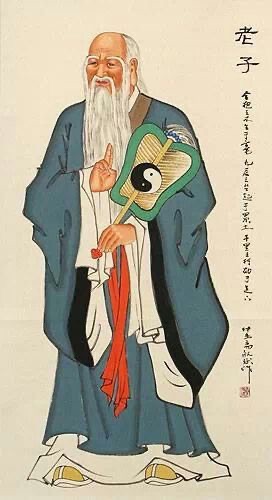
Giving birth and nourishing,
Bearing yet not possessing,
Working yet not taking credit,
Leading yet not dominating,
This is the Primal Virtue.
Lao Tzu asks his six penetrating questions, setting a high bar both conceptually and ethically, and concludes by distilling the essence of them into a simple injunction: pour yourself into whatever you do, and put yourself aside.
Shoulder the weight, but don’t claim ownership of what you carry. Carry it because it needs carrying.
Bring life into the world and care for it.
Perform the tasks before you because they are incomplete, and incomplete work cannot stand. That you did the work does not make you special – failing to do it does.
When you know what needs to be done, how to do it, and why, you have a responsibility to guide those who don’t. This does not make you superior to them, nor them subordinate to you.
In short, nothing you do can give you some claim to special status or treatment: a duty is a duty because of the harm that befalls the community when it is abdicated. “Status” is nothing but a position of greater responsibility, greater and more consequential duties. We are not here to barter with life – not here to set up deals and collect on whatever we can get for ourselves.
The best way for us to enhance ourselves is by meeting life’s demands in the right way:
By learning to hold our in our minds our inner beings, bodies, and material and social environments all at once, continuously;
By giving complete attention to whatever we engage with and thereby staying fresh, flexible, and forever on the edge of discovery;
By cleaning our perceptions of the deposits of the past, and resisting the buildup that leads to cynicism and corruption;
By fully stepping into the role of a benevolent ruler, seeing to the needs of others and letting go of all “tricks of the trade;”
By using our minds and bodies as vessels for the future, bringing things from conception to material reality;
By having the insight and open-heartedness to resist compulsive, thoughtless actions – by having the capacity for stillness.
This is how we become virtuous, how we realize our potential, and find what we truly want out of life.
In short, what is needed for a remarkable and meaningful life is to be found in the completion of the various tasks life supplies to us without our asking. Therefore there is nothing to seek, only a life to be lived – it is nowhere else but before you now.
Thank you for reading. Talk to you soon.
Jas
 Make Beautiful Choices