Do Or Die: rewrite the rules and become exceptional

Welcome back. This week I want to look at a theme that goes by many names, one that I’m certain you’ve discussed and read about before:

Raising your expectations for yourself, and getting better results, more frequently, in the process.

It seems reasonable enough to say that a higher standard of living is synonymous with better quality of life.

It also seems reasonable enough to say that making improvements in one’s overall quality of life is difficult for many.

The reason for this difficulty, in my view, has to do with a distinction that was touched upon in last week’s article: the exception on the one hand, and the rule on the other.

People who get swept up in new year’s resolutions, who make a sudden push in January only to find themselves right back where they started by March, have demonstrated that they see the better behaviors as exceptional, for example.

Therefore, going with this framework, a person who successfully makes changes is a person who rewrites the rules.

Today, then, I will lay out both the process and the mentality by which one rewrites their own rules for the better.

A bit of trite verbiage if you will: exceptional people are not making exceptions, but playing by the rules. They take the rules very seriously – much more seriously than those who are frustrated and underperforming. Said another way, the winners, the people we rightfully admire, have the strongest command of the fundamentals, and therefore the strongest foundations.

I want to lay out some of these fundamentals now, and I intend to do so a bit rudely. Rudely, because rudeness is necessary: people do not change unless and until they can no longer afford to remain where and as they are.

My rudeness is the rudeness in saying YOU’VE GOT TO WAKE UP as you’re sleeping through your alarm the day of the big job interview. From rudeness with love.

Rule Number One: results must be delivered

Let’s begin with an anecdote. Plutarch, famed Greek philosopher, historian, essayist, and priest (at the Temple of Apollo in Delphi, the site of the famous inscription, “know thyself”), compiled many of the famous sayings of both named and unnamed Spartans, who were notorious for their terse and acerbic wit.

For example, when asked to come and hear a singer who could perfectly mimic a nightingale, a Spartan declined by merely saying, “I’ve heard the bird.”

The particular quotation that concerns me right now, however, is attributed to Eudamidas:

When told that an old man was “a wise old man and one of those who search for virtue,” Eudamidas replied, “and when will he make use of it if he is still searching for it?”

It is easy to say one is studying something, seeking something, or working on something. These days, we hear people say that they are working on themselves, trying to learn patience, or, god help us, trying to learn humility.

Remember the piercing question of Eudamidas: when will he make use of it?

In other words, does someone who thinks of himself as a seeker also expect himself to find and utilize the thing being sought? In my experience, the answer is a resounding “no.”

To self describe as “seeking” is dangerous: it normalizes incompetence. It normalizes falling short. It’s okay to not be there yet, because you’re “working on it,” you’re “trying,” and you’re, worst of all, “doing your best.”

If searching is the rule, acquiring and utilizing is the exception. Results are the exception. This is the definition of mediocrity.

And, it is more than merely mediocre: it is ignorant. One acquires not by seeking, but by doing. Some examples, to better make this distinction:

Suppose I see someone who is remarkably strong physically. I don’t seek strength, I do things that require strength. I increase the demand for strength, by lifting weights, and the strength is supplied. I eat more, I sleep more, I drink more water, and I religiously avoid anything that diminishes the efficacy of my efforts. I don’t seek strength, I exercise the strength I have, and consume the resources necessary to produce more of it.

Suppose I listen to an interview with an author like Robert Greene, and wish I was as knowledgeable, well spoken and as well read. How would I seek those qualities? By reading more books, writing more often, and having more conversations with more people about the sorts of ideas that interested me. Where is the seeking in this? I see only the exercise of one’s capacity, and the resultant expansion of capacity.

Finally, what does being a better musician mean to me? Does it mean searching for better musical ideas and hoping to one day find and execute them? No. It means parting ways forever with this kind of mousey modesty, and being ever more assertive: writing more songs, spending more time practicing them, recording them more frequently, giving more direction in rehearsals, spending more time listening to music that exemplifies the qualities I wish to promote in my own, and applying more scrutiny to what I’m hearing, rather than merely enjoying what I’m doing.

In short, it means demanding results and delivering them, without exception. Let go of the notion of searching and hoping, and take up the way of having and using. Whatever it is you have right here and now, resolve to extract the maximum use from it on a daily basis: you will inevitably discover that this is the means by which you find whatever you were previously seeking.

Rule Number Two: have only the highest regard for yourself

I here exhort you to redraw your entire cosmology: you do not possess original sin, and you are not awaiting salvation. What you possess, rather, is tremendous potential that must be realized at any and all costs. Think of yourself less as someone trying to find his or her way in a vast world and more like a child of royalty placed prematurely on a throne: the role for you is the role before you now, and you must only grow into it.

Again, there is nothing for you to seek: you are here now, and there is a life for you to live right here and right now. Seeking negates having!

Redraw your cosmology: the sun, the sky, the steady passing of time that exposes the consequences of all actions, the people who brought you into this world and the others who educated and mentored and befriended and challenged you – all of this is an endorsement of your existence, confirmation that you are here, that you belong here, that space is made for you wherever you go. Even and especially when others disagree, resist, or reject my ideas, this only proves I am a force that must be contended with, must be answered and countered in some way by others.

Until you are prepared to grant this much, and to take it to be the normal state of affairs, you will always be wondering about and seeking to establish or convince yourself of what is actually nothing but the backdrop of all life, the simple fact of your existence.

Grant yourself some importance, some respect! Not in an egotistical sense, but in the sense that there is important work that awaits its completion by your hands, and it will not settle for another’s.

In the words of the Tao Te Ching, “why should the Lord of Ten Thousand Chariots act lightly in public?” You do so little, try so feebly, adhere so inconsistently, because you believe it doesn’t matter anyway. You matter to the extent that you treat yourself like something that matters.

As for me, I wrenched my life from the jaws of self defeating ideas and decided to claim as much meaning as I possibly could from the time that remains, and I will continue until some insurmountable force appears before me to say: this is it, there is no more knowledge, no more insight, or accomplishment, or improvement, or understanding, or maturity, or contribution, or love and companionship and friendship and cooperation and collaboration for you to partake of. There is a ceiling, and this is it.

Are you where you are because some such force has appeared before you, like Christ at the Mount of Olives, or are you simply not even trying?

The wise seeker knows,
That the fruit of my endeavor
Shall be commensurate
With the intensity
Of my own self effort,
AND NO FATE NOR GOD
SHALL ORDAIN IT OTHERWISE.
Vasistha’s Yoga, trans. Swami Venkatesananda
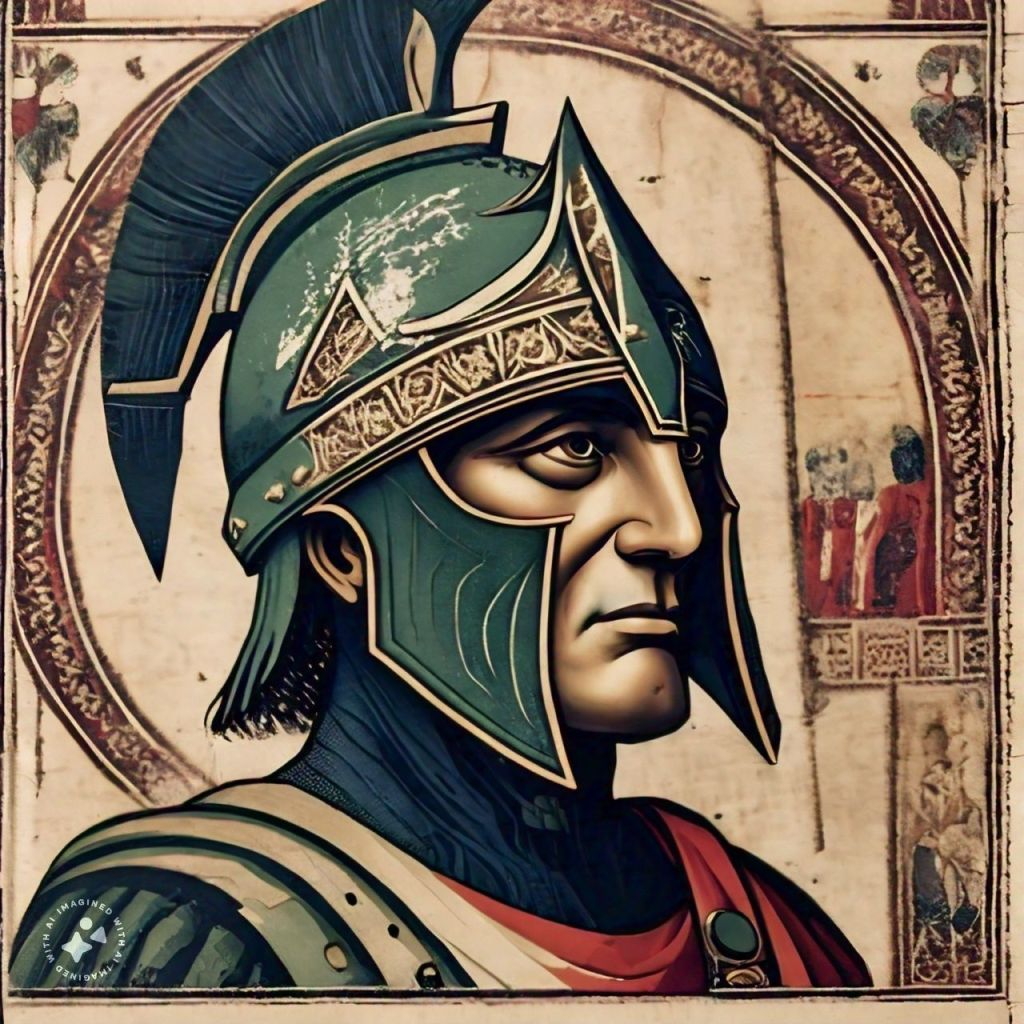
Rule Number Three: embrace hatred.

We return again to my beloved Spartans, conveyed to me by the pen of Plutarch.

Before I reprint and expound on a series of pungent quotations, however, I should back up and justify what appears to be an unjustifiable, even irresponsible use of words: embrace hatred.

It’s not what you have, but how you understand and utilize it that matters. To the determined, resourceful person, anything and everything can be and is employed toward the end of perfection: of oneself, one’s life, and one’s every undertaking.

If you were short, should I tell you, “don’t bother, shorties can’t win?” Should I tell you the same if you’re a woman, an ethnic minority, or someone attracted to the same sex? Should I say that something about you disqualifies you from the contest altogether? No. I should say, learn to play by the rules, as skillfully as you possibly can, built in handicaps notwithstanding, and you’ll receive whatever marks you earn fair and square.

This extends to attributes of the psyche as well. If you are loving and kind, you can win. If you are cunning and competitive, you can win. And, I dare to say it, if you are hateful, you can win.

To reiterate: what disqualifies you is a violation of the rules, or what you do. Not who you are or how you feel.

I believe this is clear enough.

Another concept we are going to need: the yin and yang symbol as a model for a binary system. A world of black and white opposites, but not so rigorously segregated as “black and white” implies. A little bit of black in the white half, a little bit of white in the black half, creating balance within each half, rather than balance existing “on the whole.” The Yin and Yang Binary represents the appropriate integration of opposing energies at the local level, not merely at the level of abstraction.

This matters, because nobody actually lives in the average household, with the average family and income and budget and back problems: we only occupy the particular, which merely contributes to a sense of what is average. “Average” as a data point does not truly exist.

Why say all this? Because hate has a place in your life at the local level. It isn’t simply the case that all the perfect woke coastal snow angels of love and empathy have to balance out the hateful idiots in fly over states – YOU have to strike the appropriate balance between love and hate within yourself.

This is impossible if you cannot admit to being in possession of hatred.

Back, then, to the Spartans.

“When asked how one should remain a free man, [Agis, song of Archidamus] said, “by despising death.”

“Questioned as to how he gained his great reputation, [Agesilaus] said, ‘by having despised death.’”

“Certainly when somebody asked what gains the laws of Lycurgus had brought Sparta, [Agesilaus] said: ‘contempt for pleasures.’”

When someone was asking [Cleomenes son of Anaxandridas] why the Spartans do not dedicate the spoils from their enemies to the gods, he said: ‘because they come from cowards.’”

“As some Athenian was reading a funeral eulogy in praise of men killed by Spartans, [Ariston] said: ‘what, then, do you think was the quality of our men who defeated them?’”

A picture has surely emerged, by now, of the sort of hatred I am referring to, so that we might finally understand what it means to “embrace hatred.”

A love of life that is given an intimidating ferocity by the attending hatred of death. A love of strength and vitality that is inseparable from a hatred of weakness. A love of victory that is tempered by a disdain for the evident inferiority of the defeated. A deep sense that some people are simply better than others, that superiority can be proven by contest, and that better people are entitled to more, and entitled to rule.

Said another way, Aristotle wrote in The Nicomachean Ethics that “an honorable man is a disdainful man.” I believe the meaning of this statement has been made clear enough by now.

It is not enough to like the idea of one day achieving something:

You must hate the thought of failure
Hate the thought of being right where you are now in another ten years,
Hate the thought of your parents or spouse or children making excuses for you,
Hate the thought of breaking the promises you’ve made to yourself and others,
Hate the idea of squandering your potential for the sake of episodic pleasantries,
Hate the idea of wasting your life.

When I start to falter on my path, an icy, humorless auditor within me rises up to scowl and cast a rigid index finger down like a punishing lightning bolt as if to say, get back up, get to work, and get it done.

I wish to close with a poetic representation of precisely this kind of wrathful contempt, embodied perfectly by Wallace Stevens in his poem Puella Parvula (Latin for “quiet little girl”). I can only say this so well, but Stevens says it perfectly:

Puella Parvula

Every thread of summer is at last unwoven.
By one caterpillar is great Africa devoured
And Gibraltar is dissolved like spit in the wind.

But over the wind, over the legends of its roaring,
The elephant on the roof and its elephantine blaring,
The bloody lion in the yard at night ready to spring

From the clouds in the midst of trembling trees
Making a great gnashing, over the water wallows
Of a vacant sea declaiming with wide throat,

Over all these the mighty imagination triumphs
Like a trumpet and says, in this season of memory,
When the leaves fall like things mournful of the past,

Keep quiet in the heart, O wild bitch, O mind
Gone wild, be what he tells you to be: Puella.
Write pax across the window pane. And then

Be still. The summarium in excelsis begins…
Flame, sound, fury composed… Hear what he says,
The dauntless master, as he starts the human tale.

In summary,

Part with excuses and demand results. Come to view results as normal, and lack of results as abnormal.

Hold yourself in the highest regard, and then ceaselessly demand that your behavior rise to meet your own standards.

Finally, you must have contempt for whatever is beneath you, that threatens you, that brings you down, that would seek to poison you and strip you of your sense of purpose, that would tell you you are unworthy of your aspirations and potential. Let that contempt become that which fuels you, like the mighty imagination that triumphs like a trumpet over the blaring elephant on the roof.

Thank you for reading. Talk to you soon.

-Jas
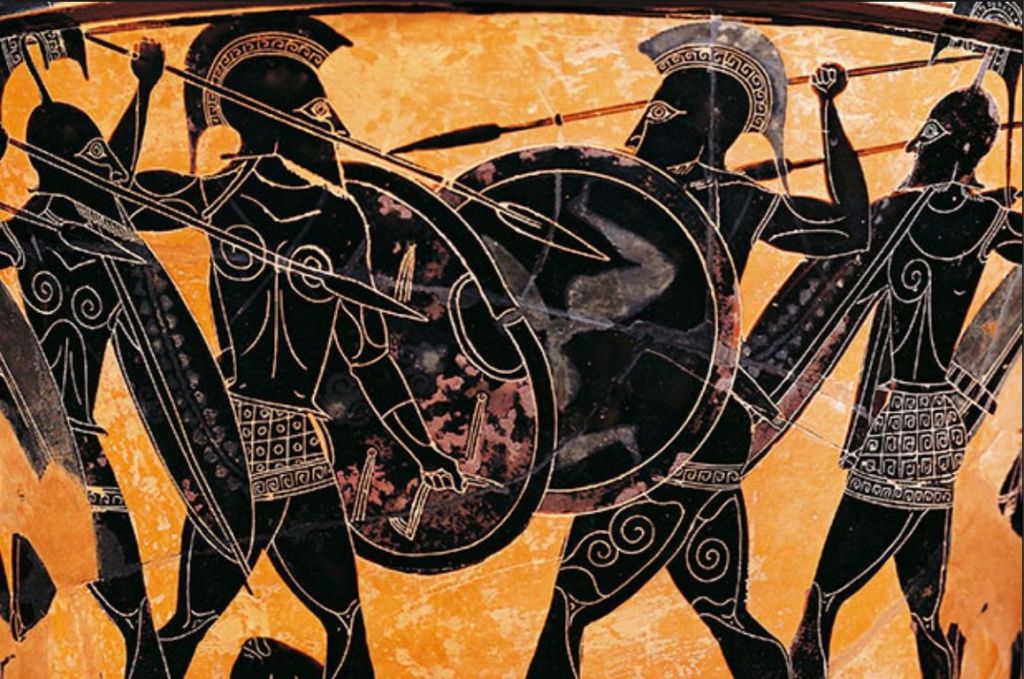
Stay On The Right Side Of The Empire: a lesson from Thucydides

The short version of today’s newsletter can be expressed in two words:

Read more.
You want three words? Read more books.
Four words? Read more history books!
If you need a lot more words, you’ll find them below.

To read history is to safely accumulate synthetic experience without the necessary risk of actual experience. You quite literally learn the lessons of the past by doing this. You see the eternal struggles of mankind, our virtues and vices, and the ways in which we’ve changed.

When I read about the past, I can see myself in the characters, in the events, and in the voice of the historian.

I read something about a nineteenth century French painter and realized that my own process as a guitarist and composer seems almost identical to his, and that comforts and emboldens me.

I read about the feats of engineering that allowed the Golden Gate Bridge to be realized, or that the San Francisco Bay was a dry valley as little as fifteen thousand years ago, and I can never look at either the same way again.

My mind has been opened, my horizons have been expanded. I believe I live in a fuller, brighter world because I step away from it long enough to read about it, and this is why I make endless exhortations to you to do the same: read, and see that thought is joy.

Why the long preface? Because today I’m discussing a text that would probably scare most people away. And, if you ran from it, I would understand.

We are talking about The History of the Peloponnesian War by Thucydides.

I read this for the first time in 2022. Why did I do this to myself? Why did I read this book when I didn’t have to, when I didn’t have a grade riding on it?

Because I watched an interview with Robert Greene, where he said that the single most difficult thing he ever did in his life was to read this text in the original Greek. He went on to say, and this was the part that goaded me into action, that you are simply not a serious student of history if you have not read this text.

Well, then.

I don’t know about you, but I’m the sort of person who cannot let that stand. You’re calling me a non serious person? You’re saying that until I’ve accomplished a specific task, I really don’t know what I’m talking about? Well, I guess it’s time to get to work.

I got to a point in my life where I couldn’t bear to casually float along, in any way, for one day longer. I had to do this thing for real. So when I heard him say that, throwing down the gauntlet, so to speak, I was somewhat relieved – relieved to know exactly where to start.

This, in fact, became the beginning of the reading list I charted out for myself in one or two sittings: my best guess as to which texts would expand and improve my mind in ways that would be meaningful and rewarding to me personally.

It all started with Robert Greene saying that, until you have read The History of the Peloponnesian War, you are kidding yourself. If anything, I am done with kidding myself.

I read it, and it truly changed my life. It changed my confidence in my ability to take on challenges (it is not an easy read, even in English!), it gave me an understanding of what actually happened between Athens and Sparta, which, by the way, is utterly fascinating, and it showed me, most importantly, what I have actually inherited as a westerner. The two strains of western civilization, the two wings of the swan, you might say, are ancient Greece and ancient Jerusalem. Hellenic and Judeo-christian values. I saw the foundational stones of our civilization in the descriptions of these people, the recordings of their speeches, their deeds, their terrible mistakes and stunning victories, their mercy and their cruelty. I saw that I was a part of it, a point along a lineage of thought, culture, and a way of existing in the world.

I cannot possibly convey that experience to you here. You may read it yourself and experience nothing of the kind. What I will claim to attempt, then, is the distillation of one moment of epiphany that I had while reading it.

(Just one. I wanted to write four, but by the time I had written out just one point, I already had the longest newsletter yet, and I’m already past my own deadline.)

What I’ll do, then, to get this point across, is briefly frame a large quotation from the text, and follow up with my own elaborations. I’m providing entire paragraphs for the sake of context, so don’t expect one liners. The depth of understanding comes from context, not from the abstracted snippets.

So, as they say, let’s get into this.

Strength requires the rejection of convenience.

The History of the Peloponnesian War is the story of Athens, the world’s first representative democracy, becoming enmeshed in a violent conflict with Sparta, an authoritarian police state.

The seeds of this conflict were planted during the Persian War, when the various Greek peoples united for the first time, out of the necessity to repel the invading Persians, led by Xerxes.

The Greeks were ultimately victorious, but their societies would never be the same again. In facing down an empire, they themselves became more like an empire, with Athens at the helm.

Athens had the superior navy, which was the key to victory. This placed them in a position of authority, which they leveraged to bring the other polities under their control.

This originally began as an adaptive response to the threat of Persia, but Athenian hegemony did not go away once the war was over.

Thucydides explains this in detail below.

“So Athens took over the leadership, and the allies, because of their dislike of Pausanias, were glad to see her do so. Next the Athenians assessed the various contributions to be made for the war against Persia, and decided which states should furnish money and which states should send ships – the object being to compensate themselves for their losses by ravaging the territory of the King of Persia. At this time the officials known as ‘Hellenic Treasurers’ were first appointed by the Athenians. These officials received the tribute, which was the name given to the contributions in money. The original sum fixed for the tribute was 460 talents. The treasury of the League was at Delos, and representative meetings were held in the temple there” (p.92, Book One, part 96).

What we see here is that Athens could not organize the other Greek forces without becoming, essentially, an accountant for a makeshift Athenian empire. Someone had to lead, and that meant the consolidation of resources scattered across various islands ruled by various peoples. This meant the imposition of costs, and enforcement in the face of delinquency.

The second and final quotation shows the downstream consequences of such an arrangement, and how it simultaneously provoked and stifled dissent.

“The chief reasons for these revolts were failures to produce the right amount of tribute or the right numbers of ships, and sometimes a refusal to produce any ships at all. For the Athenians insisted on obligations being exactly met, and made themselves unpopular by bringing the severest pressure to bear on allies who were not used to making sacrifices and did not want to make them. In other ways, too, the Athenians as rulers were no longer popular as they used to be: they bore more than their fair share of the actual fighting, but this made it all the easier for them to force back into the alliance any state that wanted to leave it. For this position it was the allies themselves who were to blame. Because of this reluctance of theirs to face military service, most of them, to avoid serving abroad, had assessments made by which, instead of producing ships, they were to pay a corresponding sum of money. The result was that the Athenian navy grew strong at their expense, and when they revolted they always found themselves inadequately armed and inexperienced in war.” (p.93, Book One, part 99).

We come, then, to the point I wish to make: strength requires the rejection of convenience. But, why is this the message I believe the above passages illustrate? Read that one clause again: “the Athenian navy grew strong at their expense.”

The allies were given, quite shrewdly, the choice between contributing money or manpower. Those who had the luxury to contribute money did so, while the Athenians used that money to reinforce themselves physically.

The Athenians chose the path of risk, of effort, of trial and error, of reinvesting in their physical capacity, while their allies passively financed it! This is how “allies” became “subjects.”

The lesson here is that you will be left behind, will be outmatched and outclassed, if you retire from the arena. Whoever fights on your behalf will one day be too strong to be fought off when the seasons change.

Do not become the person who gave away his or her power in the belief that another’s protection was guaranteed. In the words of a later Greek figure, the Stoic philosopher Epictetus, we must learn to despise what is not under our control.

And, to be a bit of a Petersonian, the adoption, not the shirking of responsibility, is how one grows stronger. By taking control of what can be controlled, you grow in both experience and capacity – in efficiency and effectiveness.

You might read what I’ve just said and say, so what? I’m not at war, I’m not funding an army that might one day subjugate me, I’m not even hiring a pool cleaner that I might one day return home to find in bed with my wife. What does this have to do with me?

What this has to do with you is the difference between producing (the Athenians producing victory in battle) and consuming (the allies consuming the protection of Athens for a price).

Consumers finance producers by purchasing their products or services. Athens’ passive financiers benefitted from Athens, but Athens benefitted far more – they grew in productive capacity, in skill, and in technological sophistication.

The beneficiaries of their advances, however, did not grow in these ways. They may have even regressed, growing complacent under the aegis of Athens. They may have felt as though they were a part of something, but truly it was Athens alone that was on a journey of self edification. The moment the allies tried to act against Athens, the ever growing chasm between them was revealed.

We live in a world of unimaginable comfort and convenience. But just because we benefit from very sophisticated technologies does not mean we understand them, or are ourselves growing in productive capacity simply because we are using increasingly sophisticated tools.

To become powerful in any meaningful way, you must become a creator, a producer, of something.

In business, you could design a product or service (learning and employing all the relevant skills), and then sell it to the public (learning and employing sales and marketing strategies).

In artist pursuits, you could write the book, the article, the post, the script, paint the painting, design the logo, write the song, sing it yourself or find a collaborator, even write an entire symphony and guide the orchestra through its performance using the art of conducting.

In terms of thought and philosophy, I think it’s the difference between absorbing ideas second hand through casual conversation and, yes I’m making this point again, reading the books yourself.

I pick out the books I read on the basis that they take me beyond a casual relationship with my interests. I think happiness means, at least partially, becoming more interested in your interests. A person who cannot be bothered to read a damn book is simply not that interested.

I read, and read, and read, and ideas taken from disparate corners of books are fused with observations I’ve made in my own life, conversations, existential dilemmas, and things from other books.

The difference between the wisdom that comes from literature and the wisdom that comes from life is that literature gives you the isolated form: you are only focused on absorbing the information. In the rest of your life, you are first and foremost living the story. Most take precious little time to read over it, so to speak. The act of reading conditions you to pay attention to your own life as you would a book.

I consider this a creative act because you are far more active in your distillation of experience into wisdom this way. You are producing knowledge, not merely consuming sensory stimuli.

In the world of fitness and wellness, you could actually apply what you see on YouTube and Instagram and discover what works for you, what your body needs, and what your actual goals are. You literally create your physique by doing this.

Until you get out there and start creating, you are, sorry to say, nothing but a consumer. Some of you are fine with this. But not the person who’s read this far.

Until you get in the game, you are merely supporting the achievements of others. Always have something on the line – something you are trying to achieve, complete, and submit for the consumption of others. Otherwise, you lose your edge. Otherwise, all the prizes in life will go to others.

Not sure where to begin? Start by saying what you really think and feel more often, more openly. This, too, is a creative act.

You might have read all this and still be thinking, is this an urgent concern?

It may not be urgent today, but it is important. Important in the sense that if you start doing something about it, such as gradually bringing more and more of your life under your control, and outsourcing less and less of it, you will, over time, become more self-sufficient, more the author of your destiny.

The reverse is true, also. The more you outsource to others, the more conveniences you embrace, the less capable you are of taking care of yourself. This is just as important now as in the days of ancient Greece. Everyone is striving to provide you with greater comfort and convenience, in more and more areas of life.

While technological advancements are self-evidently positive, they also come with costs, some not so obvious. Something that can occur when taking nutritional supplements, for example, is the phenomenon that when something is supplied from the outside, it is no longer produced from within.

The negative consequences of excessive convenience, then, can be understood in these terms. The more that is done for you, the less you need to do. The less you need to do, the less of your own capacity you put to use.

This path terminates in total atrophy: people who are incapable of doing anything for themselves. People are losing their social skills, the ability to meet friends and romantic partners, their handwriting, their attention spans, and their knowledge of the world, all because of technology and the atrophying effect of the conveniences it affords. This is real, and it’s not going away.

The rule we can extrapolate from these quotations of Thucydides, therefore, is what has already been said twice: strength requires the rejection of convenience.

In conclusion, I’ll simply say that life is activity. Life isn’t a thing you have, but living is something you do. Mine is a doctrine of action. The result comes to the one who acts. To those who wish to employ others to act on their behalf, ultimately you will receive whatever they decide to share.

Take the risk and reap the reward.

Thank you for reading, talk to you soon.

-Jas