The Tao Te Ching is a manual for being yourself. A manual for living in the world without losing touch with what matters most: your own self, who senses, feels, thinks, imagines, reasons, judges, and decides. The subtle something that is there when you’re truly present, but whose absence renders everything subjectively meaningless.
I said it was a manual, but it is very unlike other manuals. Lao Tzu constructed the Tao Te Ching as a series of short, terse, and often opaque chapters that force you to think deeply. He says simplistic things right beside subtle things, to show you these two things aren’t that dissimilar after all. He describes the ways of a wise sage, and contrasts it with all the ways to live unwisely.
One of more prominent themes of the book, and a necessity on the road to wisdom, is the cultivation of unforced restraint.
While other teachings speak the language of right and wrong, good and evil, heaven and hell, today we are speaking the language of enough and too much.
And, what is too much? The point at which you lose yourself. Avoiding this error is the subject of our talk today.
It is not about the process
When you are in control of yourself, aware of what you are doing, for whom, and why, you know when to stop: the sufficient quantity, quality, scope, and character of the end result, whatever form it takes, is kept in view until it is reached.
In every moment, however, there is a tug of war taking place: the zoomed out maturity of perspective on the one side and the up-close pull of mindless activity on the other.
Every action offers you the opportunity to lose yourself in its performance. The opportunity to take your mind off the results and to become utterly absorbed in the action itself.
Normally, when you hear people talk about ignoring results for the sake of enjoying the process, this is presented as desirable, therapeutic, and wise.
Not so fast.
Doing things correctly means producing correct results. Losing yourself in a positive way only means finding the appropriate level of difficulty that allows you to become absorbed in the execution, rather than bored (too easy) or self conscious (too difficult).
The quality of what you produce is always paramount. How could it be otherwise?
Losing yourself, in a positive way, really means forgetting about what you’re receiving as compensation, and thinking only of the quality and quantity of effort that you are giving. It means thinking only of the needs of whatever or whoever is demanding your attention.
When you behave this way, results are never secondary: your process conforms willingly and even gleefully to what is required in order to produce the necessary results.
Finally, inputs and outputs are inseparable from one another. Nothing happens by simply brooding over your desire for results, your impatience for them, your dissatisfaction with what you have, what you’re doing, or who you are now. Outputs only follow from inputs: competent people simply keep themselves occupied with supplying the necessary inputs, and monitoring the outputs as a form of quality control. This is the extent to which “favoring the process over results” has meaning.
Chapter 9 of the Tao Te Ching communicates all of this with the highest degree of economy:
Better to stop short than fill to the brim.
Oversharpen the blade and the edge will soon blunt.
Amass a store of gold and jade and no one can protect it.
Claim wealth and titles, and disaster will soon follow.
Retire when the work is done.
This is the way of heaven.
Four examples of excess, each subtler than the next. Each line a lesson in itself. It concludes with a simple injunction: stop when it is time to stop, and your life will reflect the highest virtue.
How do you know when to stop?
Here is what I am trying to understand: why do we keep going when we ought to stop? What puts us beyond the reach of the intervening hand called “enough?”
Is it pride? Is it tunnel vision? Is it immaturity? Is it impulsivity? Is it unconsciously projecting the past, or the “subconscious” onto the present reality? Is it an existential void that makes people seek wholeness in mere activity and possessions?
The cause of excess may be any of these at different times and for different people. If you want to be healthy and normal, your focus is on applying solutions, not contemplating the source of the problem. Lao Tzu explains the problem with the first four lines, and provides the solution in the last two: retire when the work is done. This is the way of heaven.
The first step in regulating yourself is to become transactional.
Bring your attention to the fact that what you’re doing is work. A task. And, because the completion of the task requires your presence every bit as much as it requires the resources you use, it follows that you too are a resource: whatever you do, everything you touch, is a project into which you are investing yourself.
To see yourself as a resource is to become conscious of expenditure. Would you keep handing money to the clerk after you’d already paid the full price? I hope not. A resource is finite, and is expended in exchange for something specific. Something that affords an advantage to the person making the expense.
To go too far is to be inattentive to the nature of the transaction at hand. As I said above, the reasons for inattention are legion. Ultimately, it is both impossible and unnecessary to know exactly why the approach is wrong, the attention is wrong, the results are wrong.
At least, for the person trying to make improvements, this knowledge is not a prerequisite for the work to begin. Rather, the nature of the illness becomes clear as one advances on the road to health. The more you come to value yourself, to see your time and energy as the valuable thing being spent, the less you will blindly run after things, because you will see it as blindly buying things.
Once you begin to draw boundaries around your resources, you will gradually go from a sieve to a reservoir. You will become (and come to see yourself as) whole.
So, and this is the important part, what happens when you operate from a place of wholeness?
You are driven by interests, and the healthy signals of your needs and instincts. Not by a misplaced desire to complete yourself. A complete person is available and responsive from moment to moment, because his or her basic existential security is intact. Such a person can operate creatively, collaboratively, helpfully, and patiently.
The Law of Diminishing Returns
All activity has three phases: the productive phase, where every unit of input reliably produces the desired outputs; the phase of diminishing returns, where the outputs decrease in quantity and/or quality; and the phase of negative returns, where more inputs actually cause a depletion of outputs.
When you are caught up in an activity, possessed by it, and thereby blinded to its results, you misinterpret the signs as you move through these three stages. Thinking that more is always the answer, you will inevitably progress into the phase of diminishing returns and mistakenly respond with a redoubling of your efforts, which only pushes you toward the phase of negative returns.
This is where burnout happens.
This is where people quit, never to return.
This is where life stops making sense.
You throw the ball and it flies in the opposite direction.
You hit the nail with the hammer and it comes back out.
You run faster and the finish line only moves farther away, until it disappears.
This is what activity in the phase of negative returns feels like.
How do you stay in the phase of productive returns?
Lao Tzu, as usual, starts with an obvious example: filling a cup with liquid. If you keep pouring liquid into the cup, pretty soon it will overflow: pouring in has now become pouring out, even though the mechanics of the activity have remained constant.
Pouring water into a cup is an easy example, precisely because nobody pours for the sake of pouring. When you pour, you watch the cup, which is to say, you are only looking at the effects (the height of the liquid) as the means by which you moderate the cause (the mechanics of pouring).
Understanding the result you are looking for, the reason you are doing the activity, is the way you focus appropriately. It tells you how, how much, in what way, for how long, and when and how to stop.
I’m writing this article right now – I have clear criteria for completion. My goal is to wake you up to the urgently important nature of everything you are so sure you already understand. To bring your attention to what is foundational and unremarkable, and activate a sense of discovery and adventure – that is my work. I have no knowledge and no presumptions about what you might like to build on your own foundation, but I do presume that your foundation could be stronger.
What limited me was precisely this: a weak and incomplete foundation. I had to learn how to stop, how to move on from something once it had served its purpose. I had to learn how to live purposefully, and to reject temptations and invitations to activities that had no clear or beneficial purpose.
I had to learn how to work, and to retire upon completion of the work. I discovered that retirement, the conscious act of finishing something and putting it aside, is both edifying and reifying.
What do I mean by that?
Edifying because I separate myself from the task by pronouncing it complete. Not perfect, but sufficient, and concluded. I regain the part of myself that was tied up in the work, and it returns to me accomplished, efficacious, dignified.
Reifying because my work now has a beginning and an end. Whatever I have done, it now lives as a discreet fact of existence, real, concrete, specific, and eternal. It is eternal because is is now part of the unalterable record of the past.
By saying, “I have now completed this,” both my person and my deeds have acquired more reality and more solidity in the world. One accomplishment at a time, I become more accomplished. If the deeds were worth doing, then the world, too, has become a better place by the same increment.
Every time I do this, I become more conscious of limits. I can see the lip of the cup in all things, because I know what activity, completion, and cessation feel like when done correctly.
Better to stop short than fill to the brim.
Oversharpen the blade and the edge will soon blunt.
Amass a store of gold and jade and no one can defend it.
Claim wealth and titles, and disaster will soon follow.
When I was a small child, I was wildly imaginative (were you the same way?). I would draw, play with toys, or simply project my imaginings onto the sky while gazing up at clouds, or into the cityscapes visible through car windows as my mom or dad drove me and my brother around town.
Because I was raised by and around kind people who understood the needs of children, I don’t recall anybody ever interjecting “that’s not real!” as a way of rudely shattering the fantasy. I was free to indulge my imagination in its various aspects, knowingly moving away from passive observation of reality and toward willful embellishments.
Now, I’m no psychologist, but I think kids can easily return to objective reality when their reality feels safe. I wasn’t running away, but simply at play. Having fun. My mind might have been a hard act to follow, but my “real life” was filled with gentle people who loved and encouraged me. And, I would be remiss if I didn’t at least acknowledge my undying gratitude for that now.
It’s when reality becomes unstomachable, however, that fantasy slowly becomes a surrogate. A step parent. A delusion. Permanent, or at least the subject of an attempt at permanence.
But delusion is more widespread than anyone would like to think, touching almost all of us in some way.
How can I say that?
Because I can say that there are major aspects of reality that people have not come to accept, are not even on their way to accepting, and maintain their distance from them with the daily use of fantasy.
I’m talking of course about the reality of death. The impermanence of all life, and the utter insignificance of individuals and even entire species of living things against the backdrop of mountains and oceans, to say nothing of the birth and death of entire stars, planets, and moons.
The easy thing to do, what I imagine most of us do in some way, is meet all that with hand waiving – how can I possibly wrap my mind around all that? Why should I concern myself with it? It just makes me depressed (alternatively, with dissociative awe).
Well, is it any different to ask why a powerless child should face the reality that his or her parents hate each other and probably won’t be married much longer?
We can look at all kinds of ugly or disempowering realities and recognize that individuals fare best when they face facts, and take back their lives from the paralysis so easily induced by what is often called fate.
A compassionate and caring person can easily recognize that it may take years for a person in a tough spot to gather the strength, maturity, and will to make sense of their life, but that something critical has been missed if this work is never undertaken.
And so, the right thing to do, I hope you can agree, is to apply the same reasoning to the facts of life and death themselves. But, not in a grand sense: it must be completely personal, completely intimate. My one short life, my ultimate insignificance, my inevitable death.
Even typing these words now is difficult!
Even sitting here on a sunny afternoon idly typing my thoughts into a doc, I shudder at the thought and look for a way out – a way out of even saying it with my thumbs to the screen of a phone!
When he saw the body of his slain companion, Gilgamesh the great King of Uruk said, unforgettably,
Must I be like that? Must I die, too?
Yes. Yes.
And once this reality has been accepted (a subject far too big for not just a weekly newsletter but for a writer of my meager stature), a degree of make believe comes, at last, to an end.
The same way I no longer imagine Wolverine leaping out from behind a copymat as my mom drives me past it on the way home from school, I can no longer imagine, I can feel the illusions melting away as I reconcile myself to reality.
Rather than be caught between passive observation and active hallucination, observation goads to action.
What sorts of behaviors come to and, and what take their place, as reality takes the place of fantasy?
We are now ready to read chapter 7 of the Tao Te Ching, now ready to consider the answer offered by an ancient Chinese sage named Lao Tzu. I’m confident you will soon see why.
Part 2: Eternal Creation, Ephemeral Creatures
SEVEN
Heaven and earth last forever. Why do heaven and earth last forever? They are unborn, So ever living. The sage stays behind, thus he is ahead. He is detached, thus at one with all. Through selfless action, he attains fulfillment.
We could begin by breaking up the short chapter in 2 ideas: the first 4 lines indirectly remind us of our mortality, the second 3 lines tell us how a wise person would make use of this information.
Regarding the first 3 lines, there is more to say than you might think. By all means, stop to contemplate the natural world, the world beyond human sociopolitical affairs, and be moved to awe. Let it inspire you, relax you, and restore you. The world is vast and beautiful – don’t miss out on even brief and frequent moments of observation: it’s downright good for you.
But I would be participating in something quite dishonest to leave it at that – if I was to simply join the bandwagon of nature worship.
To experience nature as a kind of companion – wise, gentle, and transcending – is the greatest luxury and privilege imaginable. A luxury afforded to you and me solely by the achievements and industry of humankind.
Nature is not “calm,” “peaceful,” and “rejuvenating” to human populations without ways of dealing with food, shelter, disease, injury, and waste management, just to name a few things.
Only when we have something called civilization does nature become, by contrast, quieter, more meaningful, and somehow instructive.
If nature is static, fixed, and humanity is what changes, our perspective on nature is a necessary consequence of where we’re at with ourselves at this moment – at this phase in our evolution.
My point is simply this: we, through a combination of time, discovery, striving, ingenuity, dumb luck, perseverance, imagination, optimism, and obsession, have raised ourselves up to a point where nature is no longer an enemy but a friend, a teacher, a resource, and a reminder of what matters.
With that last paragraph in mind, do not denigrate yourself and humanity as a whole when you admire nature: your capacity for admiration is, for precisely the reasons I just explained, evidence of something legitimately admirable on your part.
What you should feel, rather than inferiority, is simply distinction. Difference. Contrast.
Let me now list many of the differences that will inevitably sound denigrating but are simply truths, truths that are inescapable when comparing ourselves to nature.
Nature is eternal, while you are ephemeral. Nature is overpowering and irresistible while you are weak and inconsequential. Nature is hard and unfeeling while you are soft and sensitive. Nature is steadfast while you are capricious and whimsical.
But do not stop there: nature is seemingly blind and automatic while you gaze in contemplation and weigh your options. Nature is ruthless while you have mercy, feel pity, and offer second chances. Nature consumes the weak while you cherish and preserve what would be obliterated without your interventions. Nature simply is, while you yearn for what you might become. Nature merely reproduces, while you fall in love. Nature kills, and so do you, but you alone bury and grieve and remember the dead. You may even call nature a god, but you alone seek and worship your god.
In many ways, you are nothing like the world. And by allowing yourself to perceive these differences without feelings of self recrimination, you can grow wise.
And this plays into what I want to say about the second half – what to do with a life that is by definition doomed to death.
Can I be a bit obvious, maybe even didactic? May I even risk being redundant? The point of comparison is to highlight differences. And, why highlight differences? One reason would be to better understand your own situation and needs. To make better sense of your life by understanding what you are and what you’re not.
Part 3: A Sage Does Not Compete
What does the sage do differently from the rest of us, as a direct result of better understanding both nature and himself? We are told that
The sage stays behind, thus he is ahead.
What do you do when you realize you’re not running a race? You slow down. And why can it be said that life isn’t a race? Because it is a farce to compete with people who are about to be annihilated, only moments before or after your own annihilation.
The sage is ahead of those still running, because he has finished the race, or rather is finished with racing.
Now, a word about competitive activities. As long as they have meaning to you, continue them. Their meaning may evolve for you, also. You may be in a place where dullness and indolence have to be burned up in some passionate striving. You may have to prove yourself, to cultivate yourself, to become capable of the rigor necessary to best your betters. So be it. There is great beauty and dignity in contests of skill, in discipline and sacrifice, and even in the yearning for glory and the hatred of one’s opponents. There is of course great ugliness in it, too. But both are united by greatness.
But a sage is something more than a great man or woman. You cannot become great without a persistent drive to do so. You have to want it, even to need it.
A sage does not need it.
A sage may do great things, but the attention is always on the quality of the work, the care and thoroughness of the work. The attention is never on the fame, glory, or leverage that could be obtained by doing great things.
A sage is ahead of others because he is not in competition with anyone. This is not fluff: there is so much more that can be done when you don’t need credit, when you don’t even need to be seen doing it. Like someone who paints over graffiti while everyone else is asleep or quietly supports others to help them achieve their own goals, there is an entire world of accomplishment and virtue that opens up the moment you drop the requirement of putting everything on a scoreboard.
Someone without the need to compete and win can do thankless but necessary work without tiring, since the will to continue is not supplied in the form of recognition or encouragement.
For example, when I renewed my commitment to reading books, I began by setting a goal of X pages per day, to make sure I finished each book within 7-10 days. I quickly realized this was arbitrary, impossible, and meaningless.
The point was to understand the ideas in the books as completely as possible, not to finish as many books as possible. I wasn’t reading to read, I was reading to become more knowledgeable and cultivated. To deepen my thinking and understanding of the world. This was not about chasing the dopamine of task completion, but the slow burn of maturation.
At some point I slowed down to clarify my motives: what mattered was that I established and maintained a reading habit, not that I crossed some random finish line by a certain date.
It also didn’t matter if I pulled ahead of some other randomly selected person, either.
Truth be told, I don’t want to become the most knowledgeable person about any subject, because I would be nothing but disappointed to receive confirmation that there was truly nothing left to do or learn: “the barrenness of the fertile thing that can achieve no more.”
I would hate to be trapped in a world so petty and small that it could be conquered by me.
Now I eat information until I’m full, so to speak, and then I rest my brain. I take it in. I let the revelations soak into the soil and grow the garden of my mind. I let the same waters of knowledge erode the sand castles of imagination and whimsy. It feels contemplative and earnest, not shallow and forceful.
By settling into a natural place, I have nothing to keep up with, no whip at my back, only curiosity backed by commitment. This is sustainable, sane, and kind.
Part 4: A Sage Is Not An Addict
He is detached, thus at one with all.
Words like “detached,” or the term “non-attachment” can be quite tricky to interpret correctly. The temptation to make a bit of a straw man and say, for example, “oh, so we shouldn’t care about other people, have relationships, or feel sympathy and empathy and compassion,” or some version of this, is understandable. It’s understandable because it’s easy to look at things in a binary way: caring or uncaring.
And, that’s the first problem: conflating non-attachment with being uncaring. In reality, the unattached person is the most sincerely caring person you could ever encounter or, hopefully, become.
Why?
Let’s answer this by explaining what we mean by “attached” in this context. Side note, if you’re up on attachment theory and relationship psychology more broadly: unattached, non-attachment etc refers to something closer to “secure attachment style,” not “avoidant attachment.”
Attachment is an insecure clinging. An unhealthy preoccupation. An addiction. Yes, ultimately what I mean when I say “attached” is that a person is addicted to other people.
A sage is not an addict, but “one with all.” He is one with all precisely because he is not addicted to any.
To understand this short sentence, then, is to understand addiction broadly: when someone cannot function without the presence of something else, something that they do not truly need but upon which they have nonetheless become dependent. Addictions are things we would be better off without. Stronger and healthier and saner without. They are not legitimate needs, but closer to a symbiotic parasite: they do something for us, yes, but at a cost only a fool would knowingly pay.
The key word is “knowingly.” All addictions hide behind not only the benefits they procure but their mind numbing and deluding effects as well. Once a path has been walked with the help of the crutch or the cane of an addictive substance, the craving for it now arises in tandem with difficulties. All paths become unthinkably difficult without the crutch of this companion. In time, people forget what it feels like to stand tall on their own.
People can be addicted to other people, too: unable to stand upright without the supply of their approval, their values, their layers of identity in the form of ethnicity, culture, religion, politics, class, education, and profession.
In a very real way, people turn down the frightening journey of discovering their true selves for the comfort of a well defined place in the crowd, no matter how much they tell themselves they’re different, no matter how far to the margin of whatever completely mainstream group they find themselves.
I should clarify something: of course we are social creatures and live in groups. Of course it is perfectly natural that the group would convey culture to the individual on every level.
This is, undeniably, normal, natural, and healthy. But the group is simply an aggregate of individuals.
No matter how many questions of how to live life appear to be answered for you by society, you still have to act out these values all by yourself from one moment to the next, from one decision to the next.
In other words, yes the supply of “group think” is everywhere, but until you reduce your own demand for it, you are attached to it. Unduly supported it. Addicted to it. And as long as this is the case, there will be much within you that is both weak and unprocessed. And beyond that, it will be almost invisible to you.
This is something I have experience with: the need to labor toward self discovery.
I had to sort out for myself the difference between what I wanted and what I thought “they” would approve of.
Did I actually dislike somebody or was I merely uncomfortable or insecure around them?
Was there something in them I found intolerable, or did I see the very thing that I harbored within myself that I dare not reveal?
Was my rejection of others no different from driving out of the village scapegoat in ancient times, the killing of a sacrificial victim made to stand in for the sins of the collective?
Did I want to be close to others, or did I just want to relieve the discomfort of loneliness?
Was I there to give, or to get?
In this last question, the addictive nature should be seen clearly. In all of these little aphorisms, what is shown in selfishness, consumerism, self gratification. Attachment. There is no real interest in other people here at all.
To become a sage, at least to become more sage like than before, means to become interested in others the way someone is interested in a garden from which they cannot eat.
A sage stands tall in his or her individuality, not as an act of rebellion against the group, but as someone who has developed completely.
If I know who I am, and I’m not taking my cues from others, then the diversity of perspectives and temperaments out there is not confusing or maddening but interesting. I can see my own humanity mirrored in others. I can be happy for their happiness, their relationships, their stable lives, their accomplishments, their intelligence, everything that makes them exceptional, or average, or even agitated and dysfunctional. I can see it all and see a human just like me but simply tilted a few degrees in another direction.
When I suffered from addictions, my life shrunk to the size of the addiction: my world was a place where I purchased, consumed, experienced the world through the lens of and suffered on account of the substances.
Little by little they eclipsed everything: responsibilities, relationships, interests, ideas, and even self preservation.
My life did nothing but continuously shrink under their influence: even since I broke my attachment to them, and completely removed them, my life has done nothing but expand.
Would I say that I am now “one with all?”
Goodness, no. Run from the person who says, “I am one with all.”
Deny him parole. Don’t join his sex cult.
What I would say is I’m free to own my perspectival reality: right in some ways, wrong in others, with some ever widening level of wiggle room to become more right and less wrong over time.
Because I take responsibility for the direction of my journey and the spirit in which I undertake it, and because I know how much determination, earnestness, and maturity that takes (because I had to cultivate all three, and was born with none of them), I mostly leave others in peace. I leave them to the management of their own lives, for better or worse.
Nobody else can live my life for me. Why would I be able to live someone else’s for them?
You probably noticed I said I “mostly leave others in peace.” Mostly? Because making no interventions at all actually is the same thing as being totally uncaring and totally cowardly.
You see someone walking into the street with their headphones on, buried in their phone, and a car is coming – do you leave them in peace because you are nobody to interfere?
I hope not.
All of my improvements were, in some way, responses to the world showing me that I wasn’t measuring up.
Sometimes it did so gently, but mostly it was painful. I would not have perceived the need for change were it to be painless. Thank God, then, for pain.
I’m just as much a part of other people’s lives as they are of mine – it would be irrational to think others don’t need corrective feedback even though I do, and I benefit from it.
For most people, it is a mixture of attachment and cowardice that hides behind their “live and let live” slogans. They are filled with judgments, frustrations, and compromised standards and boundaries, but they simply do not know how to confront problems in their relationships, or excise people they find distasteful, disagreeable, or immoral.
They don’t know how to say no. They think being a good friend means saying yes, putting your feelings aside, and capitulating to the needs of the squeakiest wheel.
“One with all” means I do not fear you. I don’t live in fear of you disagreeing with or disliking or misunderstanding me or something I say or do.
I’m prepared both to defend a position and adjust when I see compelling evidence that an error was committed. It’s not that I’m so sure that I’m right – I’m willing to jump in, engage fully, and discover where and how I am wrong. Specifically. Sitting on the sidelines, afraid of the disapproval of others, you may know something is missing, but no one has found and integrated that missing something while merely looking on as a spectator.
Part 5: A Sage Is Not Selfish
Through selfless action, he attains fulfillment.
Weak, degenerative people seek fulfillment through self gratification (addictions in various forms).
Strong, healthy people attain fulfillment by contributing to the welfare of others. What they do for themselves is maintain themselves.
Life grows in scope, in value, in happiness, in meaning, by growing one’s capacity to contribute, and by repeatedly delivering those contributions into the lives of others.
Contributing to the welfare of others can take many forms – I will make no effort to enumerate even a partial list now. As a rule, however, it cannot damage or diminish another person in any way. Meaning, if you contribute by becoming a crutch that they lean on, because this makes you feel useful, it is not useful to them, because it is making them weak and dependent.
In my experience, being a good person means doing a whole lot of what looks like nothing. Minding your own business, but minding it well. Becoming meticulous, excellent, restrained, fastidious and frugal. There is more to say about human excellence elsewhere, but I want to focus on selfless action for the time being.
It is not going around and trying to be helpful. There is no “going around” at all. There is, in fact, nothing driving you to go do this or that at all – there is the perception of situations and events, the instinctive awareness of what is called for in that moment, and the fluid transition from observation to action.
The lack of self seeking is what makes it selfless: not some very flattering campaign of bringing flowers to the sick and kissing babies and letting people know “you’re here for them.”
Less letting people know, and more being there.
Less jumping in, and more watching and waiting.
Letting others find their footing, find their words, and find their way, but quietly keeping an eye on it all, so as not to miss the moment of action when action is called for.
It’s called for less often than you probably think, unless this person we’re talking about is your own infant child.
If you want to do nice things for others because you’re temperamentally inclined to do so, you shouldn’t be looking for permission from this newsletter: for God’s sake go and be good. But do it because it fulfills your nature, which is actually the best bit of all the good it does for you: to be you, through and through, and no one else.
That leads me to another important point.
Do good because you’re a do-gooder.
Do good because you wish to learn how to do good.
Do good because you need to know you’re capable of doing more than bad.
Do good because you want to find out whether or not it will make you happier.
Do good, actually, because you understand that you expect it of yourself and your own approval or disapproval is the single most important thing in your life.
But do not do good to make others like you, respect you, sleep with you, admire you, forgive you, hire you, or choose you over someone else.
It’s the “so that they will” that has to go. The neediness. The addictive craving. The manipulative, covert bartering. The resentment when they don’t do what you want, even though you bent over backwards. The contemptible, sniveling longing for recognition. This is trash. Trash.
The proper understanding of selfless action is that it is the fruit born of first ending your competitive relationship with others and then ending your unhealthy attachments to others.
How can you help people when you think their success is a threat to yours? How can you truly come to understand others, and their unique needs, when you derive your sense of self from their example?
When you find and lay claim to the path that is only available to you, competition ends.
When you cast off all forms of crutches and develop the strength to stand in your own nuanced and irreducibly complex individuality, attachments end, too.
Now you can see what others need, because they are struggling along a path you yourself have walked successfully.
You can see what would be helpful, what would be enabling, what would be superficially pleasant but ultimately irrelevant – you see a great deal, and you see it clearly: you are now, legitimately, a force for good in the world.
Part 6: Conclusion
We covered so much today, and I learned a great deal in the process of finding the words for this article. I looked at the lines of Chapter 7 of the Tao Te Ching and I saw a great task before me: show everyone the through line that connects our mortality, the grandeur of nature, and the three characteristics of a sagely life laid out here – life beyond competition, beyond attachments, and beyond self interest.
The simple fact that our time is limited is enough to justify the undertaking of sorting this all out – how ought we to feel about our place in the world? How ought we relate to one another? What should we seek in the actions we take? What will make the difference between a life spent wisely and a life wasted?
I can now say this much: a life of denial, insecurity, desperate clinging, and petty one-upmanship just is certainly the latter. The former is the path of strength, dignity, and respect. Out of these three grow the virtues of acceptance, caring, and contribution.
I hope you will reflect on what we have discussed here today, and I wish you the courage to do so.
That’s the famous line from The Lord Of The Rings. The ONE ring, the one source of power that controls all the rest.
There were other rings, many others in fact, that were given to numerous people in various positions of power, but, secretly, one ring controlled them all.
In the books and the film adaptations, these rings were all created by the arch nemesis, Sauron.
But is there an equivalent to The One Ring in real life, created by the good guys? Is there one thing, hidden away, that controls all the other levers that are visible publicly? One thing, that, if seized and taken control of, makes control of all the rest next to effortless?
For you and me, in other words for regular people trying to live good lives, The One Ring is wisdom. Good judgment. Right thinking. The proper use of whatever information we have.
If you think The Lord of the Rings is an old book, let’s look at a much older one: The Ramayana. The Ramayana is the tale of Rama, an avatar or incarnation of Vishnu, the Hindu God that sustains the universe (as opposed to Brahma, the creator, and Shiva, the destroyer).
Long story short, Rama and his allies undertake the arduous mission of dethroning and defeating the Demon King Ravana (not unlike Sauron in terms of his evil intent, but, rather unlike Sauron, still having a body. Ravana is, in fact, a serial rapist, murderer, and so on).
The good guys ultimately win, but in the immediate aftermath of their victory, something quite interesting happens. I say “interesting,” because, years after reading Ramesh Menon’s beautiful translation of the ancient epic, this is the one and only line from the book that I remember, verbatim, after only reading it once.
Here’s what happened.
The good guys win, and almighty Shiva himself appears before the victorious heroes to grant them any wish they choose. Literally anything. It’s worth taking a moment to contemplate what you might wish for.
Among them is Vibhishana, not insignificantly the younger brother of Ravana. When the Lord Shiva asked him which boon to grant him, Vibhishana said, and let this be emblazoned across your mind forever,
“Let my first thought always be of dharma.”
And what is dharma? The Sanskrit root of the word means “to uphold.” So, that which holds this all together, what edifies and rightens the world, the principles-in-practice that lead us goodness and deliver us from wickedness – that is dharma.
Let my first thought always be of dharma. Let me always think wisely.
Vibhishana was wise enough to wish for wisdom. The story of the Ramayana, like Tolkien’s classic, is not just an accounting of our team beating the other team, but a parsing of right from wrong, wisdom from folly, in such a way that we might grow in understanding by reading and reflecting on it: we divide the world not into us and them but into right and wrong, good and evil, wisdom and folly.
Those lines will not obey the us/them distinction, as evidenced by the fact that Vibhishana is the brother of the villain, Ravana. In the Lord Of The Rings, Gandalf must defeat his own peer and former mentor, Saruman. The sentiment is the same: if the world is to be divided, let it be along lines of morality, ethics, and virtue. Let the good triumph over the wicked, even the wicked among us.
Let me take it a step further:
Let what is good, virtuous, and wise within you triumph over that which is wicked within you. Ravana and Vibhishana were brothers, born of the same parents, raised in the same household.
With that in mind, with this raised sense of urgency and consequence in mind, I wish to outline the meaning of chapter 5 of the Tao Te Ching, the Book of the Way. My invocation of the Tao is quite close to Vibhishana’s invocation of Dharma: that which upholds.
Come with me on this journey into the obscure and esoteric: what we are looking for, what we are actually hammering into its shape with each discussion, is The One Ring of wisdom, of Dharma, of Tao.
I’ll begin by reprinting the chapter in full, and then exploring its meaning one idea at a time. Let’s get started.
FIVE
Heaven and earth are ruthless; They see the ten thousand things as dummies. The wise are ruthless; They see the people as dummies.
The space between heaven and earth is like a bellows. The shape changes but not the form; The more it moves, the more it yields. More words count less. Hold fast to the center.
We essentially have two halves, one fairly straightforward, the second more subtle. As is often or even always the case with Lao Tzu, the simple is the solid foothold from which you step across the chasm to the deeper idea. He always gives you the means by which to do this. He always gives you the low rungs on the ladder to get you going.
Heaven and earth are ruthless; They see the ten thousand things as dummies. The wise are ruthless; They see the people as dummies.
What are we to make of this word, “ruthless?” It means having no pity or compassion for others. It neither denotes nor connotes, however, ill intent or hostility. Rather, it highlights the coldness of an amoral universe.
The world is pitiless: unmoved by the suffering of its inhabitants. Not unaware: unmoved. Exceptions are not made in view of pain, loss, or even tragedy.
The world is the way that it is, and there is no operant power in it that will tilt the scales, look the other way, or otherwise grease the wheels if it can just be moved to sympathy. No. This sentiment also appears in Steven Mitchell’s translation of the Book of Job: behold, hope is a lie. More famously still, it is inscribed over the gates of Hell in canto 3 of Dante’s Inferno: lasciate ogne ‘speranza, voi ch’intrate (abandon all hope, ye who enter here): the rules shall not be bent for you, wretched creature.
As harsh as this is, it is a critical step toward wisdom. Heaven and Earth are ruthless, and the wise, too, are ruthless. Neither admit of exceptions. Neither traffic in sentimentality or sympathy.
Now hold on a moment. Usually, when we think of wisdom we also think of benevolence, but these opening lines appear to shatter that completely.
We will have to repeatedly and often forcefully cleave apart pitilessness on the one hand and active malice on the other: the former is what we are dealing with, and it is, in fact, the only way by which the latter can be contended with.
What do I mean? Wisdom is what keeps you on the right path, by definition. This means there can be no room for fanciful nonsense, whimsical make believe, naive aspirations toward fairy tale endings. The wise are ruthless, and see the people “as dummies.”
In other words, as objects completely helpless in the face of the forces governing them.
If heaven and earth, which is to say the natural world, has no pity for the plight of its plants and animals, and those that make it make it and those that don’t don’t, then the wise sages have the resolve to admit that human affairs are no different. If food runs out, there is starvation. If shelter is not secured, the elements will take you out. If the cut is not cleaned, infection will set in.
This is ruthless simplicity: we are caught in the middle of countless cause and effect relationships, and they are all as unalterable as the laws of physics and other biological realities.
“Tell me lies, tell me sweet little lies” is not the refrain of the sage. A sage faces reality, and whether in the form of direct instruction or simply an instructive example, shows you how to do the same.
So far, I have been correct, but still incomplete. Benevolence must be addressed. Because, like I said before, a sage is benevolent. Wisdom is benevolence itself. How, may I ask, can benevolence be exercised in an uncaring world? And, how are people who are so often the authors of their own suffering, for reasons and in ways too numerous to enumerate, to be cared for? No honest person over a certain age can deny the frequency with which efforts to help others quickly dead-ends in frustration.
It is all too often because the naively well-meaning among us are rushing to the aide of the naively inept: help that is not truly helpful is being offered to those who are unable to receive. A stalemate, or a tragedy of errors, in the making.
In other words, a person who has not truly faced reality is seeking to remedy the reality of another
It is a hell of a statement to say that “the wise are ruthless.” Why? Because the council of a wise person is the best you could hope for. Or maybe you’d like to tell me what you’d rather have in a piece of advice or a bit of help than wisdom. Let us just say it then: the most helpful possible person is also someone characterized by ruthlessness.
Or did you already know that?
If error, if avoidable suffering, is caused by illusions, help worthy of the name can only come from someone with none, and such a person will seem downright ruthless to the deluded.
The space between heaven and earth is like a bellows. The shape changes but not the form; The more it moves, the more it yields.
This is the truly esoteric idea at the core of the chapter. Once we understand its meaning on its own, we can look at how its meaning is extended by the lines that come before and after.
Let’s start by rewording this strange phrase as “the world moves, but it doesn’t change.” I will come back to this, but I have to tease out or demystify it a bit more first.
Something else the metaphor of the bellows implies is that what “it yields” is just the movement of air. The air it draws into itself when it opens is the same air it expels when it closes: the more it moves, the more it yields.
In other words, look at “the ten thousand things,” which is to say, the contents of the world, less as many individual objects and more like a singular expression of a convulsing world.
Its shape is changing in the sense that it is moving, but the form doesn’t change. Meaning, the movements are built into the way it is structured: the form can remain static even as the shape moves, and moves much air in the process.
What, finally, does this mean? What if I answer with another question (forgive me): what if all you’re seeing before you, day after day, year after year, is movement, not change?
From one person to the next, one situation to the next, one relationship to the next, one environment with its set of dynamics, personalities, and politics to the next – it’s all just “the world.” All of this, all of it, is nothing but the world.
Are you seeing it? Not reducible to a unit smaller than “the world!”
This is why the idea of change is taken off the table, and replaced with the more limited concept of movement (this is what is meant by drawing a distinction between “shape” and “form”).
What this means is that there is not nor could there be, for someone seeing the world in this way, such a thing as novelty. Or anonymity. Or running away and starting over. When you were born, you entered into an exclusive relationship with something called The World. Every distinct person, every distinct circumstance, is still just you and the world taking a long walk together. It is all the same, ever the same, inescapably the same.
This means that everything you say or do, you say or do to the world itself. No slate is wiped clean by the revolving door of faces, situations, and circumstances.
This is intrinsically related to the ruthlessness of both heaven and earth and the wise: if there is never change, only movement, then there is no running away from the consequences of your actions, no dodging, no concealing, no procrastinating.
If there is nowhere to go, because the world is a single indivisible mass and does not break down into any, and I mean any constituent parts, then whatever is broken or incomplete in your understanding of and relationship to the world may as well be faced down and resolved right here, right now.
More words count less. Hold fast to the center.
The missing piece in our lives is not, I promise you, more words. You don’t need more theories, explanations, ideas, and dreams, but a firmer and less-frequently-interrupted grip on reality. You need to feel the center, to make it central, and to stay right there, right with it.
Thoughtless and self indulgent speech takes you away from the center. Words make conceptual maps of the world. More words can make you think the world itself has expanded. Uncovering a new idea – surely there are objective natural phenomena that correspond to these word-pictures? Maybe not. You can use words as if to fashion a brand new key. You now assume there is a special door somewhere waiting to be opened by it.
But the world we construct out of words, the world of abstractions, of which political or religious rhetoric is filled to the brim, is like the incomprehensibly large keyring of a janitor in a high rise building –
Except that none of those keys correspond to actual doors. They are just there, jingling at the jostling of your hips, like the ringing of a bell that heralds the presence of the man of knowledge, the sophisticated person.
There was only ever the world, the one and only true world, and because it is the one and only, there isn’t even a door, isn’t even a key, and there never was.
Wisdom is the ruthlessness that strips all this make believe away, sees the one and only real shape standing in the room full of mirrors, holding fast to the center all the while.
I’d like to begin by telling you a bit of my origin story.
When I decided to memorize the Tao Te Ching, I knew it wouldn’t be easy. It wouldn’t be easy because memorizing roughly 5000 words isn’t the kind of thing you just wake up one day and accomplish before going to bed.
It was going to take time, and the time had to be spent strategically.
I figured, these are short chapters. None of them are longer than 1 page. I can do 1 chapter every other day. That’s 162 days to memorize 81 chapters.
But, it will be a cumulative process. Learning chapter 2 is my opportunity to practice chapter 1. Learning chapter 3 is my chance to review both 1 and 2, and so on.
Would you like to know how I memorized the chapters? I would put the text in front of me, read a line out loud, avert my eyes from the page, and say the words I’d just read, 10 times.
I’m sure you can guess what I did next: repeated the process one line at a time, cumulatively, so that by the time I got to the last line, I was saying the entire chapter from memory in one sitting.
You know what’s remarkable about this approach? The efficiency. I didn’t time myself, but I would bet you anything it took no more than 15 minutes to learn an entire chapter in this way.
And then less than 1 minute to review.
As time went by, my brain became more and more accustomed to the process and to the material. I started to notice the patterns of how ideas were organized, developed, and repeated with variation. I began to understand the mind of Lao Tzu, and the mind of Gia Fu Feng, who translated his ideas into English.
I would review and solidify the material on the bus, at the gym, during walks, or at the beginning and end of the day, like a kind of meditation. I would see the way certain events, or thoughts in my mind, were almost answered by specific lines in the text.
I was living and breathing the Tao Te Ching every day, and it became the undercurrent of thought persisting throughout the continuous changes of daily activity.
I would navigate a busy street in Chinatown, and think, “yield and overcome.” Someone would be rude to me and I would think, “accept being unimportant,” or “he who takes upon himself the humiliation of the people is fit to rule them.” I would feel angry at someone and suddenly think “he who is self righteous is not respected.”
And so on. The words of Lao Tzu became like a toolkit into which I could reach at the moment of frustration, the moment my egotism, my vanity, my arrogance, my pettiness, my invented feelings of victimhood, my cruelty, or my vindictive sadism reared its ugly, insistent head, like a panting dog with halitosis.
I hammered in the words of the great sage with daily, hourly repetition, until the temple of wisdom could stand firm against the buffeting storm of my folly.
I am telling you now, there was much folly to be undone. I would read or recall the chapters and would quite often be moved to tears – by finally coming to grips with the extent of my error. Errors of perception, errors of effort, errors of abandonment.
But these were tears of relief, not sadness. The relief of finally seeing the self inflicted pain come to an end. To receive, into arms finally opened by fate and its deftly dealt blows, the knowledge of how to live and what to do.
With all of that in view, I would like to walk you through chapter 4, and share what I believe to be its true meaning, or, to say it better, the meaning that feels most meaningful to me.
I’ll reprint it first, and then comment. Are you with me?
Chapter 4
The Tao is an empty vessel; it is used, but never filled. Oh, unfathomable source of ten thousand things! Blunt the sharpness, Untangle the knot, Soften the glare, Merge with dust. Oh, hidden deep but ever present! I do not know from whence it comes. It is the forefather of the emperors.
If you really want to see those words through my eyes, you can memorize them right now using the method I described above.
1 line at a time, 10 times each, cumulatively. What will you begin to see in yourself and the world, for the very first time, if you give these words and ideas the keys to every room of your mind?
Let’s find out.
The Tao is an empty vessel; it is used, but never filled.
The language of the Tao Te Ching is poetic, and appeals to our intuition. I wouldn’t call it illogical, but nonlogical: it overcomes the demand for systematic consistency with the agility of metaphor, and by enlisting our imaginations.
Only you can explain this to yourself, the same way I had to wrap my mind around it all by myself.
The way of the world, the Tao, is the way of instantaneous invention, use, and abandonment of method. It is used but never filled. It never hardens into sediment.
The vessel is always empty: whatever it is that is needed now, the entirety of the vessel, the entirety of The Way, is available to receive it.
What is filling your vessel now? What is it that can’t enter because of what was never poured out from the past?
Lessons of today pour in, but they find a full glass, and water spills.
This messy absentmindedness is not the way. The way is the use without filling. Take the shape of this moment, but lose it instantly to take the shape of the moment that is already arising.
You think of yourself as something – a lawyer, a musician, a peacemaker, a liberal, a loving sister – what will you do when the moment calls for something that falls outside of the definitions you permit yourself?
I only need to be a guitarist when a guitar is in my hands. When the page is before me, a writer. When I go to bed with my lady, a lover. And so on. People want to be friends with a musician, a writer, a lover, a cook, an administrator, only if that person knows how to set all those things aside and be a friend when the friend is before them.
To have depth is to have a deep vessel that is nonetheless emptied at a moment’s notice, leaving only the deeply reverberating echoes of everything you’ve become at the behest of untold moments.
A word of warning – nothing you claim to be can ever excuse the refusal to become what is demanded of you now. “The Tao…is never filled.”
Oh, unfathomable source of ten thousand things!
The Sage does not claim to know what he does not know, what cannot be known. He does not know the secret origins of the universe, or how the world came to be as it is. He only knows that it is the way that it is. But do you know that much? The Sage does not necessarily have more information than you: in many cases you can be certain that you know more.
And, maybe this is the problem. When I think I know, my vessel is full – when I act, I empty it. Now the mysterious world goes to work with my offering of action, bringing forth an elaboration of itself as an answer. I discover that what I knew, even if completely correct, is always dwarfed by what I don’t.
No matter what I do, or learn, or say, or think, the flow of reality, from one moment to the next, the unfathomable source of ten thousand things, keeps producing, endlessly inventive, never tiring.
I can only keep up by emptying my vessel over and over and over.
Blunt the sharpness, Untangle the knot, Soften the glare, Merge with dust.
Why do we take it too far, you and I? Why do we dig in our heels, and harden into something unyielding and oppositional, judgmental, harsh, and punishing, or, on the other hand, into something evasive, flippant, dismissive, minimizing, and superficial?
Because our vessels are full. The vessel gets full and stays full, and flexibility disappears. To empty the vessel, to drop the rigid ideas of identity that we form as necessary responses to each moment, is to blunt the sharpness, untangle the knot, soften the glare, and merge with dust.
Stay in an idea of self long enough and it becomes too sharp to handle, too tight to budge, too bright to confront directly, too high and mighty.
Said another way, the waves are crushing you because you refuse to flow with them – you refuse to bend when life demands bending. Life is the stronger force. Life will break you, quickly and effortlessly, if you resist.
The folly of man, of you and me both, is in thinking our oppositional hardness has any real power.
Merge with dust: reconcile yourself to that which you are so sure is beneath your dignity, by which you feel insulted, or what you can’t be bothered to engage with.
And by this I simply mean: do what needs to be done, and do not let your pride, or your vain attempts to conceal your inadequacies, stop you.
Oh, hidden deep but ever present! I do not know from whence it comes. It is the forefather of the emperors.
I don’t know about you, but I love that line: hidden deep but ever present.
Both right here and out of reach, at the same time, at all times. I have a way of expressing this that I hope you’ll enjoy. I think it’s quite poetic, if I do say so: stop looking for it, and start looking at it.
If I told you to go find it, you would never be sure. And you would never find it. Because searching from place to place cannot be the way we find what is ever present.
If it is hidden deeply, look deeply.
I would repeat this line to myself over and over, oh hidden deep but ever present, as I went about my day. At work, in transit, in rehearsal, everywhere. It is here now. The great and final secret is in the room now, here with you now, has never been anywhere else but here. It was here then just as it is here now. Hidden deep but ever present. Always available, never gone, never withheld, never taken off the table, never something that does not apply – it admits no exceptions, and this is the ultimate humility: every moment spent without it is a moment I fail to look at it.
What happens to the conversation when you won’t make eye contact? This is what happens to you and the Tao, you and the way, when you refuse to look. It is humbling to look – because you can only see it by emptying the vessel. Emptying the vessel always means self abnegation: who I am is already who I was, I must now make room for what I might become.
I know this means something special for you, something it could never mean for me. You have your own private treasure of wisdom all to yourself in these words.
What does it mean to understand the world? If I say I do, what is it that I’m really saying?
That the world as such is no longer a problem for me. Existence is not a problem, and life no longer requires justification.
I no longer require justification, because I am a constituent of a world that I see as being precisely what it should be.
Does this mean I see the world as perfect?
Yes and no.
The way most people use the word “perfect,” I would have to omit a great deal from my field of vision to affirm it thus.
I don’t see all, but I omit nothing that is within my power to see.
Therefore,
When I say the world is as it should be, demanding no justification, and that this quality of rightness necessarily extends to me as well,
My saying so is also my saying that I mean something very different from you when I say “perfect.”
The world is not incomplete, flawed, or in any way a deviation from the way it was intended to be.
Because there is no intent, no plan that ran aground in the process of implementation, no explanatory gap between conception and execution.
It is what it is supposed to be, because this is how it came out. A world can no more fail to be as it should be than a wave can fail to swell and crest and crash as it should have.
While this kind of language is maddening in its apparent rejection of the rigor of protracted arguments, the simple tautology is actually the correct statement: it should be this way because it is this way.
If that sounds like it fails and even refuses to explain anything, that’s because it does indeed fail and refuse.
The world does not require justification.
I’ll go a step further: all justifications are refusals to understand and accept.
All explanations are designed to paint some details as relevant and others as irrelevant: without an argument to win, or an agenda to pursue, all details are either totally relevant or totally irrelevant.
“The world is as it is” is step 1 of the project of knowing what it is that the world is: I refuse to accept any plot summary, but demand to read the original text without abridgement.
People use words like “obvious,” “self evident,” “of course,” and so on, as a way of acting as if they already understand, that the world that is here to be seen is somehow insufficient in its obviousness – and they are only interested in explanations, justifications, hypothetical alternatives, utopian futures, lost paradises of the past.
Anything, apparently, but the world as it is. Anything but the world before their eyes.
We can now discuss chapter 2 of the Tao Te Ching, written by Lao Tzu and translated into English by Gia Fu Feng.
Go more deeply into what is self-evident, and see that there is nowhere to go and nothing to do: the secret is under your nose now, never more close at hand than it is now, and no one stops you but you.
I will reprint the chapter in its entirety and then expound upon it 1 idea at a time. Let’s begin.
Chapter 2:
Under heaven all can see beauty as beauty only because there is ugliness. All can know good as good only because there is evil.
Therefore having and not having arise together. Difficult and easy complement each other. Long and short contrast each other; High and low rest upon each other; Voice and sound harmonize each other; Front and back follow one another.
Therefore the sage goes about doing nothing, teaching no-talking. The ten thousand things rise and fall without cease, Creating, yet not possessing, Working, yet not taking credit. Work is done, then forgotten. Therefore it lasts forever.
Analysis
This chapter is essentially broken up into two sections. The first section defines the relationship between conjoined opposites, and expends 62 words to make 1 point as perfectly clear as possible. 8 pairs of opposites are given as a way of driving home the point that this concept touches everything that can be characterized in any way whatsoever – that is to say, absolutely everything.
The second section makes far less self evident points, but nonetheless cannot stand without the first section.
The subtle thing is always, by definition, hidden within the obvious thing: one who refuses to look at what is obvious, the busybody who says it is beneath his sophistication, will never see the subtle thing within.
This was the point being made in the introduction: if you cannot grant what is obvious, perhaps it is not obvious to you at all.
Under heaven all can see beauty as beauty only because there is ugliness. All can know good as good only because there is evil.
Therefore having and not having arise together. Difficult and easy complement each other. Long and short contrast each other; High and low rest upon each other; Voice and sound harmonize each other; Front and back follow one another.
It means what it sounds like it means: the one owes its existence to the existence of the other. The two arise together, and cannot arise one at a time. Non identical twins, you might say.
The collection of trees exists with or without our conceptual scaffolding around it, but the moment we begin to describe the forest, the opposing concepts are instantly created.
The sunny part above their canopy and the shady part below it. The relative height of them: a tree cannot be tall but it can be taller than.
In fact, a tree needn’t be named a tree at all, except to expediently distinguish between tree and not tree. If we don’t chop that oddly shaped gray thing for making fire and building huts, then we need one word for rock and one word for tree. One word for stone and another for lumber.
We have a word for day because we have both day and night.
We have words like virginity, puberty, and acquitted, because we understand that specific actions and processes irrevocably divide our lives into stages of before and after.
Perspective and position are what gives things their import, are what actually generate entire concepts like having and not having, difficult and easy.
Therefore the sage goes about doing nothing, teaching no-talking.
Why does a deep, rather than superficial understanding of this all too basic fact lead to doing nothing and not talking?
Because the end to the futile flailing that we call reactivity comes about by giving up, at least partially, this perspectival relativism that is at the heart of all value judgments.
If something is worse than something else, it requires justification. If it just is, it doesn’t.
Consider, then, a new set of conjoined opposites: judging and accepting.
There is a time for judgment, and a time for acceptance. We are presented with decisions, and this is when we judge. Once the decision is made, we have to work with whatever was chosen, and judgment makes this impossible.
Comparison between the thing we chose and the alternatives, real or imaginary, that we didn’t choose, confuses us. It makes us think we are back there at that fork in the road, when in fact we are already a fair ways down one of the two paths.
If my meaning is unclear, here is illustrative example: imagine waking up one day, 50 years into your marriage, and exclaiming, alas, my wife is old! She is old because you’ve been married to her for 50 years, and she is now 50 years older than the younger woman with whom you fell in love and asked to marry you.
Way back when you made your decision, she was young. Younger by 50 years, anyway. Therefore young and old arise together. You cannot marry a young woman without one day waking up next to a much older one. If you have chosen wisely, and fate is kind, then both situations were created simultaneously: growing old together is a sign of a successful relationship.
If you start on the path of education, of study, of reading and writing, you will grow in erudition, but you will also create philistines. The higher you climb up the mountain of knowledge, the smaller and more distant and unrelatable will be all those who didn’t join you on your journey. The path of study therefore creates both the knowledgeable and the ignorant.
The same can be said of anything: wealth, experience, skills of a particular sort. You cannot have more of anything without increasing the discrepancy between yourself and others.
Only a fool spends years studying esoteric knowledge only to be astonished at the relative ignorance of others. No Olympic weightlifter is truly shocked that someone else can’t make that weight budge an inch.
The sage goes about…teaching no-talking. What is there to say? What is there to point at in astonishment: all pursuits create more of the thing we were trying to minimize in ourselves. A day spent alert and active guarantees deep sleep.
The sage does not react because he sees everything, all subjective experiences and relative qualities, all concepts that only exist perspectivally, as being created by the processes of living themselves. Therefore what is there to comment on, and to whom? It is all feigned ignorance for the sage.
The ten thousand things rise and fall without cease, Creating, yet not possessing, Working, yet not taking credit. Work is done, then forgotten. Therefore it lasts forever.
Without cease. We do have to make decisions are the path we take in life, but the vast majority of our lives spent walking the path. A decision is made in a moment, but our lives are made by our ability to abide by those decisions.
Being the employer or employee, being the writer or the instructor, the husband, the mother, the neighbor, the keeper of the household: these are about actions, not decisions.
The demand for action is unceasing, and there is no room for standing back as if to say look at me, look at my accomplishments. Because the next moment and its attending demand for action is already here, and you only miss the chance before you now by stopping to evaluate what you’ve just done.
This is why work is done and then forgotten. Forgetting is what clears the workspace for the assignment that is only now arriving.
You may be better or worse than some, you may be sharper or duller in your aptitude, comparatively lucky or unlucky.
The open-eyed observation that rightly informs action is not aided by comparison to others.
We make comparisons when we are offered a choice. Therefore, it is lunacy to engage in comparison when no choice is on the table, and greater lunacy still when there never was nor ever could be such a choice.
This is why the world, and our selves, require no justification: they were not selected out of any number of available alternatives. If you can show me that you paid a premium for the world and were promised more than you were delivered, by all means tell me more. But the onus is on you.
The sage, the wise person, is busy creating, busy working, with no need to hold onto or receive praise for the results. The only result that matters is the resultant opportunity to continue working, to continue living.
Today I’d like to start by expanding on a theme that came up in last week’s discussion of Faust: you don’t possess capital T truth as much as you divest yourself of expedient lies.
For context, Socrates used to refer to a little voice within himself (dæmon in Greek) that would object when he was about to say something dishonest, facile, or otherwise playing to emotion but lacking in rational substance. We call Socrates wise, and he was, because he obeyed this voice consistently.
What always struck me as the most notable quality of Socrates is the lack of an intuitive sense of rightness: the best he got was an absence of wrongness. No green lights, but either red lights or no lights at all, so to speak.
There is a parallel to this in Michelangelo’s statement that he removed everything that was not David, or Thomas Edison saying that he didn’t fail 10,000 times but rather found 10,000 ways that didn’t work.
The right way is there, and no matter how much marble you remove or methods you have to discard along the way, the one right way just happens to be the one that doesn’t feel wrong.
What you don’t do is invent it. You don’t invent it because you can’t invent its rightness, its efficacy, or its perfect proportionality: that feeling of yes, this is it (the actual lightbulb turning on) is discovered, not created. If it were created, you could have created a “wrong way” that worked, because you would have created a thing that also possessed the feature of “working.”
We all know this is not what happens: why else would it take Edison 10,000 iterations, or Socrates a few moments of reflection, or Michelangelo however many blows of the chisel: we cannot make untrue things true.
What I’ve just done is laid the groundwork to discuss the first chapter of the Tao Te Ching. The book of the way.
I look at the Tao Te Ching as the most effective means by which people can disabuse themselves of wrongheaded ideas, and, specifically, inoculate themselves against ideology. To stop reducing the world and everything in it to dogmas, doctrines, memes, avatars, slogans, and statistics, and start actually seeing the world as the world.
The world is already here, but unlike Michelangelo’s David, it is not latently present in rock and awaiting its liberation by our hands.
Unlike Edison’s lightbulb, we don’t need to go through 10,000 ways that don’t work before we can find the one real world.
It is actually something closer to Socrates: he didn’t say things he knew to be untrue, and we must stop believing in things that we know to be make believe.
The world is what you have left, what you always already have, when you stop ignoring it in favor of make believe.
This will all make a lot more sense after we’ve gone through the entirety of chapter 1 one idea at a time, which starts now.
The Tao that can be told is not the eternal Tao. The name that can be named is not the eternal name. The nameless is the beginning of heaven and Earth. The named is the mother of the ten thousand things. Ever desireless, one can see the mystery. Ever desiring, one sees the manifestations. These two spring from the same source but differ in name; this appears as darkness. Darkness within darkness. The gate to all mystery.
Analysis:
The Tao that can be told is not the eternal Tao. The name that can be named is not the eternal name.
To just say the tired cliche once so we can move on: the Tao is beyond words.
What does it mean, then, to start a book with that statement?
There is already an invitation to think, and I can promise you that it goes farther than thinking about the ineffability of some great profound truth. That by itself, while it might feel grandiose or inspiring depending on your temperament, does nothing for you in practice.
What it asks you to consider is that what you are about to read is a book about the Tao. The book itself is not the Tao, the same way a book about apples isn’t an apple and can’t be eaten or planted or used to make pastries.
A book about apples, to someone who has eaten, or farmed, or baked with apples, however, would be quite interesting and valuable in its own way.
Words are words, and things are things. For words to really make sense, and not lead us astray, they must refer back to real things. They must illuminate them in some way, either through analysis, parable, or even something more poetic and abstract.
What words do not do is alter reality. Words are the map, but the world is the real unalterable thing we are trying to map with our words.
The nameless is the beginning of heaven and earth. The named is the mother of the ten thousand things.
Here are two “terms of art” used throughout the text: “heaven and earth” refers to the greater backdrop of nature itself (mountains, the sky, oceans, the elements in general, the world in an inert sense), and “the ten thousand things” refers to the humdrum of activity, the bustling and coming and going of life, human society, the dynamic and demanding perpetual motion of the world.
The above lines are more here for clarification of terms and establishing, pardon me, a proprietary lexicon, rather than make a specific point.
If something is being said here, it is simply that language exists to help us navigate our world, and would be irrelevant and non-existent were we to be without the need to live and move about in it.
Again, words are not real in an absolute sense, but are perspectival in nature.
Ever desireless, one can see the mystery. Ever desiring, one sees the manifestations.
To continue with the theme of perspectivalism, the world looks the way it looks because of the things you want from it. When you’re in the mall and you’re trying to find Zara the other signs only have the meaning of “not Zara.” When you need to find the bathroom the blue and white rectangular sign with the slacks or the dress is the only symbol you see – the rest vanishes.
If our perceptions reflect our motivations, our physiology, our abilities, our societies, our threats and fears, how much does our language reflect those perceptions?
Language describes reality in a way that advances a particular agenda: it is a function of the desires we are actively working to fulfill.
If our desires were as simple as someone trying to find Zara or the bathroom, our language would be that simple (and when that’s truly all that’s at stake, our language is indeed simple).
Consider that people’s agendas are often quite a bit more complex than this, however.
People conceal things from themselves and others, and advance a specific version of themselves through social conditioning, manners, self image, aspirations, regrets, the intent to appear sexually available or unavailable, interested or uninterested, in agreement or disagreement, confused or comprehending, cooperative or hostile.
What people see in front of their faces has every bit as much to do with what they have or haven’t learned from the past and where they believe they’ll be in the future. What people see before them and what they do and don’t want from it is conditioned by time constraints, mood, social standing, relative familiarity with whatever is around them, and the history of their relationships with whatever they’re interacting with.
This is but the quickest and crudest of hints at what people have going on beneath the surface.
A person is like Omega Centauri: a globular cluster of thousands upon thousands of stars that looks like a single, unified star to the naked eye.
If the appearance of the world varies based on our varying desires, then there are as many worlds as there are people in it.
Well, not as many worlds, but as many maps of the world. Maps tell you how to get from one place to another, but the world itself doesn’t tell you anything.
Change your desires, and the manifestations change. The map of the world changes.
Am I saying that there is such a thing as living entirely in the world, without any reference to the abstraction of a map (a picture of the world made of concepts)?
There may or may not be, but I can tell you that every description of such a life, every church or workshop or online course or YouTube channel or tweet or cult leader or infographic or alien artifact telling you how to achieve it and why would be nothing more than another map.
The Tao that can be told is not the eternal Tao. Whatever it is you’re saying, it is about the Tao, but does not in itself constitute the Tao.
These two spring from the same source but differ in name; this appears as darkness. Darkness within darkness. The gate to all mystery.
Lao Tzu is saying, to stick with my verbal device, that both the map and the terrain “come from the same source, but differ in name.” He then goes on to say that such a thing is confusing and mysterious. Well, I’ll say.
But we can neither claim a full understanding nor be content with our incomprehension: we must strain to grasp the just out of reach knowledge, and not “revel in ignorance as a maggot revels in pus” (thank you, Swami Venkatesananda, for that blinding gem of invective).
The terrain includes you, with your private map. It is a fact that you imagine the world as you do. Your imaginings may be illusions, but there is also the concrete fact that you operate under their sway. That you believe them is a concrete fact, that you act within the framework they create is a fact, and the consequences of those actions are also facts. How could it be otherwise? And so, the dream comes to life. The sleep walking man, whatever he sees in the dream, walks over to a real toilet or refrigerator or staircase or whatever.
And in this way, illusions are real. Both true and untrue, both ephemeral and concrete.
Unless you are willing to say that all illusions, all delusions, all forms of make believe, all beliefs, some noble and some nihilistic, murderous and saintly, are interchangeable solely because they share the quality of perspectival relativism,
then you must admit, at least provisionally,
that they have an unconditional reality to them in one respect: they are specific perspectives.
The line between the two, between mystery and manifestation, conditional and unconditional reality, objective and subjective, is therefore, at some level, not as distinct as we would have it.
These two spring from the same source, but differ in name: truth and illusion differ in name only.
He says it: this is the gate to all mystery, darkness within darkness. If you say you get it, you are lying. If you say you have no idea what he means, you aren’t even trying.
In conclusion, what do we do with the ideas we have just been occupying ourselves with? What is their value? I contend to you that their value is Socratic: they make the inner voice a bit louder and clearer when it seeks to stop us from capitulating to expedient falsehoods. We can temper our inescapable participation in perspectival relativism, in private illusions. In recognizing that illusion is the one universal currency we all traffic in, we can become a bit less bewitched by our own and a bit more interested in another’s.
Not for the sake of being persuaded, co-opted, intimidated or seduced, but for the sake of sanity. For the sake of avoiding a war between competing illusions, and for aiming at what is real and shared rather than what is private and illusory.
Society, civilization, culture – these are shared maps. Shared ways of organizing the world that factor in the realities we can’t escape and the illusions that comfort us in ways the bare terrain simply doesn’t (if you doubt this, show me one group of people who doesn’t participate in invented meaning).
The ever present danger that people pose to one another is the co-opting of public tools by private agendas.
We create something held together by abstractions, which is culture, so our personal impulses can be restrained and sublimated toward an idea of the greater good.
But because those abstractions are just that, abstractions, individuals can put pressure on them in all kinds of ways so that they change into a reflection of their own desires – not inherently a bad thing, but the devil’s in the details: we want more culture, more advancements in quality of life, higher standards of literacy, fitness, purposeful industriousness, research, and so on. What we don’t want, what no decent person wants, is for these collective word games to devolve into ideology.
Ideology is the brutish half wit cousin of culture, of thought. Culture makes life livable, makes life’s mysteries approachable from countless directions and thereby provides outlets and purpose to all temperaments and talents – ideology shrinks life into trite slogans and shuts off the noble impulse toward knowledge and self actualization that defines culture at its best.
Ideology shuts off thinking and drives base instincts toward exploitative ends, all while invoking principles, compassion, empathy, and tolerance. It only unites one group so that they might be mobilized against another.
It speaks the language of guilt, justice, resistance, restoration, oppression, victimhood – never of challenge, achievement, discipline, sacrifice, individual cultivation, skill, or wisdom. It parasitizes culture while animating us with the spirit of barbarism.
It can only be practiced collectively, never privately. Culture, in the sense that it is the opposite of ideology, is a system that creates personal enrichment through collective cooperation.
From one human to another: always be mindful of this difference.
The enduring value, for me, in my life, of remembering that the Tao that can be told is not the eternal Tao, and that mystery and manifestation spring from the same source, is humility. Humility. Stupid, doltish, boorish ideology is what awaits every slob who believes he is gorging himself on the truth, like a pig burying its face in a trough of slop.
Believing that you know, that you own the real and are here to spread it, to lease it at a premium, to bestow it upon the great unwashed masses, is the path over the edge of the cliff, admiring your elegant map all the way down.
A sage bows before reality, no matter how dimly or partially he sees it. And in so doing, saves himself and others from harm. From all the harm that could have been prevented with just a bit more wisdom and a bit less falsehood.
Today, we start with a quote from anthropologist Ralph Linton, taken from his text The Study of Man. I’ll reproduce the quote first and provide analysis after:
This tendency toward the unnecessary and in some cases even injurious elaboration of culture is one of the most significant phenomena of human life. It proves that the development of culture has become an end in itself. Man may be a rational being, but he is certainly not a utilitarian one. The constant revision and expansion of his social heredity is a result of some inner drive, not of necessity. …it seems possible that the human capacity for being bored, rather than man’s social or cultural needs lies at the root of man’s cultural advance. (p.184-5, Ralph Linton, The Study of Man)
Read the first sentence again: this tendency toward the unnecessary and in some cases even injurious elaboration of culture is one of the most significant phenomena of human life.
“Injurious elaboration of culture.”
Let me paraphrase: the same way that a moth is hardwired to use a light source to orient itself in flight, and cannot distinguish between the moon and a candle, and thus cannot avoid burning itself…
…it seems possible that humans are hardwired to revise and expand upon their inherited social systems, and cannot distinguish between what works just fine and what could be better. Thus, we can’t quite steer clear from “injurious elaborations of culture.
To paraphrase again: boredom leads people to do things that are unwise, on both a personal and societal scale.
What is wisdom? The capacity to differentiate between what is truly beneficial and what is merely tempting. What is necessary and edifying and what is unnecessary and injurious.
Philosophy (the love of wisdom) is the enterprise of installing better software in our malleable minds – updates that can tell the moon from a candle, an opportunity from a trap, selfishness from self respect.
And this is why I focus as much as I do on the Tao Te Ching: it seems dead set on communicating the necessity of knowing when to stop. How to become someone who instinctively knows where the limits are before they are exceeded.
It immerses you in the attitude of a wise person, and, if you stay in it long enough, internalizing and practicing it diligently, you become wise too. Doing less of what is unnecessary, the requisite attention, energy, and will to do what is necessary is available more often and in greater supply.
Today, I want to dissect chapter 3. You’ll see why in a moment. It contains some truly puzzling phrases that demand interpretation but yield correspondingly deep insights.
Chapter 3
Not exalting the gifted prevents quarreling. Not collecting treasures prevents stealing. Not seeing desirable things prevents confusion of the heart.
The wise therefore rule by emptying hearts and stuffing bellies, By weakening ambitions and strengthening bones. If people lack knowledge and desire, Then intellectuals will not try to interfere. If nothing is done, then all will be well.
When I was engaged in the work of memorizing the text, I began to take a special liking to the stanzas that seemed almost intentionally objectionable in the way they were worded.
People should lack knowledge? That is a good thing? We should do nothing? We should ignore the problems of the world? We should give up on our hopes and dreams and just eat to our hearts’ content?
It sure sounds like that’s what’s being said.
I can assure you, however, that Lao Tzu went to the appropriate lengths to divert shallow, reactive minds. These seemingly ridiculous statements that occasionally surface in the text are here, I believe, to attract those who are sincerely curious and willing to do the necessary heavy lifting, so to speak, to get at the truth, while putting off those unwilling to exercise their minds.
So, let’s begin. Let’s actually think, and grow from the labor of doing so, rather than simply consume the same trite drivel in new verbiage over and over again, atrophying from the lack of effort.
Not exalting the gifted prevents quarreling.
Let’s make sense of this by going back to the absolute basics. What do we want a society to be? Harmoniously integrated. We grant without question that there is a distribution of virtue: some are obviously better than others. Some are taller, stronger, faster, healthier, smarter, and even nobler than others: only the worst people deny this. What, then, is the best thing to do with the best of us?
If the goal is cohesion, integration, a society functioning as one organism, assigning the appropriate duties and resources to each component part, then exaltation does nothing to achieve this goal.
Exaltation actually separates the gifted from the rest, and puts a spotlight not on their achievements but on them. To exalt means to lift above the others. Why? So it can be seen and admired by all. Does that sound healthy and appropriate to you? To encourage people to think of some as above them, and themselves as necessarily inferior?
Is it socially responsible to encourage some people to feel superior and others inferior? Is it socially responsible to turn attention and praise into a currency with value, to be sought, traded, and expended for personal benefit?
Obviously not. We’re invited to consider how this path leads to division (quarreling), rather than cohesion.
What do I think we should do instead? Fair question, and I will answer it later, but not now. Now, we get clear about what does not and cannot possibly work. That’s always step 1.
Not collecting treasures prevents stealing.
It might not be obvious that exalting the gifted causes quarreling, but it should be obvious that stockpiling resources attracts desperate and unscrupulous people seeking resources.
What’s less obvious, though? That having to have (collecting treasures) isn’t that different from having to praise (exalting the gifted). If the best thing to do with the gifted is not to exalt them, then the best thing to do with treasures is not to collect them, and for the same reason.
Not seeing desirable things prevents confusion of the heart.
One more negation before we get into solutions, prescriptions made in the affirmative.
Where does confusion of the heart come from? From gazing upon something lovely and longing for it. Imagining you need it, feeling pained by your lack of it. Feeling that whatever you do have must not be good enough, if you feel this desire and longing in the face of what you do not possess.
This is confusion: not knowing where to go, being unsure of where you are, unsure of what you perceive. Possessed by fantasy, imagining yourself enhanced by the acquisition of more, and being increasingly lured into an imagined world. It should go without saying that living in imagination, in longing, in fantasy, does not make for coherent and sensible actions in the real world.
The wise therefore rule by emptying hearts and stuffing bellies, By weakening ambitions and strengthening bones.
Paraphrase: the wise rule by putting energy into what is real, and ignoring what is not real.
What is wise is to invest your energy in what you have (stuffing bellies and strengthening bones), rather than chasing after and longing for what you don’t.
Before you entertain ideas of what’s missing in your life, experience what it feels like to be truly well nourished and strong. Learn to combine a rigorous exercise regimen with an appropriately robust diet. Learn how to sleep properly. How to drink water diligently and consistently, how to maintain mobility and flexibility and balance.
Instead of becoming enamored with the value in others and in objects, see value in yourself. Not in an egotistical way, which is actually seeking the approval of others and therefore valuing their opinions over your own, but in a responsible way. Extract all the gold from your own mine before envying another’s.
Said as directly as possible: draw all the strength, stability, health, capacity, confidence, and even beauty out of the resource that is your own body before you give a single thought to what you would demand of the world.
If people lack knowledge and desire, Then intellectuals will not try to interfere. If nothing is done, then all will be well.
People always have a hard time with these three lines, and it’s not hard to see why.
As is always the case with Lao Tzu, use the part that does make sense to decide the part that doesn’t: this never fails.
Let’s agree that interference is bad. In this context, it almost certainly means misguided, unhelpful, and possibly harmful and exploitative input from people who don’t really understand the subtleties of how to promote human flourishing.
And who are these people who are interfering? Intellectuals. People who understand things at the level of theory, policy, scripture, or even research, but by definition lack the grit that comes with a lifetime of practical application.
People animated by intellectual arrogance are inserting themselves into the affairs of others, both because they think they know better and because they wish to interfere, resulting in negative outcomes.
How are the people making themselves targets for meddling know-it-alls? With their own lack of self sufficiency, their own deluded ideas of utopia. A whole and healthy person has a purpose, a duty. A broken or halfway-there person has desires.
Grow sufficiently solid and strong, and you will simply see the unfolding of events before your eyes and respond to them as necessary: you have both the capacity and the availability to act, because your own needs have been fulfilled.
If you are incomplete, and unable to complete yourself, however, you will invariably be seeking the missing pieces outside of yourself. You know something’s missing, and you want it. This is what is meant by knowledge and desire.
Now, we can make sense of the last lines:
When people lack knowledge and desire, Then intellectuals won’t try to interfere.
We can now paraphrase this, confidently:
If you properly care for yourself, you will not become a target for parasitic con artists who live off a society’s resources but only contribute theories that lead people in circles and ultimately to ruin.
If nothing is done, then all will be well.
If you’re walking up a staircase, with the landing at the top clearly in view, you know where you are going, and your body automatically responds to the command “climb the stairs.” If I were to ask you, what are you doing, you would probably answer in terms of why you were going where you appear to be going. What I doubt is that you would answer in terms of your knees, ankles, calves, quadriceps, hamstrings and gluteal muscles. I would assume you are consumed with ideas of purpose, rather than mechanics.
I’m not being pedantic: this is the meaning of non action, of saying “if nothing is done, all will be well.” If you are at a state where, once you understand what must be done, you simply do it, with the how relegated below the threshold of conscious awareness, too unremarkable to notice, then you yourself are well: you are a capable person. Nothing is done, but all is well. Actions are automatic, and only purpose is under consideration.
This level is only available to the person who has total command over the instruments of action, and this is why the wise rule by emptying hearts and stuffing bellies, by weakening ambitions and strengthening bones.
Without this bedrock of self sufficiency, we exalt the gifted, we collect treasures, and we see whatever we don’t possess as desirable.
When we are strong, we leave the gifted to their work. We appreciate art and all forms of finery, but do not feel the need to possess or stockpile it, because nothing in us is seeking enhancement by proxy. We don’t imagine another’s life to be better, or alternative circumstances to be more conducive to our happiness.
With a full belly and strong bones, we know that happiness comes from the knowledge and sensation of one’s ability to stand up to life, not from luxuriously hiding from it.
For this reason, those who have nothing to offer the world but false promises of utopia know that we are simply not in the market, and they keep moving.
This is how one steers clear of unnecessary and even injurious elaborations of culture: life honors the perfectly sane limits of the body, rather than the inexhaustible caprices of the mind.
Said another way, a person who truly works hard every day never encounters boredom, but only well deserved repose.
I’d like to begin by inviting you to join me in a little thought experiment.
Despite all the complex, nuanced ideas about life you’ve accumulated over years of experience, observation, and reflection, I’d like your permission to talk about it in simplistic, reductive language – provisionally, for the sake of making a point.
We can agree right now that life is indeed more complex that the conversation we’re about to have,
But we agree to shrink life to the size of a framework for the next few minutes for the sake of, ironically, expanding our range of options in the real world.
Why am I speaking in this strange way?
Because this is how the process of thinking works: suspending not disbelief but objections and appeals to irreducible complexity:
Yes, life is complicated. Yes, there is too much information that we don’t have for us to ever be sure,
And no, that is not an excuse for inaction and failing to develop a philosophy about life that governs you.
Growing in intellectual capacity means frequently shrinking life to the size of a single framework so that you can learn it, apply it, and confirm its uses and limitations for yourself.
Do this a few hundred times over a 10 year period and you will be a beacon of wisdom.
Today’s Framework:
Positive Feedback Loops.
Let’s begin with a definition,
and then follow that with some brief examples of how they can be used both for good and for ill,
and then, the real gem for today, how to use the philosophy of Epicurus to regulate and, when necessary, break positive feedback loops in order to maximize your personal well-being.
Firstly, what is a feedback loop?
The shortest definition is to say that a feedback loop occurs when outputs are used as inputs.
Have you ever held a live microphone, and suddenly heard a loud squealing sound? That’s feedback. The microphone is picking up sound (inputs) that are then being amplified through the speakers (outputs) – feedback is when the microphone is picking up sound from the speakers. This creates a continuous loop, causing the sound to lose control quickly.
(Normally, there is no loop at all: only the unamplified voice goes into the microphone and through the speakers – a straight line, or process that is begun anew with each word spoken into the mic.)
Here’s the kernel of wisdom to take from this: when the rate of a process accelerates over time, it’s often an example of a positive feedback loop.
The chemical reactions involved in blood clotting, apples ripening, labor contractions, the greenhouse effect – these are all positive feedback loops: the longer it goes on, the faster the effects multiply.
Not everything is like this: it’s not true that the longer I run the longer I want to run, or that the more I eat the more I want to eat: I get tired, or full, and I stop.
What are healthy feedback loops?
Some feedback loops are good!
The more information I have about a topic, the more interested I am in it: my questions become more specific, the gaps in my knowledge more frustrating, and the drive to complete the picture intensifies. I say this is a virtuous cycle.
Creative expression is a positive feedback loop: the more you explore different ideas, the more it takes for an idea to feel different: the more I write articles, or songs, or improvise and perform with my band, the more ideas I have, and the more quickly they come to me. Positive feedback.
Relationships are positive feedback loops. If you like someone, and you start spending time with them, that eventually bonds you to them to the point that being apart feels abnormal. Friendships, romantic relationships, creative collaborations; all driven by positive feedback.
A more general term for this might just be momentum.
When are positive feedback loops bad for you?
Don’t let the word “positive” fool you: think of it more like “uncontrollable increase.” That sounds a lot scarier, and, sometimes, that’s appropriate.
Addictions create positive feedback loops: using substances to cope with the shitty feelings following the high.
Lying creates positive feedback loops: it’s really hard to answer a probing question about a lie without having to create a brand new lie, and a bunch of lies now create a huge liability for you, requiring even more lies to conceal them. If you want a profound meditation on the uncontrollable spiraling effect of lies, watch the television series Sons of Anarchy.
The biggest positive feedback loop of all, however, is the loop of social norms:
Why do I need an iPhone? Because everyone else has one. So, the more people use them, the more pressure there is on everyone else to use them.
Can you be the one person in your company who doesn’t have slack on his or her phone?
Can you be the one person using public transit when everyone else is driving or using Uber?
Can you be the only athlete who isn’t using steroids when all of your competition is?
Positive feedback loops can drive curiosity, exploration, refinement, innovation and creativity.
They can also normalize unhealthy behaviors, attitudes, and delusions: giving things a foothold when they should have been staunchly opposed from the beginning. Everything insidious, everything that exploits half-truths, exploits our aversion to conflict, our desire to be seen as open-minded and tolerant, or keeping up with the times – depends on positive feedback loops.
For those looking to break out of the loop, the echo chamber, the confirmation bias, the vicious cycle, and tribalistic group think, let me now refer you to the 4th century Greek philosopher Epicurus.
Epicurus lived in Ancient Athens, and founded a commune organized around his ideas. He valued simplicity, productive activity, and friendship. He saw that doing things brought more happiness than having things.
While Epicureanism has never become a widespread movement, it, like its cousin Stoicism, distills timeless insights into compact, pithy maxims.
Of the 40 doctrines of Epicurus, I believe I can offer one, the 21st, that summarizes his philosophy as well as reading them all:
“He who has learned the limits of life knows that that which removes the pain due to want and makes the whole of life complete is easy to obtain: so that there is no need of actions which involve competition.”
Let me paraphrase: it’s easy to have enough. What’s not easy is to have more than someone else (or everyone else).
To “learn the limits of life” is to understand that your limits are set by your body’s needs, not society. Not the perceived competition. It means understanding that if you are not suffering from privation (“the pain due to want”), you don’t actually need any more of it, whatever it is.
So, let me just speak to you from this mindset for a few moments:
Is your body starving, or does a sense of social standing (competition, driven by positive feedback loops) make you feel diminished because you can’t afford to eat at that restaurant?
Are you really so unhappy with your job, your pay, your home, and your lifestyle, or do you feel less than others who appear to have more?
Do you try to be someone you’re not, holding up an illusory facade, while concealing, neglecting, and devaluing the person that you really are, all because you think this is necessary to present yourself to others?
In short: are your activities guided by your needs, or the need for mimicry?
See what happens when you take Epicurus’ words to heart: “that which makes the whole of life complete is easy to obtain.” Realize that “good enough” is real, and represents a standard that originates from within yourself, whereas “the best” only has meaning in comparison to others.
Let me phrase it another way so that “good enough” seems less like resignation, and “the best” seems more ridiculous:
The goal of being happy versus the goal of being the happiest.
“Good enough” is not for those unfit for the best: it is for those with an internal locus of self worth.
Let something be good enough for it to cease to be a source of preoccupation: if you’re strained from having too little, or stressed from having more than you can manage, this is not what you want.
You want the amount that allows you to forget about it: neither starving nor stuffed.
The point is that YOU are the source of that limit, no one else.
Where do we go from here?
In all things, be the one who chooses. Choose the areas in your life that you wish to pursue to the ends of the earth, and choose the ones to leave at the level of good enough.
I know what lights me up, and what pains me to fall behind on. I know the things I’m simply maintaining as constants, and I know the things I don’t really care about very much at all. And, that evolves over time! It should evolve. It’s good to evolve. But make it a conversation with yourself. Be conscious of it, intentional about it. Don’t be swept up in the perceived expectations of others, what psychologists call “introjection.”
Recognize that it takes so little to supply you with your real needs, and just about everything else after that can be chalked up to social norms. Don’t be led by the nose by them, and don’t childishly rebel against them, but look at them, and choose for yourself.
Today, I want to make a case for the reluctant hero. The person who doesn’t seek glory, but is nonetheless dragged into a conflict by circumstance. This is someone who wasn’t looking to get involved, but whose conscience will not permit him or her to walk away.
In other words, a person motivated by principle, by a sense of duty, rather than their passions.
I’d like to clarify exactly what I mean by this by first making a distinction:
This is not exactly the same thing Kant meant by saying an action has to go against inclination for it to have moral worth.
That statement, found in his Groundwork for the Metaphysics of Morals, meant that moral worth requires conscience triumph over instincts to the contrary, in the same way that bravery requires, by definition, the overcoming of fear.
When you overcome your prejudices to give someone your full attention and a fair shot,
When you hold yourself back from temptation, knowing you’d likely get away with it,
When you stay up late or get up early to take care of something important, fighting the urge to blow it off all the while –
These are examples of conscience winning over inclination: acts of moral worth.
And what I’m going to advocate for today is something five degrees off from that:
Doing something despite having a lack of interest in the outcome.
Maybe a better term for what I’m talking about isn’t actually “the reluctant hero” but the disinterested hero.
If you’re wondering why I didn’t just say that in the beginning, some ideas are discussed so rarely that you need to explain what you don’t mean before you can say what you do mean.
The concept of the disinterested hero is summarized perfectly in chapter 68 of the Tao Te Ching, the foundational text of Taoism, a school of Chinese philosophy that started roughly 2500 years ago.
I’ll reprint Gia-Fu Feng’s iconic 1972 translation below, and then proceed to expound upon it –
You could very well just take the 55 words of this chapter and meditate upon them daily or hourly for a year or so, and I’m sure you would come up with all kinds of deep insights. I’m sure because that’s what I did, and I want to tell you what came to mind for me, and how I applied it to my life.
SIXTY-EIGHT
A good soldier is not violent. A good fighter is not angry. A good winner is not vengeful. A good employer is humble. This is known as the Virtue of not striving. This is known as the ability to deal with people. This since ancient times has been known as the ultimate unity with heaven.
“The virtue of not striving.”
That sums it up, and yet I know it only raises more questions than it answers. As a first step in answering those obvious questions, read it again, and see how quickly your mind starts to clear up like a stuffy room once the windows are open.
What do these repetitive stanzas reduce to?
A good person is unemotional.
The skills of warfare do not require or benefit from the anger of the soldier.
The fighter is not better at fighting because he is angry with his opponent.
The person who triumphs is not enhanced by feelings of antipathy toward the person who lost.
The person who is in charge does not become a better boss by gloating over his or her authority.
Striving, then, is equated with the extra emotions: angry, violent, vengeful, proud or arrogant.
Lao Tzu says there is a virtue in not striving, a virtue in lacking the animating force of intense emotions.
In the very next line, he says something that sheds some light on exactly what he means by all this:
This is known as the ability to deal with people.
Again, his answers are puzzling, but they are answers.
In the absence of striving, in the absence of strong emotions that take us over, we have the ability to deal with people.
Well, I have to say I find that very interesting. What is implied here is that emotions make us forget that we are dealing with other humans. Emotions blind us by making us unthinking, lacking in sympathy, and myopic.
Let’s keep paraphrasing the lines until they become even less cryptic:
A good soldier/fighter/winner/landlord has the ability to deal with people.
Are you shocked yet? Because this is nothing short of shocking if you have truly grasped it.
Being good is less about having to be better than other people, and more about being good with people. With them! This can only mean that these sorts of strong emotions actually disconnect you from others, and turn you into someone trying to get something from others.
The angry soldier needs to kill the enemy, the violent fighter is trying to do as much damage to the other as he can, and the vengeful winner doesn’t want to win as much as he wants the other to lose, and the arrogant employer loves that his employees are dependent on him for their livelihoods.
All of these asymmetrical dynamics are actually quite unfortunate: wars, fights, stressful contests of skill, and the mutual interdependence of the fortunate and the unfortunate.
But for people animated by these violent emotions, they relish in the destruction, denigration, and subordination of the lesser, the loser, the weaker, the poorer of the two parties.
This is not virtue, because this is not how you deal with people.
The implication here is that, yes, life drags us into conflicts all the time, but something is wrong with you if you are happy about that. You have your duty to produce results, and that very fact stratifies the world into winners and losers, masters and slaves, those who eat and those who are eaten.
But are we required to be sad about it? Nothing to that effect is said here. It is enough to emphasize the fact that an enthusiasm for life’s inevitable moments of destruction is pathological and by definition antisocial, and that something of profound importance is lost when you are so excitable by the prospect of gain at another’s expense.
The ultimate unity with heaven is what comes to those who do what must be done, to the best of their ability, because anything that must be done must be done as well as possible, if it truly must be done at all. Unity with heaven is what you get when you understand that the best you can do is not the most you can do, the farthest you can go.
To do the best you can also means you must not do any more than is necessary: this is known as the virtue of not striving. It goes without saying that an angry, violent, vengeful person does not know when to stop, and this requires no elaboration on my part at all.
How did I apply this to my life?
To put it simply, the 68th chapter of Tao Te Ching taught me to focus on the person I’m dealing with, instead of trying to be true to the emotions aroused in me by the situation at hand.
I never questioned the emotions, and I never thought seriously about what it was I was trying to accomplish: I would capitulate to my feelings, thinking that this was “authenticity,” and that there was something noble in refusing to betray my feelings for the sake of superficial social conventions.
What I gradually came to understand is that my intense emotions were born of immaturity, even petulance, not “authenticity.” I saw that I was dramatizing my own emotions because I lacked the ability to deal with people. The moment I began to focus on creating the best possible outcome between myself and the other party, and therefore began to cultivate the skill of dealing with people, the emotions began to disappear altogether.
I still have emotions, of course, but they are speaking in their inside voices, so to speak – they are not shouting, feigning urgency, and attempting to hijack the conversation. They inform, rather than insist, because I no longer believe that emotions excuse anything, and because I now understand that emotions can function as a smokescreen that conceal the inability or simply the refusal to analyze.
Does that make me, as I implied before, disinterested?
I think that when you start to see your life as an aggregate of relationships, there is both so much more to be done and almost nothing to react to: you are action itself, and nothing is happening to you as much as you are the activity that is happening, the conduit through which moments of contact and exchange occur.
I think the examples of soldiers, fighters, winners, and employers are used to make the point clearly: often enough, we are called upon to enter into dynamics where not everyone can come out feeling like the winner, and there needn’t be any emotion involved at all.
In that moment, there is something that needs to be done. Our purpose, yours and mine, is to be calm and clear enough to perceive it, participate in it, and fulfill it.
The virtue of not striving means the virtue of not being on a crusade – some goal above and beyond the actual humans you share your life with. There simply is no life without others, in the most basic sense.
For this reason, nothing that comes between you and the continuity of your relationships with others can be called virtue: the only way forward is together, and this must inform and temper the moments when, yes, we must fight and militate against and dominate each other.
I cannot stress enough that these asymmetrical dynamics cannot be avoided, and, when I say that a communitarian ethos should temper our behaviors, I mean they should cleanse us of stupid, unthinking brutishness.
In no way am I saying, as a general principle, to become a pushover, without a spine and without boundaries. I am actually saying something quite opposite: become perfectly capable of delivering on what is demanded by life, unclouded by trite ideas of both pacifism and heroism.
What is there to strive for? Life has placed an entire life, an entire world, right in front of you: simply fulfill the roles you have been granted. This, since ancient times, is known as the ultimate unity with heaven.
Welcome back. Today, I’m going to discuss the not-so-secret secret sauce that everybody needs, but very few can explain how to get:
Self confidence.
It opens doors. It makes you respectable and attractive. It picks you back up when you hit the ground. It gives you a forcefield against negative emotions.
I can remember when I didn’t have it, and all the ways I tried to compensate for that (they didn’t work).
I can remember what had to change before I could truly acquire it,
And I can see and appreciate all the ways in which I now live in a different world, living a different life, on account of finally having it.
The reason the confident and the unconfident person live in different worlds is because each sees the world differently:
Different perspectives cause different observations, Different observations cause different conclusions, Different conclusions cause different actions, And different actions cause different results.
This is why I’m here to lay out the 3 distinctions that separate confident people from unconfident people:
It really is mental. Well, it begins that way. When you start enacting the new understanding I’m about to lay out, you’ll soon find everything changes, not just your thoughts.
Distinction One: preparation, not faith
Oxford Languages defines “confidence” as “the feeling of belief that one can rely on someone or something; firm trust.”
To be self confident, then, is to be convinced of oneself.
If you were going to make a significant purchase, what would convince you of your ability to do so, checking your account balance and reviewing other upcoming expenses, or quietly affirming to yourself “I am abundant, prosperous, and wealthy?”
The numbers adding up is what convinces you. This is why companies have finance and accounting departments: confidence comes from evidence, not faith.
When I lacked confidence, I would try to pantomime the behaviors of a more confident person. Sooner or later, however, I always self sabotaged. I self sabotaged because, deep down, I knew that I didn’t know what I was doing.
I was unprepared!
How did I remedy this?
There’s no shortcut for this, and that’s why it separates the committed from the merely wishful: I started putting in the time.
Let me give you some examples:
With respect to my musicianship, I began actually practicing my guitar to a metronome for a minimum of 30 minutes every day. I began reading through the sheet of music of, say, Mozart’s piano sonatas and John Coltrane’s saxophone solos.
In other words, I began to systematically learn new musical ideas, practice them to an unforgiving click that would reveal, rather than flatter, my technique, and, as a result, I began walking into my rehearsals feeling excited and intentional about getting into the material and applying what I was learning.
I wasn’t afraid to make mistakes, because I had clear targets for what I was trying to implement, and I was willing to make as many mistakes as it took before I could demonstrate a command of the material.
As a result, I take more risks, try things that push my limits, and feel pretty uninhibited about floating ideas about how my band might realize a particular song or evolve in general terms.
I don’t just have faith in myself: I have repeatedly gone through the process of introducing, developing, and mastering new ideas. Some of them work, some don’t, and I know how much practice it takes before you can really tell the difference.
I have the confidence to assert my ideas, even in an inchoate form, because I have the evidence of my previous successes and failures to lean on: I know I can do this.
It is the same with writing. Once I found templates and guidelines from credible sources, I just began implementing them, publishing short form content to X every day, and, eventually, newsletters like this one every week. Every time I hit “publish,” I’ve created more evidence that I can do this. This thing I’m doing now is a thing I have done before, and with each successive word that I write, each new word that I have to write becomes smaller and smaller in comparison to the total lifetime volume.
In the beginning, it was hard. But one article is evidence I can do it. Twenty articles is proof that I am doing it.
The same applies to weightlifting, or discussing a sensitive topic with my girlfriend: I’ve done this before, and the evidence of my past efforts both gives me the confidence to try now and the experience to avoid error. I have faith, yes, but it is faith informed by evidence.
How to generalize this and apply to your life:
Take some quiet time for yourself and write down in a doc or in a notebook about the areas where you don’t feel solid. There might be a couple, there might be several. Just pick one for now.
Write down all the “wins” you can think of for this topic. Let’s say you want to get your finances together, or feel together about them. Create a checklist of everything someone who feels confident about money would be able to say.
For example: how often do you check your balances? Do you have a place where all your recurring expenses are written down? Do you track your one-off spending? Are you saving money? Do you have a notice or a spreadsheet that’s set aside for this? Do you have a time set aside once a week for this?
When you are happy to answer all those questions, and this holds for six months, you have established some evidence that you have your finances together, and what you get in exchange for this is confidence. What you lose is anxiety.
Distinction Two: rules, not exceptions
Confidence is all about feeling solid, and that includes solid boundaries. Yes means yes, and no means no.
Do things you know you shouldn’t do, Say things you know you don’t mean, Get involved in situations you feel uneasy about, And stifle the impulse to say or do something,
And you have only confused yourself.
On the one hand, it’s your life. On the other, it doesn’t seem like you realize that.
Owning your life, really taking charge of things, is about defining the rules and sticking by them. Enforcing them.
Have you really quit, or just cut back? Have you cut back, or are you just saying that? Did you break up, but keep answering late night texts? Did you say you wouldn’t eat that, and yet you are? Are you uncomfortable with how much you’re on social media, but don’t really make changes?
All these situations undermine your sense of self confidence for two reasons:
You’re shutting out your intuitions. You’re not abiding by your decisions.
Your intuitions should be the source of your rules. Your decisions enforce them.
When I say that I live by my own rules, and I do, I don’t mean I break the rules of society, or that I care less about the consequences of my actions than others –
I mean what Socrates meant when he said he has an inner dæmon that calls bullshit when he says or does or is about to say or do something that he knows to be not quite correct and forthright but merely expedient. When you don’t know better, then you don’t know. You can’t act consistently with knowledge you don’t have. But if you do know, and here I’ll sound a bit authoritarian, you must obey. Not because someone else said so, but because you said so!
I cannot overstate how much self-confidence has followed as a result of knowing myself to be free from as many contradictions as possible. When I know I’m wrong, I admit it and correct course. When I think I might be right, I dare to speak up, find out, and abide by the results with dignity. When I know I’ve said or done something I find morally offensive, I apologize. Even more importantly, I do not apologize simply because someone else is offended: perhaps they are unreasonable, or have incomplete information. Sometimes, an explanation is needed, even if an apology is what is expected.
When I know I’ve done nothing wrong, I offer only information, courteously, but never an apology. One person’s indignance does not inspire my contrition, but my sense of right and wrong does.
This is called having some respect for yourself, having some boundaries, and having an internal locus of self worth.
I know right from wrong. I know I have impulses that fly in the face of my moral judgments, and I know that I am the best person to police my impulses in the name of my moral judgments.
Kant said that only that action that runs contrary to inclination has moral worth, and this is what he meant: an adult is a responsible parent to the eternal child within. You do not capitulate to children, but you do negotiate with them: you set clear expectations and boundaries, and you make proper behavior as appealing and richly rewarded as possible. You overcome destructive impulses with sustained corrective pressure. You do this as an investment in the realization of their potential. This is love.
And, when you do this, you are a person with moral worth, and a deep wellspring of self confidence. A child without boundaries is anxious, not comfortable, not confident.
How to adapt this to your own life:
Make a list of the promises you keep breaking for yourself. Come up with concrete strategies for finally keeping them.
If you promised yourself less screen time, buy an exciting book, and set down the phone in another room until the next day.
Buy an actual alarm clock, instead of using your phone.
Purchase your next book when you’re within 100 pages of finishing the book you’re in now.
Treat the promises you make to yourself like contracts that would incur steep fines and reputational damage were they to be broken.
Distinction Three: inner, not outer.
Confident people are confident because they address underlying issues, rather than cover them up. Let me make one caveat here, worded as an additional distinction: not necessarily permanently resolved, but resolved into a plan. Resolved into a system where the problem is managed.
Some things can be overcome with a little planning and effort: go and overcome them (this is what distinction two is all about: “I solve all the problems I possibly can” is a rule everyone should follow).
Some things, however, need ongoing management. You can manage them from one of two places: the inside or the outside.
Eating right, drinking plenty of water, and getting plenty of rest and vigorous exercise would be managing your appearance from the inside. You look good because you are healthy. The exterior is an expression of the interior.
Managing it from the outside means covering up imperfections. Outer presentation is necessary and important, but you know exactly what I mean: can you say you show care and respect to your body and its needs?
Finances are the same way: are you working to increase your productive capacity, finding ways to offer more valuable skills to the marketplace, becoming more efficient and reliable, and adventurously expanding your horizons,
Or is your courageous plan to settle for second best so you can afford to retire?
You resolve money issues by inwardly transforming your capacity to generate it. For example, I write, and invest in every opportunity to become a better writer, so that writing can one day replace my day job. That’s an example of managing it from the inside. As a result, I don’t quite feel so self conscious about where I am in those terms, and I don’t unfavorably compare myself to others: I have a plan, a goal, and a system for getting me there. It will take time, but, here I am, putting in the time.
That’s inner work. And, here’s how it’s distinct from our first distinction (evidence, not faith):
Yes, all work creates persuasive evidence, but the confidence that comes from working to resolve rather than working to conceal comes from reducing the number of loose ends, rather than adding to a pile of wins.
You don’t win the game of fitness, or career, or relationships, or creative, artistic pursuits. You don’t win the game of learning. What you do is stay in the game. And you stay in the game by accounting for and managing the entropic forces that could eventually take you out of the game:
Essentially, you stop trying, and one day you realize you’re no longer in the game of life. You’re replaying it in your head. Activity lives in memory.
The answer to this is to envelope whatever cannot be truly defeated into a system that can be run in perpetuity.
Some examples you can use?
Date night every week is a system. Reading books and studying new things is a system. Staying physically active is a system. Calling and texting to check up on people is a system. Having ongoing projects, the more difficult the better, is a system. Always having something in your life that you’re taking to the next level is a system. A newsletter every week, a handful of pithy tweets a day, is also a system.
I was born a mass of weakness, ignorance, incompetence, and selfishness: converting as much of that coal as possible into the diamonds of strength, knowledge, skill, and caring with the time I have available to me
Is a system.
And what confidence does that give me? The confidence that this will not be a wasted life.




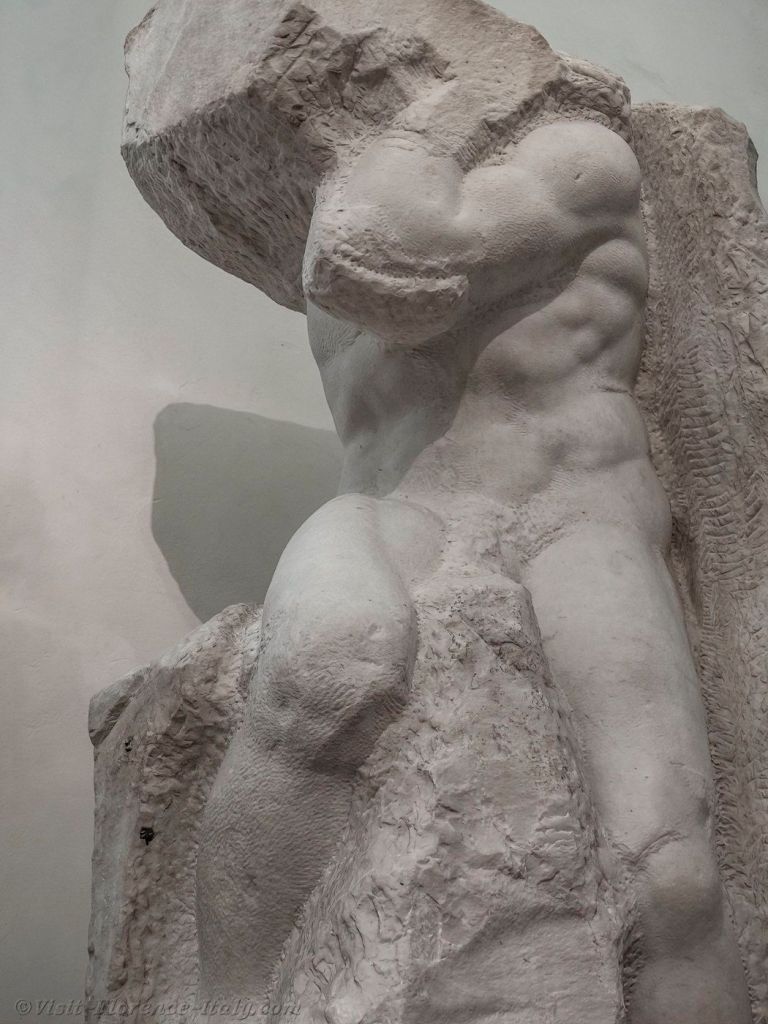
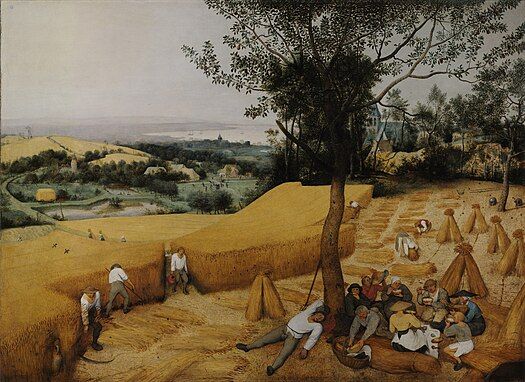



 Make Beautiful Choices