I don’t know about you, but my biggest limitation is time. I wanted to say “skill,” but the limiting factor in skill is probably time, too. I’m the most skilled at the things I’ve spent the most time on. If I want to get better at the things I really want to be better at so I can be more productive, so I can contribute in a more meaningful way to my environment and the people I care about, that will take time. And, that subject carries a certain weight to it because of misuses of time in the past.
Maybe you can relate.
But how I spend my time is also a function of who I am, or at least who I believe myself to be. I look at the world the way that I do because of what I believe, how I feel, what I want, what happiness and success look like in my mind, where I think my suffering and limitations come from, and so on.
Because of these aspects of my identity, I spend my time doing certain things and not others. I hold myself to a certain standard, execute my tasks with a certain level of quality, and express a specific worldview through my work, because of who I am in a fundamental sense.
Therefore, if my ability to utilize my time is going to change in positive ways, my ideas about who I am have to change first. This is why I read books, why I write articles like this, and also why I habituate certain behaviors like weightlifting and meditation: these all change my concept of who I am in positive ways.
Becoming more confident in my mind, body, and emotional state makes me a more generous, tolerant, curious, and helpful person in general. Because I know I have a strong foundation within me, I take on more of what’s difficult, uncertain, and otherwise uncomfortable, and that makes my life and the lives of those around me better, plain and simple.
I hope that, as you’re reading this, you’re thinking of the ways in which you can relate to what I’m saying. Maybe you feel great about what you’re doing, but, if you’re honest, there’s probably some part of you that feels some embarrassment, some pangs of conscience, about the gap between where you are and what you’re doing about it on a daily basis.
Congratulations. That means you have an ideal. The ideal is the picture of who you wish you become, that guides everything you do, yet also renders everything you do insufficient. Insufficient in an eternal sense, not momentary.
My ideal includes smelling great, for example. Being a waste producing mammal is constantly at odds with that ideal, so my showers are sufficient in a temporary sense but no shower is sufficient in an absolute sense.
A pedantic example, to be sure, but it makes the point, and it also gives me a chance to say something else about insufficiency: it applies to the duration of the results created by my actions, not to my worth as an individual. Read that again. Just because I have to do certain things over and over again, does not mean there’s something wrong with me or wrong with the world. Repetitive action is the name of the game. It’s where results come from, where your track record comes from, and ultimately where your destiny comes from. It’s written in what you do over and over: who you are is how you’ve spent your time.
We are now ready to read and understand chapter 6 of the Tao Te Ching. This chapter is so mysterious and opaque in its wording that many of you will have a hard time understanding what it means and what it has to do with many of the ideas I’ve been discussing up till now.
Let’s start by reading through it once. Then we can begin decoding it.
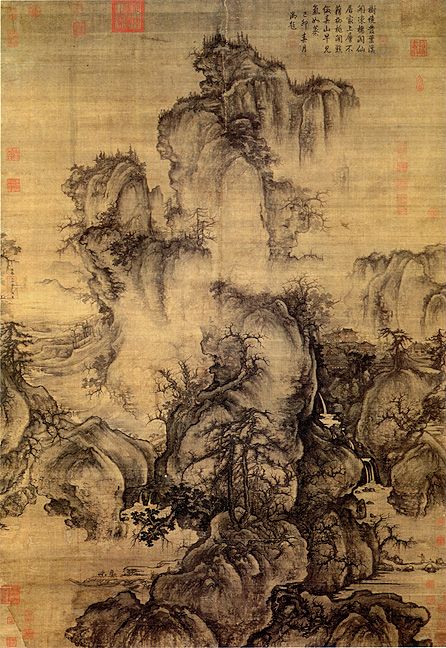
Six
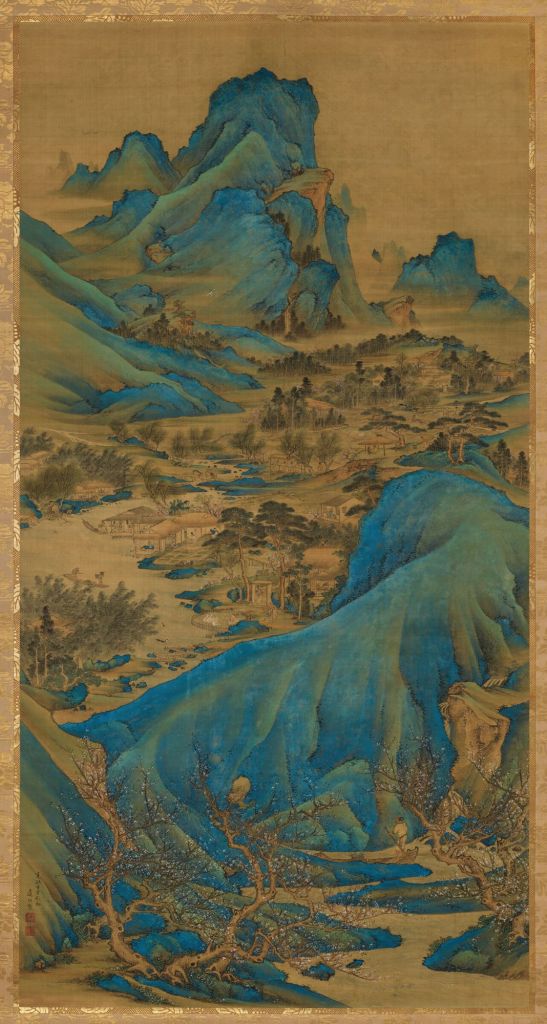
The valley spirit never dies;
It is the woman, primal mother.
Her gateway is the root of heaven and earth.
It is like a veil barely seen.
Use it; it will never fail.
Because of the brevity of this chapter, and the fact that it represents a singular idea, you can bring the whole thing into focus at once, like a polaroid, rather than progress line by line.
Whatever the valley spirit is, it never dies, and it never fails. We are told that it is “the woman, primal mother.” So, not merely “feminine” but maternal: the biological, material underpinnings of what is abstractly “feminine” (don’t worry, I’ll explain what I mean by this soon enough). This is about womanhood itself, not just the traits or proclivities of women.
Let’s clarify the awkward part now: when we read the words “her gateway,” yes, that means what you think it means. And, it is “the root of heaven and earth” – everything, even the world itself, issues from this “gateway.”
It must be said that nothing profound has yet been said. The lush valley, the lowest point to which all resources flow, is animated by the same spirit that animates women, womanhood, and everything entailed within and implied by the term “female.” The will to bring life into the world, and the unconscious mechanisms (pardon me) by which it is done.
What gives this all-too-familiar concept mystery, gravity, and even urgency are the last two lines:
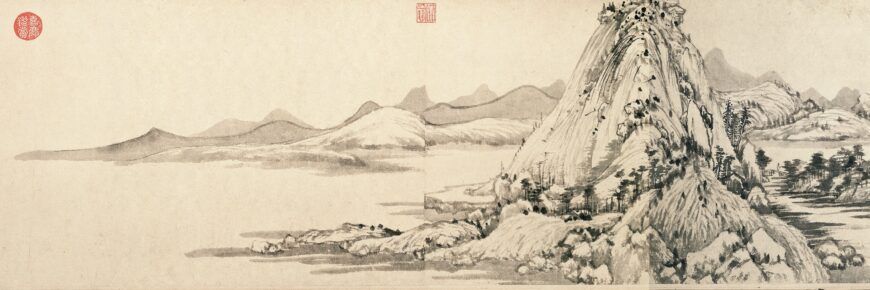
It is like a veil barely seen.
Use it; it will never fail.
This changes everything: he’s not just telling you to recognize and appreciate that all life is made possible by women (which you ought to do, and let this be a reminder) – he’s telling you to “use it.” To use the valley spirit.
Let’s rearrange a few words to see if the meaning is clearer, or at least if a clearer path to analysis emerges:
The valley spirit is like a veil: use it and succeed.
Let’s be a bit unsophisticated and say that yes, I want to succeed, and I assume that you do, too.
Good. The surest way to success (“it will never fail”) is in adapting the nature of motherhood into everything you do.
We’re almost there. We must now make sense of this word “veil.”
I think that when you properly integrate the “primal mother” into your consciousness and your methods, the results are subtle. Barely seen. Not advertised with a banner, not proclaimed by imbecilic slogans, but visible only to the most perceptive.
We can now say what “this” is and why it unfailingly produces desirable outcomes:
The power to intelligently use the present to create the future. The power to balance being with becoming. We are what we are today, but tomorrow is on the way. Tomorrow will be today soon enough. And what is tomorrow? Tomorrow only means death: the advance of time means nothing but the shrinking of the time we have left. In Sanskrit, for example, Kala means both death and time. Another name for Shiva, the Hindu God of destruction and transformation? Mahakaal: The Great Time.
Time is entropy. Deterioration. The only countervailing force against entropy is creativity. In biological terms, we reproduce so that a new generation survives after the previous dies (if you think this is too obvious to spend time discussing, just take a look at the birth rates in countries where people supposedly “know better”).
In daily life, and on a more prosaic scale than, say, the intergenerational continuity of humanity, the method is this: use a portion of today to reap the harvest of yesterday (enjoying your life), and a portion to plant the seeds of tomorrow (self denial, discipline, deliberate practice, learning, and preparation).
“Time” might be an abstraction, because you can’t see it, only its effects, and plenty of people seem to be utterly in denial about that, but a helpless infant is about as real as it gets. Who is your future self? The infant called “today.”
What is it, then, that will never fail if you use it? Again, the conscious adoption of the role of mother: the future comes into the world through me. I am the intelligence that mediates between the demands of the present, the limitations and opportunities created by the past, and the anticipation of the future.
I use my knowledge,
my instincts,
my hopes,
my imagination,
my love,
my care and attention,
my time,
my physical presence,
and my will,
to overcome the stultifying optionality
of the borderless now
and drive it toward the future
with decisive actions.
I give it direction.
My purpose is to endow everything around me, everything within reach, with purpose.
If I am to live well, I must behave as the primal mother that brings an idea from embryonic murmurs to birth in material form to adolescent awkwardness to confident enthusiasm and, eventually, maturity and mastery.
Why a mother, and not a father? Because I bring it out of me. Its all-but-formless state is present within me, as an aspiration, as a calling, as an intuitive sense – a mere thought or feeling.
And I begin to cherish it, nurture it, and acquire a profound affection for it. It’s mine. It came from within me, and is deeply connected to me. But, if I put enough energy into it, the right way, it will eventually belong to itself, to others, even the world.
After a long hiatus I dreamed of making music again. I would sit in the park and noodle around, obsessively creating songs or simply musical fragments on the guitar.
A year later I found a drummer who liked what I was doing.
A year after that we started renting a studio, and quickly found a bass player and a pianist.
A year after that, we have twenty songs, performances lined up, recording dates lined up, photoshoots lined up, follow up meetings with graphic designers lined up, people creating wiki pages for album production workflows for us.
I was once the only thing keeping this idea alive, and now it is supported by a small community. It has reality: dimension beyond what I can or could imagine because it exists outside my mind, influencing and receiving influence from external factors that grow in number by the day.
A similar thing is happening with my writing, and in areas of my life that aren’t public: the present is spent in such a way that the future is endowed with the greatest dignity. I love it. I care for it. I fight for it, luxuriate in it, negotiate with it, embark on the adventure of my life with it, but it is not truly mine, not truly for me: what it is is the means by which I might sacrifice myself, rather than squander myself.
Why does this way of living never fail? Because it automatically organizes your life correctly. How about that? To be a mother is to bring out from within yourself that which would replace you. How much more responsibility can you take for the impermanence of life than this? What could represent a more complete acceptance of the facts than this? Life deserves to go on, and it deserves a chance to become better than it is today. Others deserve to start at the point I could not exceed.
Those who are better than me, more deserving than me, the future beneficiaries of a world I will never know and which could not be realized were it to make room for the bits of the past that cannot be extricated from me – they are within me, and it is my duty to endow them with reality, with strength, with the best of what I have, and, eventually, with independence and agency.
All of this is implicit and inseparable from womanhood, from motherhood. Tamper with them at your peril. Embrace them, and thrive.
Thank you for reading. Talk to you soon.
-Jas
Looking for more?
 Make Beautiful Choices