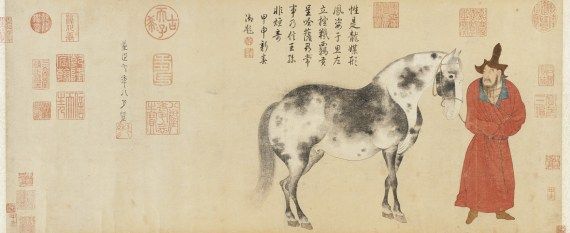
Part 1: Mortality
When I was a small child, I was wildly imaginative (were you the same way?). I would draw, play with toys, or simply project my imaginings onto the sky while gazing up at clouds, or into the cityscapes visible through car windows as my mom or dad drove me and my brother around town.
Because I was raised by and around kind people who understood the needs of children, I don’t recall anybody ever interjecting “that’s not real!” as a way of rudely shattering the fantasy. I was free to indulge my imagination in its various aspects, knowingly moving away from passive observation of reality and toward willful embellishments.
Now, I’m no psychologist, but I think kids can easily return to objective reality when their reality feels safe. I wasn’t running away, but simply at play. Having fun. My mind might have been a hard act to follow, but my “real life” was filled with gentle people who loved and encouraged me. And, I would be remiss if I didn’t at least acknowledge my undying gratitude for that now.
It’s when reality becomes unstomachable, however, that fantasy slowly becomes a surrogate. A step parent. A delusion. Permanent, or at least the subject of an attempt at permanence.
But delusion is more widespread than anyone would like to think, touching almost all of us in some way.
How can I say that?
Because I can say that there are major aspects of reality that people have not come to accept, are not even on their way to accepting, and maintain their distance from them with the daily use of fantasy.
I’m talking of course about the reality of death. The impermanence of all life, and the utter insignificance of individuals and even entire species of living things against the backdrop of mountains and oceans, to say nothing of the birth and death of entire stars, planets, and moons.
The easy thing to do, what I imagine most of us do in some way, is meet all that with hand waiving – how can I possibly wrap my mind around all that? Why should I concern myself with it? It just makes me depressed (alternatively, with dissociative awe).
Well, is it any different to ask why a powerless child should face the reality that his or her parents hate each other and probably won’t be married much longer?
We can look at all kinds of ugly or disempowering realities and recognize that individuals fare best when they face facts, and take back their lives from the paralysis so easily induced by what is often called fate.
A compassionate and caring person can easily recognize that it may take years for a person in a tough spot to gather the strength, maturity, and will to make sense of their life, but that something critical has been missed if this work is never undertaken.
And so, the right thing to do, I hope you can agree, is to apply the same reasoning to the facts of life and death themselves. But, not in a grand sense: it must be completely personal, completely intimate. My one short life, my ultimate insignificance, my inevitable death.
Even typing these words now is difficult!
Even sitting here on a sunny afternoon idly typing my thoughts into a doc, I shudder at the thought and look for a way out – a way out of even saying it with my thumbs to the screen of a phone!
When he saw the body of his slain companion, Gilgamesh the great King of Uruk said, unforgettably,
Must I be like that? Must I die, too?
Yes. Yes.
And once this reality has been accepted (a subject far too big for not just a weekly newsletter but for a writer of my meager stature), a degree of make believe comes, at last, to an end.
The same way I no longer imagine Wolverine leaping out from behind a copymat as my mom drives me past it on the way home from school, I can no longer imagine, I can feel the illusions melting away as I reconcile myself to reality.
Rather than be caught between passive observation and active hallucination, observation goads to action.
What sorts of behaviors come to and, and what take their place, as reality takes the place of fantasy?
We are now ready to read chapter 7 of the Tao Te Ching, now ready to consider the answer offered by an ancient Chinese sage named Lao Tzu. I’m confident you will soon see why.
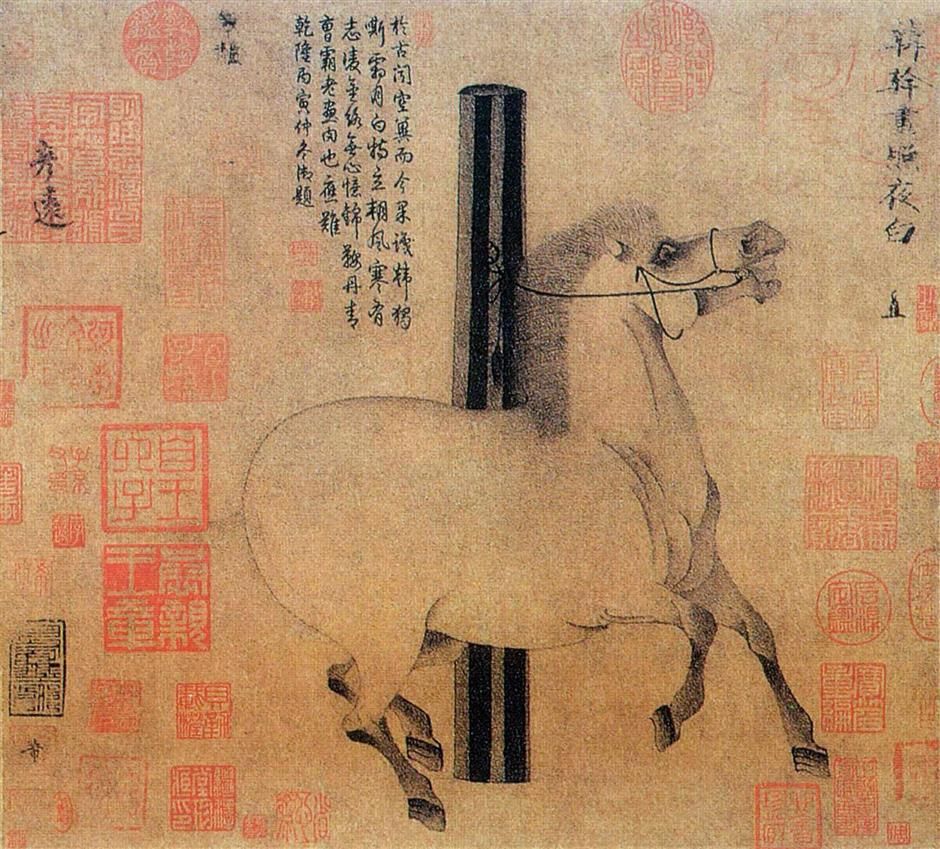
Part 2: Eternal Creation, Ephemeral Creatures
SEVEN
Heaven and earth last forever.
Why do heaven and earth last forever?
They are unborn,
So ever living.
The sage stays behind, thus he is ahead.
He is detached, thus at one with all.
Through selfless action, he attains fulfillment.
We could begin by breaking up the short chapter in 2 ideas: the first 4 lines indirectly remind us of our mortality, the second 3 lines tell us how a wise person would make use of this information.
Regarding the first 3 lines, there is more to say than you might think. By all means, stop to contemplate the natural world, the world beyond human sociopolitical affairs, and be moved to awe. Let it inspire you, relax you, and restore you. The world is vast and beautiful – don’t miss out on even brief and frequent moments of observation: it’s downright good for you.
But I would be participating in something quite dishonest to leave it at that – if I was to simply join the bandwagon of nature worship.
To experience nature as a kind of companion – wise, gentle, and transcending – is the greatest luxury and privilege imaginable. A luxury afforded to you and me solely by the achievements and industry of humankind.
Nature is not “calm,” “peaceful,” and “rejuvenating” to human populations without ways of dealing with food, shelter, disease, injury, and waste management, just to name a few things.
Only when we have something called civilization does nature become, by contrast, quieter, more meaningful, and somehow instructive.
If nature is static, fixed, and humanity is what changes, our perspective on nature is a necessary consequence of where we’re at with ourselves at this moment – at this phase in our evolution.
My point is simply this: we, through a combination of time, discovery, striving, ingenuity, dumb luck, perseverance, imagination, optimism, and obsession, have raised ourselves up to a point where nature is no longer an enemy but a friend, a teacher, a resource, and a reminder of what matters.
With that last paragraph in mind, do not denigrate yourself and humanity as a whole when you admire nature: your capacity for admiration is, for precisely the reasons I just explained, evidence of something legitimately admirable on your part.
What you should feel, rather than inferiority, is simply distinction. Difference. Contrast.
Let me now list many of the differences that will inevitably sound denigrating but are simply truths, truths that are inescapable when comparing ourselves to nature.
Nature is eternal, while you are ephemeral. Nature is overpowering and irresistible while you are weak and inconsequential. Nature is hard and unfeeling while you are soft and sensitive. Nature is steadfast while you are capricious and whimsical.
But do not stop there: nature is seemingly blind and automatic while you gaze in contemplation and weigh your options. Nature is ruthless while you have mercy, feel pity, and offer second chances. Nature consumes the weak while you cherish and preserve what would be obliterated without your interventions. Nature simply is, while you yearn for what you might become. Nature merely reproduces, while you fall in love. Nature kills, and so do you, but you alone bury and grieve and remember the dead. You may even call nature a god, but you alone seek and worship your god.
In many ways, you are nothing like the world. And by allowing yourself to perceive these differences without feelings of self recrimination, you can grow wise.
And this plays into what I want to say about the second half – what to do with a life that is by definition doomed to death.
Can I be a bit obvious, maybe even didactic? May I even risk being redundant? The point of comparison is to highlight differences. And, why highlight differences? One reason would be to better understand your own situation and needs. To make better sense of your life by understanding what you are and what you’re not.
Part 3: A Sage Does Not Compete
What does the sage do differently from the rest of us, as a direct result of better understanding both nature and himself? We are told that
The sage stays behind, thus he is ahead.
What do you do when you realize you’re not running a race? You slow down. And why can it be said that life isn’t a race? Because it is a farce to compete with people who are about to be annihilated, only moments before or after your own annihilation.
The sage is ahead of those still running, because he has finished the race, or rather is finished with racing.
Now, a word about competitive activities. As long as they have meaning to you, continue them. Their meaning may evolve for you, also. You may be in a place where dullness and indolence have to be burned up in some passionate striving. You may have to prove yourself, to cultivate yourself, to become capable of the rigor necessary to best your betters. So be it. There is great beauty and dignity in contests of skill, in discipline and sacrifice, and even in the yearning for glory and the hatred of one’s opponents. There is of course great ugliness in it, too. But both are united by greatness.
But a sage is something more than a great man or woman. You cannot become great without a persistent drive to do so. You have to want it, even to need it.
A sage does not need it.
A sage may do great things, but the attention is always on the quality of the work, the care and thoroughness of the work. The attention is never on the fame, glory, or leverage that could be obtained by doing great things.
A sage is ahead of others because he is not in competition with anyone. This is not fluff: there is so much more that can be done when you don’t need credit, when you don’t even need to be seen doing it. Like someone who paints over graffiti while everyone else is asleep or quietly supports others to help them achieve their own goals, there is an entire world of accomplishment and virtue that opens up the moment you drop the requirement of putting everything on a scoreboard.
Someone without the need to compete and win can do thankless but necessary work without tiring, since the will to continue is not supplied in the form of recognition or encouragement.
For example, when I renewed my commitment to reading books, I began by setting a goal of X pages per day, to make sure I finished each book within 7-10 days. I quickly realized this was arbitrary, impossible, and meaningless.
The point was to understand the ideas in the books as completely as possible, not to finish as many books as possible. I wasn’t reading to read, I was reading to become more knowledgeable and cultivated. To deepen my thinking and understanding of the world. This was not about chasing the dopamine of task completion, but the slow burn of maturation.
At some point I slowed down to clarify my motives: what mattered was that I established and maintained a reading habit, not that I crossed some random finish line by a certain date.
It also didn’t matter if I pulled ahead of some other randomly selected person, either.
Truth be told, I don’t want to become the most knowledgeable person about any subject, because I would be nothing but disappointed to receive confirmation that there was truly nothing left to do or learn: “the barrenness of the fertile thing that can achieve no more.”
I would hate to be trapped in a world so petty and small that it could be conquered by me.
Now I eat information until I’m full, so to speak, and then I rest my brain. I take it in. I let the revelations soak into the soil and grow the garden of my mind. I let the same waters of knowledge erode the sand castles of imagination and whimsy. It feels contemplative and earnest, not shallow and forceful.
By settling into a natural place, I have nothing to keep up with, no whip at my back, only curiosity backed by commitment. This is sustainable, sane, and kind.
Part 4: A Sage Is Not An Addict
He is detached, thus at one with all.
Words like “detached,” or the term “non-attachment” can be quite tricky to interpret correctly. The temptation to make a bit of a straw man and say, for example, “oh, so we shouldn’t care about other people, have relationships, or feel sympathy and empathy and compassion,” or some version of this, is understandable. It’s understandable because it’s easy to look at things in a binary way: caring or uncaring.
And, that’s the first problem: conflating non-attachment with being uncaring. In reality, the unattached person is the most sincerely caring person you could ever encounter or, hopefully, become.
Why?
Let’s answer this by explaining what we mean by “attached” in this context. Side note, if you’re up on attachment theory and relationship psychology more broadly: unattached, non-attachment etc refers to something closer to “secure attachment style,” not “avoidant attachment.”
Attachment is an insecure clinging. An unhealthy preoccupation. An addiction. Yes, ultimately what I mean when I say “attached” is that a person is addicted to other people.
A sage is not an addict, but “one with all.” He is one with all precisely because he is not addicted to any.
To understand this short sentence, then, is to understand addiction broadly: when someone cannot function without the presence of something else, something that they do not truly need but upon which they have nonetheless become dependent. Addictions are things we would be better off without. Stronger and healthier and saner without. They are not legitimate needs, but closer to a symbiotic parasite: they do something for us, yes, but at a cost only a fool would knowingly pay.
The key word is “knowingly.” All addictions hide behind not only the benefits they procure but their mind numbing and deluding effects as well. Once a path has been walked with the help of the crutch or the cane of an addictive substance, the craving for it now arises in tandem with difficulties. All paths become unthinkably difficult without the crutch of this companion. In time, people forget what it feels like to stand tall on their own.
People can be addicted to other people, too: unable to stand upright without the supply of their approval, their values, their layers of identity in the form of ethnicity, culture, religion, politics, class, education, and profession.
In a very real way, people turn down the frightening journey of discovering their true selves for the comfort of a well defined place in the crowd, no matter how much they tell themselves they’re different, no matter how far to the margin of whatever completely mainstream group they find themselves.
I should clarify something: of course we are social creatures and live in groups. Of course it is perfectly natural that the group would convey culture to the individual on every level.
This is, undeniably, normal, natural, and healthy. But the group is simply an aggregate of individuals.
No matter how many questions of how to live life appear to be answered for you by society, you still have to act out these values all by yourself from one moment to the next, from one decision to the next.
In other words, yes the supply of “group think” is everywhere, but until you reduce your own demand for it, you are attached to it. Unduly supported it. Addicted to it. And as long as this is the case, there will be much within you that is both weak and unprocessed. And beyond that, it will be almost invisible to you.
This is something I have experience with: the need to labor toward self discovery.
I had to sort out for myself the difference between what I wanted and what I thought “they” would approve of.
Did I actually dislike somebody or was I merely uncomfortable or insecure around them?
Was there something in them I found intolerable, or did I see the very thing that I harbored within myself that I dare not reveal?
Was my rejection of others no different from driving out of the village scapegoat in ancient times, the killing of a sacrificial victim made to stand in for the sins of the collective?
Did I want to be close to others, or did I just want to relieve the discomfort of loneliness?
Was I there to give, or to get?
In this last question, the addictive nature should be seen clearly. In all of these little aphorisms, what is shown in selfishness, consumerism, self gratification. Attachment. There is no real interest in other people here at all.
To become a sage, at least to become more sage like than before, means to become interested in others the way someone is interested in a garden from which they cannot eat.
A sage stands tall in his or her individuality, not as an act of rebellion against the group, but as someone who has developed completely.
If I know who I am, and I’m not taking my cues from others, then the diversity of perspectives and temperaments out there is not confusing or maddening but interesting. I can see my own humanity mirrored in others. I can be happy for their happiness, their relationships, their stable lives, their accomplishments, their intelligence, everything that makes them exceptional, or average, or even agitated and dysfunctional. I can see it all and see a human just like me but simply tilted a few degrees in another direction.
When I suffered from addictions, my life shrunk to the size of the addiction: my world was a place where I purchased, consumed, experienced the world through the lens of and suffered on account of the substances.
Little by little they eclipsed everything: responsibilities, relationships, interests, ideas, and even self preservation.
My life did nothing but continuously shrink under their influence: even since I broke my attachment to them, and completely removed them, my life has done nothing but expand.
Would I say that I am now “one with all?”
Goodness, no. Run from the person who says, “I am one with all.”
Deny him parole. Don’t join his sex cult.
What I would say is I’m free to own my perspectival reality: right in some ways, wrong in others, with some ever widening level of wiggle room to become more right and less wrong over time.
Because I take responsibility for the direction of my journey and the spirit in which I undertake it, and because I know how much determination, earnestness, and maturity that takes (because I had to cultivate all three, and was born with none of them), I mostly leave others in peace. I leave them to the management of their own lives, for better or worse.
Nobody else can live my life for me. Why would I be able to live someone else’s for them?
You probably noticed I said I “mostly leave others in peace.” Mostly? Because making no interventions at all actually is the same thing as being totally uncaring and totally cowardly.
You see someone walking into the street with their headphones on, buried in their phone, and a car is coming – do you leave them in peace because you are nobody to interfere?
I hope not.
All of my improvements were, in some way, responses to the world showing me that I wasn’t measuring up.
Sometimes it did so gently, but mostly it was painful. I would not have perceived the need for change were it to be painless. Thank God, then, for pain.
I’m just as much a part of other people’s lives as they are of mine – it would be irrational to think others don’t need corrective feedback even though I do, and I benefit from it.
For most people, it is a mixture of attachment and cowardice that hides behind their “live and let live” slogans. They are filled with judgments, frustrations, and compromised standards and boundaries, but they simply do not know how to confront problems in their relationships, or excise people they find distasteful, disagreeable, or immoral.
They don’t know how to say no. They think being a good friend means saying yes, putting your feelings aside, and capitulating to the needs of the squeakiest wheel.
“One with all” means I do not fear you. I don’t live in fear of you disagreeing with or disliking or misunderstanding me or something I say or do.
I’m prepared both to defend a position and adjust when I see compelling evidence that an error was committed. It’s not that I’m so sure that I’m right – I’m willing to jump in, engage fully, and discover where and how I am wrong. Specifically. Sitting on the sidelines, afraid of the disapproval of others, you may know something is missing, but no one has found and integrated that missing something while merely looking on as a spectator.
Part 5: A Sage Is Not Selfish
Through selfless action, he attains fulfillment.
Weak, degenerative people seek fulfillment through self gratification (addictions in various forms).
Strong, healthy people attain fulfillment by contributing to the welfare of others. What they do for themselves is maintain themselves.
Life grows in scope, in value, in happiness, in meaning, by growing one’s capacity to contribute, and by repeatedly delivering those contributions into the lives of others.
Contributing to the welfare of others can take many forms – I will make no effort to enumerate even a partial list now. As a rule, however, it cannot damage or diminish another person in any way. Meaning, if you contribute by becoming a crutch that they lean on, because this makes you feel useful, it is not useful to them, because it is making them weak and dependent.
In my experience, being a good person means doing a whole lot of what looks like nothing. Minding your own business, but minding it well. Becoming meticulous, excellent, restrained, fastidious and frugal. There is more to say about human excellence elsewhere, but I want to focus on selfless action for the time being.
It is not going around and trying to be helpful. There is no “going around” at all. There is, in fact, nothing driving you to go do this or that at all – there is the perception of situations and events, the instinctive awareness of what is called for in that moment, and the fluid transition from observation to action.
The lack of self seeking is what makes it selfless: not some very flattering campaign of bringing flowers to the sick and kissing babies and letting people know “you’re here for them.”
Less letting people know, and more being there.
Less jumping in, and more watching and waiting.
Letting others find their footing, find their words, and find their way, but quietly keeping an eye on it all, so as not to miss the moment of action when action is called for.
It’s called for less often than you probably think, unless this person we’re talking about is your own infant child.
If you want to do nice things for others because you’re temperamentally inclined to do so, you shouldn’t be looking for permission from this newsletter: for God’s sake go and be good. But do it because it fulfills your nature, which is actually the best bit of all the good it does for you: to be you, through and through, and no one else.
That leads me to another important point.
Do good because you’re a do-gooder.
Do good because you wish to learn how to do good.
Do good because you need to know you’re capable of doing more than bad.
Do good because you want to find out whether or not it will make you happier.
Do good, actually, because you understand that you expect it of yourself and your own approval or disapproval is the single most important thing in your life.
But do not do good to make others like you, respect you, sleep with you, admire you, forgive you, hire you, or choose you over someone else.
It’s the “so that they will” that has to go. The neediness. The addictive craving. The manipulative, covert bartering. The resentment when they don’t do what you want, even though you bent over backwards. The contemptible, sniveling longing for recognition. This is trash. Trash.
The proper understanding of selfless action is that it is the fruit born of first ending your competitive relationship with others and then ending your unhealthy attachments to others.
How can you help people when you think their success is a threat to yours? How can you truly come to understand others, and their unique needs, when you derive your sense of self from their example?
When you find and lay claim to the path that is only available to you, competition ends.
When you cast off all forms of crutches and develop the strength to stand in your own nuanced and irreducibly complex individuality, attachments end, too.
Now you can see what others need, because they are struggling along a path you yourself have walked successfully.
You can see what would be helpful, what would be enabling, what would be superficially pleasant but ultimately irrelevant – you see a great deal, and you see it clearly: you are now, legitimately, a force for good in the world.
Part 6: Conclusion
We covered so much today, and I learned a great deal in the process of finding the words for this article. I looked at the lines of Chapter 7 of the Tao Te Ching and I saw a great task before me: show everyone the through line that connects our mortality, the grandeur of nature, and the three characteristics of a sagely life laid out here – life beyond competition, beyond attachments, and beyond self interest.
The simple fact that our time is limited is enough to justify the undertaking of sorting this all out – how ought we to feel about our place in the world? How ought we relate to one another? What should we seek in the actions we take? What will make the difference between a life spent wisely and a life wasted?
I can now say this much: a life of denial, insecurity, desperate clinging, and petty one-upmanship just is certainly the latter. The former is the path of strength, dignity, and respect. Out of these three grow the virtues of acceptance, caring, and contribution.
I hope you will reflect on what we have discussed here today, and I wish you the courage to do so.
Thank you for reading. Talk to you soon.
-Jas
Looking for more?
My recent interview with Atlantic Bridge
I look forward to hearing from you!
 Make Beautiful Choices