Today, I want to make a case for the reluctant hero. The person who doesn’t seek glory, but is nonetheless dragged into a conflict by circumstance. This is someone who wasn’t looking to get involved, but whose conscience will not permit him or her to walk away.
In other words, a person motivated by principle, by a sense of duty, rather than their passions.
I’d like to clarify exactly what I mean by this by first making a distinction:
This is not exactly the same thing Kant meant by saying an action has to go against inclination for it to have moral worth.
That statement, found in his Groundwork for the Metaphysics of Morals, meant that moral worth requires conscience triumph over instincts to the contrary, in the same way that bravery requires, by definition, the overcoming of fear.
When you overcome your prejudices to give someone your full attention and a fair shot,
When you hold yourself back from temptation, knowing you’d likely get away with it,
When you stay up late or get up early to take care of something important, fighting the urge to blow it off all the while –
These are examples of conscience winning over inclination: acts of moral worth.
And what I’m going to advocate for today is something five degrees off from that:
Doing something despite having a lack of interest in the outcome.
Maybe a better term for what I’m talking about isn’t actually “the reluctant hero” but the disinterested hero.
If you’re wondering why I didn’t just say that in the beginning, some ideas are discussed so rarely that you need to explain what you don’t mean before you can say what you do mean.
The concept of the disinterested hero is summarized perfectly in chapter 68 of the Tao Te Ching, the foundational text of Taoism, a school of Chinese philosophy that started roughly 2500 years ago.
I’ll reprint Gia-Fu Feng’s iconic 1972 translation below, and then proceed to expound upon it –
You could very well just take the 55 words of this chapter and meditate upon them daily or hourly for a year or so, and I’m sure you would come up with all kinds of deep insights. I’m sure because that’s what I did, and I want to tell you what came to mind for me, and how I applied it to my life.
SIXTY-EIGHT
A good soldier is not violent. A good fighter is not angry. A good winner is not vengeful. A good employer is humble. This is known as the Virtue of not striving. This is known as the ability to deal with people. This since ancient times has been known as the ultimate unity with heaven.
“The virtue of not striving.”
That sums it up, and yet I know it only raises more questions than it answers. As a first step in answering those obvious questions, read it again, and see how quickly your mind starts to clear up like a stuffy room once the windows are open.
What do these repetitive stanzas reduce to?
A good person is unemotional.
The skills of warfare do not require or benefit from the anger of the soldier.
The fighter is not better at fighting because he is angry with his opponent.
The person who triumphs is not enhanced by feelings of antipathy toward the person who lost.
The person who is in charge does not become a better boss by gloating over his or her authority.
Striving, then, is equated with the extra emotions: angry, violent, vengeful, proud or arrogant.
Lao Tzu says there is a virtue in not striving, a virtue in lacking the animating force of intense emotions.
In the very next line, he says something that sheds some light on exactly what he means by all this:
This is known as the ability to deal with people.
Again, his answers are puzzling, but they are answers.
In the absence of striving, in the absence of strong emotions that take us over, we have the ability to deal with people.
Well, I have to say I find that very interesting. What is implied here is that emotions make us forget that we are dealing with other humans. Emotions blind us by making us unthinking, lacking in sympathy, and myopic.
Let’s keep paraphrasing the lines until they become even less cryptic:
A good soldier/fighter/winner/landlord has the ability to deal with people.
Are you shocked yet? Because this is nothing short of shocking if you have truly grasped it.
Being good is less about having to be better than other people, and more about being good with people. With them! This can only mean that these sorts of strong emotions actually disconnect you from others, and turn you into someone trying to get something from others.
The angry soldier needs to kill the enemy, the violent fighter is trying to do as much damage to the other as he can, and the vengeful winner doesn’t want to win as much as he wants the other to lose, and the arrogant employer loves that his employees are dependent on him for their livelihoods.
All of these asymmetrical dynamics are actually quite unfortunate: wars, fights, stressful contests of skill, and the mutual interdependence of the fortunate and the unfortunate.
But for people animated by these violent emotions, they relish in the destruction, denigration, and subordination of the lesser, the loser, the weaker, the poorer of the two parties.
This is not virtue, because this is not how you deal with people.
The implication here is that, yes, life drags us into conflicts all the time, but something is wrong with you if you are happy about that. You have your duty to produce results, and that very fact stratifies the world into winners and losers, masters and slaves, those who eat and those who are eaten.
But are we required to be sad about it? Nothing to that effect is said here. It is enough to emphasize the fact that an enthusiasm for life’s inevitable moments of destruction is pathological and by definition antisocial, and that something of profound importance is lost when you are so excitable by the prospect of gain at another’s expense.
The ultimate unity with heaven is what comes to those who do what must be done, to the best of their ability, because anything that must be done must be done as well as possible, if it truly must be done at all. Unity with heaven is what you get when you understand that the best you can do is not the most you can do, the farthest you can go.
To do the best you can also means you must not do any more than is necessary: this is known as the virtue of not striving. It goes without saying that an angry, violent, vengeful person does not know when to stop, and this requires no elaboration on my part at all.
How did I apply this to my life?
To put it simply, the 68th chapter of Tao Te Ching taught me to focus on the person I’m dealing with, instead of trying to be true to the emotions aroused in me by the situation at hand.
I never questioned the emotions, and I never thought seriously about what it was I was trying to accomplish: I would capitulate to my feelings, thinking that this was “authenticity,” and that there was something noble in refusing to betray my feelings for the sake of superficial social conventions.
What I gradually came to understand is that my intense emotions were born of immaturity, even petulance, not “authenticity.” I saw that I was dramatizing my own emotions because I lacked the ability to deal with people. The moment I began to focus on creating the best possible outcome between myself and the other party, and therefore began to cultivate the skill of dealing with people, the emotions began to disappear altogether.
I still have emotions, of course, but they are speaking in their inside voices, so to speak – they are not shouting, feigning urgency, and attempting to hijack the conversation. They inform, rather than insist, because I no longer believe that emotions excuse anything, and because I now understand that emotions can function as a smokescreen that conceal the inability or simply the refusal to analyze.
Does that make me, as I implied before, disinterested?
I think that when you start to see your life as an aggregate of relationships, there is both so much more to be done and almost nothing to react to: you are action itself, and nothing is happening to you as much as you are the activity that is happening, the conduit through which moments of contact and exchange occur.
I think the examples of soldiers, fighters, winners, and employers are used to make the point clearly: often enough, we are called upon to enter into dynamics where not everyone can come out feeling like the winner, and there needn’t be any emotion involved at all.
In that moment, there is something that needs to be done. Our purpose, yours and mine, is to be calm and clear enough to perceive it, participate in it, and fulfill it.
The virtue of not striving means the virtue of not being on a crusade – some goal above and beyond the actual humans you share your life with. There simply is no life without others, in the most basic sense.
For this reason, nothing that comes between you and the continuity of your relationships with others can be called virtue: the only way forward is together, and this must inform and temper the moments when, yes, we must fight and militate against and dominate each other.
I cannot stress enough that these asymmetrical dynamics cannot be avoided, and, when I say that a communitarian ethos should temper our behaviors, I mean they should cleanse us of stupid, unthinking brutishness.
In no way am I saying, as a general principle, to become a pushover, without a spine and without boundaries. I am actually saying something quite opposite: become perfectly capable of delivering on what is demanded by life, unclouded by trite ideas of both pacifism and heroism.
What is there to strive for? Life has placed an entire life, an entire world, right in front of you: simply fulfill the roles you have been granted. This, since ancient times, is known as the ultimate unity with heaven.
Deep down, everyone is looking for the fountain of youth.
Or, said another way, everyone is looking for a way to make death less scary.
Whether you’re
taking care of your health to ensure that you age gracefully,
hoping your name will live on by meaningfully contributing to your professional field, community, or family,
or cultivating faith in reincarnation or an eternal reward in heaven for a life well lived
We are all, in our own way, taking steps to minimize the negating power of death. If our bodies must die, let it not happen any sooner or more ungracefully than necessary. Let us be survived by successful and happy children. Most of all, let us do something with our lives that makes them worth the time, the toil, and their ultimate brevity.
If you have not yet awoken to this concern, trust me, you will: from antiquity to today, it runs through our culture at every level.
Is there a solution to this age-old problem?
Yes and no.
As I’ve stated in other blogs, wisdom and peace of mind have less to do with making problems go away and more to do with rising above them through understanding.
To quote Ludwig Wittgenstein, “the solution to the problem of life appears as the vanishing of the problem” (Tractatus Logico-Philosophicus, 6.521).
The world doesn’t necessarily change, but your attitude about it can. You can look at the same world and no longer see a problem.
The sorts of changes that bring about significant positive improvements, then, are not circumstantial, but perspectival.
My intent for this and similar articles is to facilitate perspectival change,
And I do so by presenting teaser trailers, so to speak, for what life might look like if seen through wiser eyes.
This is how I changed my own perspective and thereby my own life: I read, reread, and eventually memorized (yes, really) an English translation of the Tao Te Ching, or “The Book Of The Way,” written by Lao Tzu some twenty five hundred years ago in ancient China.
Today, I’d like to share my thoughts on the fifty second of its eighty one chapters, which is the one and only chapter where we are told precisely, if obliquely, how the fear of death is to be overcome.
I’ll reproduce the entire chapter, and then go through it one idea at a time, so we might make a small but irrevocable step in the direction of wisdom, and away from avoidable suffering.
Chapter Fifty Two
The beginning of the universe Is the mother of all things. Knowing the mother, one also knows the sons. Knowing the sons, yet remaining in touch with the mother, Brings freedom from the fear of death.
Keep your mouth shut, Guard the senses, And life is ever full. Open your mouth, Always be busy, And life is beyond hope.
Seeing the small is insight; Yielding to force is strength. Using the outer light, return to insight, And in this way be saved from harm. This is learning constancy.
You may have noticed one of the strangest lines in all literature;
“Knowing the sons, yet remaining in touch with the mother/brings freedom from the fear of death.”
No, talking about serious or deep topics does not mean we are forbidden from acknowledging that we are perplexed, or that we find something opaque, unclear, or even ridiculous.
A serious conversation demands that we be open, and say what we really think: that is the beginning of seriousness, because it cannot be a performance. And I am thus demanded to say that when I first read that line, I found it utterly absurd. I granted it some hidden, deeper meaning, on principle, but decided it was something I was going to have to come back to. It simply made no sense, sounded silly, and did not inspire serious reflection.
Not at first.
Let’s walk through it together slowly, and I think you’ll come to see what I see now: the tip of a sort of iceberg; a mere thread that unravels an enormous knot if tugged at tenaciously.
The beginning of the universe Is the mother of all things
This seems straightforward enough. He is simply defining terms: the ultimate beginning is here called “the mother.”
Knowing the mother, one also knows the sons.
If the mother is the beginning of the universe, then who are sons? The universe, by necessity. He frames it as an obvious consequence: knowing the mother, one also knows the sons. Of course! In older, traditional societies, you didn’t know someone in isolation. You knew them as part of a lineage: if you knew a mother, you knew her children.
The familiar thing, the thing that should be taken for granted, is used to make sense of the esoteric thing:
If you know the world, and of course you do, then you know the source, the beginning of all things, far better than you realize.
The meaning of this will soon become clear after we put the last piece in place:
Knowing the sons, yet remaining in touch with the mother, Brings freedom from the fear of death.
In light of the minimal decoding we’ve already done, we might rephrase this as
“Knowing both the present and the past removes the fear of the future.”
If this is true, why is it true?
Because the past is just a present moment that has already happened, and the future is a present that is yet to happen: besides their temporal arrangement, there is no difference between any of them, just like an old woman, a girl, and an infant daughter may all be the same person on different days.
What was it like in the very beginning? Just like this, but longer ago. What will it be like a long time from now? Again, just like this. Our lives are being lived now, but we didn’t exist in the past and will not exist in the future: the future in which we will be absent is no more dreadful than our absence in the past.
If this is still too abstract to resolve real feelings of existential anxiety, and I say that it is, then think back to a time in the past that you know you experienced, and yet no longer remember. Some random point in your childhood, like the daily events of your eleventh year.
They took place, you witnessed, experienced, and participated in them, and they presumably felt as real then as this moment does now, and yet it is lost from memory. Lost from memory, and yet a link in the chain of moments that led you here: your childhood self is the mother to your present day self, you might say.
When the final days come, then, they will seem as natural in their temporal context as today’s events do now: unique and special in some ways, perhaps, but unremarkable and banal in other, larger ways. Whatever is happening now is at the end of a long series of cause and effect relationships that are neither unknown nor mysterious, even if major details have been forgotten: it is actually all quite ordinary. As ordinary as the fact that you were once eleven must seem to you now.
Surely, then, you can bring yourself to admit that the thought of yourself a decade from now isn’t that hard to imagine. You were once eleven, and then twenty one, and then thirty one, yet forty one is unimaginable? Sixty one some terrifying specter? Hardly. Whatever you are doing now must eventually become as distant, as undeserving of recall, as whatever you were doing during your eleventh year,
And this should feel relieving.
We arrive at the deeper meaning, at least in my mind, of this passage:
The mother is the level of the general, and the sons are the level of detail.
What is the justification for this interpretation?
The beginning of the universe is surely something none of us has experienced, but the present moment is the only thing that anyone has experienced.
In exactly the same way, nobody has experienced anything in general terms. Only the specific can become an experience. And, yet, a sense of the general emerges after enough encounters with specifics. Knowing the sons, one also knows the mother.
Is there such a thing as the specific in logic? Absolutely not. All logic is general, by definition. So, while nobody has ever, by definition, experienced the general, or experienced logic as such, logic nonetheless works. Generalities do explain, because what is wisdom if not the generalized explanation that makes the particular bearable, while still being too vague to replace detailed behavioral prescriptions in the present, toward the particular?
This, then, is the real, or rather a further meaning of the couplet
Knowing the mother, yet remaining in touch with the sons Brings freedom from the fear of death.
It means that we have to operate at the level of the particular: life is to be lived, and it is a hands-on activity. The details matter. The timing matters. They will always matter, and nothing supersedes them. And yet, the inferred sense of life that we are here calling the generalized, is like a kind of divine cosmic mother that gives birth to and eventually receives all the tumultuous activity at the level of the specific.
The big picture, the conceptual frameworks, the insights into life contained in literature, poetry, art, theater, music, the lessons of history, and, most importantly, our own memory: these come to the aid of the person wholly immersed in the present. They are not an escape from, or an alternative to life in the here and now, but they both enrich its myopia with their vastness and blunt its conjoined urgency and futility with their evidence of undying continuity.
The fear of being brought to nothing, coming to naught, and living in vain, is something of which we can be readily and repeatedly disabused by simply reaching out to the stratum of the generalized, where both the remembered past and the inferred future live: the past and future both live with us in the present at the level of the general, and thus the inevitable demise at the level of the particular seems less consequential, and, on days of rare exaltation, even illusory.
Keep your mouth shut, Guard the senses, And life is ever full. Open your mouth, Always be busy, And life is beyond hope.
The meaning of these six lines, in isolation, is fairly straightforward and does not demand elaboration, except to say that a life of restraint, of observation and reflection, is an easier life to live than one of hot pursuit.
Be still, and both perceive and receive life’s fullness: it pours into you when your movements cease. One need not change drastically, but merely notice the reliable correspondence between the slowing of activity on the one hand and the deepening of experience on the other.
To connect it to what has gone before, then, I might add that the proper relationship between the specific and the general is what tempers the addictive craving for novel stimulus in the present. To generalize is to strip a thing of its novelty, and the wise use this strategically.
I can tell you that I’ve talked myself into many a good thing and out of many a bad thing by doing precisely this: extrapolating into the unseen future by applying generalized reasoning and logic when the specifics available in the moment were insufficient.
My last point leads us perfectly to the concluding passage:
Seeing the small is insight; Yielding to force is strength. Using the outer light, return to insight, And in this way be saved from harm. This is learning constancy.
The “outer light” is objective reality, the specific phenomenon happening now. Returning to insight, and being thereby “saved from harm” means returning to reflect on the repository of collected experience, or the general.
Using the language of the first stanza, we might say that, rather than fight with the sons, discuss the matter with the mother, “and in this way be saved from harm.”
Again, a modeling of the correct relationship between activity in the present and action informed by the generalized sense garnered from experience and reflection. The truisms, the patterns, the wisdom, the principles that exist only at the level of abstraction nonetheless steer us clear of danger as we navigate the particular.
When he says, in closing, that this is learning constancy, he means just what he says: that if we both participate in and observe life properly, we should only become steadier with time. We should expect to accumulate enough of the general to become ever more unphased by the particular, the culmination of which is to be unphased even by the termination of all particulars.
Welcome back. Today, I’m going to discuss the not-so-secret secret sauce that everybody needs, but very few can explain how to get:
Self confidence.
It opens doors. It makes you respectable and attractive. It picks you back up when you hit the ground. It gives you a forcefield against negative emotions.
I can remember when I didn’t have it, and all the ways I tried to compensate for that (they didn’t work).
I can remember what had to change before I could truly acquire it,
And I can see and appreciate all the ways in which I now live in a different world, living a different life, on account of finally having it.
The reason the confident and the unconfident person live in different worlds is because each sees the world differently:
Different perspectives cause different observations, Different observations cause different conclusions, Different conclusions cause different actions, And different actions cause different results.
This is why I’m here to lay out the 3 distinctions that separate confident people from unconfident people:
It really is mental. Well, it begins that way. When you start enacting the new understanding I’m about to lay out, you’ll soon find everything changes, not just your thoughts.
Distinction One: preparation, not faith
Oxford Languages defines “confidence” as “the feeling of belief that one can rely on someone or something; firm trust.”
To be self confident, then, is to be convinced of oneself.
If you were going to make a significant purchase, what would convince you of your ability to do so, checking your account balance and reviewing other upcoming expenses, or quietly affirming to yourself “I am abundant, prosperous, and wealthy?”
The numbers adding up is what convinces you. This is why companies have finance and accounting departments: confidence comes from evidence, not faith.
When I lacked confidence, I would try to pantomime the behaviors of a more confident person. Sooner or later, however, I always self sabotaged. I self sabotaged because, deep down, I knew that I didn’t know what I was doing.
I was unprepared!
How did I remedy this?
There’s no shortcut for this, and that’s why it separates the committed from the merely wishful: I started putting in the time.
Let me give you some examples:
With respect to my musicianship, I began actually practicing my guitar to a metronome for a minimum of 30 minutes every day. I began reading through the sheet of music of, say, Mozart’s piano sonatas and John Coltrane’s saxophone solos.
In other words, I began to systematically learn new musical ideas, practice them to an unforgiving click that would reveal, rather than flatter, my technique, and, as a result, I began walking into my rehearsals feeling excited and intentional about getting into the material and applying what I was learning.
I wasn’t afraid to make mistakes, because I had clear targets for what I was trying to implement, and I was willing to make as many mistakes as it took before I could demonstrate a command of the material.
As a result, I take more risks, try things that push my limits, and feel pretty uninhibited about floating ideas about how my band might realize a particular song or evolve in general terms.
I don’t just have faith in myself: I have repeatedly gone through the process of introducing, developing, and mastering new ideas. Some of them work, some don’t, and I know how much practice it takes before you can really tell the difference.
I have the confidence to assert my ideas, even in an inchoate form, because I have the evidence of my previous successes and failures to lean on: I know I can do this.
It is the same with writing. Once I found templates and guidelines from credible sources, I just began implementing them, publishing short form content to X every day, and, eventually, newsletters like this one every week. Every time I hit “publish,” I’ve created more evidence that I can do this. This thing I’m doing now is a thing I have done before, and with each successive word that I write, each new word that I have to write becomes smaller and smaller in comparison to the total lifetime volume.
In the beginning, it was hard. But one article is evidence I can do it. Twenty articles is proof that I am doing it.
The same applies to weightlifting, or discussing a sensitive topic with my girlfriend: I’ve done this before, and the evidence of my past efforts both gives me the confidence to try now and the experience to avoid error. I have faith, yes, but it is faith informed by evidence.
How to generalize this and apply to your life:
Take some quiet time for yourself and write down in a doc or in a notebook about the areas where you don’t feel solid. There might be a couple, there might be several. Just pick one for now.
Write down all the “wins” you can think of for this topic. Let’s say you want to get your finances together, or feel together about them. Create a checklist of everything someone who feels confident about money would be able to say.
For example: how often do you check your balances? Do you have a place where all your recurring expenses are written down? Do you track your one-off spending? Are you saving money? Do you have a notice or a spreadsheet that’s set aside for this? Do you have a time set aside once a week for this?
When you are happy to answer all those questions, and this holds for six months, you have established some evidence that you have your finances together, and what you get in exchange for this is confidence. What you lose is anxiety.
Distinction Two: rules, not exceptions
Confidence is all about feeling solid, and that includes solid boundaries. Yes means yes, and no means no.
Do things you know you shouldn’t do, Say things you know you don’t mean, Get involved in situations you feel uneasy about, And stifle the impulse to say or do something,
And you have only confused yourself.
On the one hand, it’s your life. On the other, it doesn’t seem like you realize that.
Owning your life, really taking charge of things, is about defining the rules and sticking by them. Enforcing them.
Have you really quit, or just cut back? Have you cut back, or are you just saying that? Did you break up, but keep answering late night texts? Did you say you wouldn’t eat that, and yet you are? Are you uncomfortable with how much you’re on social media, but don’t really make changes?
All these situations undermine your sense of self confidence for two reasons:
You’re shutting out your intuitions. You’re not abiding by your decisions.
Your intuitions should be the source of your rules. Your decisions enforce them.
When I say that I live by my own rules, and I do, I don’t mean I break the rules of society, or that I care less about the consequences of my actions than others –
I mean what Socrates meant when he said he has an inner dæmon that calls bullshit when he says or does or is about to say or do something that he knows to be not quite correct and forthright but merely expedient. When you don’t know better, then you don’t know. You can’t act consistently with knowledge you don’t have. But if you do know, and here I’ll sound a bit authoritarian, you must obey. Not because someone else said so, but because you said so!
I cannot overstate how much self-confidence has followed as a result of knowing myself to be free from as many contradictions as possible. When I know I’m wrong, I admit it and correct course. When I think I might be right, I dare to speak up, find out, and abide by the results with dignity. When I know I’ve said or done something I find morally offensive, I apologize. Even more importantly, I do not apologize simply because someone else is offended: perhaps they are unreasonable, or have incomplete information. Sometimes, an explanation is needed, even if an apology is what is expected.
When I know I’ve done nothing wrong, I offer only information, courteously, but never an apology. One person’s indignance does not inspire my contrition, but my sense of right and wrong does.
This is called having some respect for yourself, having some boundaries, and having an internal locus of self worth.
I know right from wrong. I know I have impulses that fly in the face of my moral judgments, and I know that I am the best person to police my impulses in the name of my moral judgments.
Kant said that only that action that runs contrary to inclination has moral worth, and this is what he meant: an adult is a responsible parent to the eternal child within. You do not capitulate to children, but you do negotiate with them: you set clear expectations and boundaries, and you make proper behavior as appealing and richly rewarded as possible. You overcome destructive impulses with sustained corrective pressure. You do this as an investment in the realization of their potential. This is love.
And, when you do this, you are a person with moral worth, and a deep wellspring of self confidence. A child without boundaries is anxious, not comfortable, not confident.
How to adapt this to your own life:
Make a list of the promises you keep breaking for yourself. Come up with concrete strategies for finally keeping them.
If you promised yourself less screen time, buy an exciting book, and set down the phone in another room until the next day.
Buy an actual alarm clock, instead of using your phone.
Purchase your next book when you’re within 100 pages of finishing the book you’re in now.
Treat the promises you make to yourself like contracts that would incur steep fines and reputational damage were they to be broken.
Distinction Three: inner, not outer.
Confident people are confident because they address underlying issues, rather than cover them up. Let me make one caveat here, worded as an additional distinction: not necessarily permanently resolved, but resolved into a plan. Resolved into a system where the problem is managed.
Some things can be overcome with a little planning and effort: go and overcome them (this is what distinction two is all about: “I solve all the problems I possibly can” is a rule everyone should follow).
Some things, however, need ongoing management. You can manage them from one of two places: the inside or the outside.
Eating right, drinking plenty of water, and getting plenty of rest and vigorous exercise would be managing your appearance from the inside. You look good because you are healthy. The exterior is an expression of the interior.
Managing it from the outside means covering up imperfections. Outer presentation is necessary and important, but you know exactly what I mean: can you say you show care and respect to your body and its needs?
Finances are the same way: are you working to increase your productive capacity, finding ways to offer more valuable skills to the marketplace, becoming more efficient and reliable, and adventurously expanding your horizons,
Or is your courageous plan to settle for second best so you can afford to retire?
You resolve money issues by inwardly transforming your capacity to generate it. For example, I write, and invest in every opportunity to become a better writer, so that writing can one day replace my day job. That’s an example of managing it from the inside. As a result, I don’t quite feel so self conscious about where I am in those terms, and I don’t unfavorably compare myself to others: I have a plan, a goal, and a system for getting me there. It will take time, but, here I am, putting in the time.
That’s inner work. And, here’s how it’s distinct from our first distinction (evidence, not faith):
Yes, all work creates persuasive evidence, but the confidence that comes from working to resolve rather than working to conceal comes from reducing the number of loose ends, rather than adding to a pile of wins.
You don’t win the game of fitness, or career, or relationships, or creative, artistic pursuits. You don’t win the game of learning. What you do is stay in the game. And you stay in the game by accounting for and managing the entropic forces that could eventually take you out of the game:
Essentially, you stop trying, and one day you realize you’re no longer in the game of life. You’re replaying it in your head. Activity lives in memory.
The answer to this is to envelope whatever cannot be truly defeated into a system that can be run in perpetuity.
Some examples you can use?
Date night every week is a system. Reading books and studying new things is a system. Staying physically active is a system. Calling and texting to check up on people is a system. Having ongoing projects, the more difficult the better, is a system. Always having something in your life that you’re taking to the next level is a system. A newsletter every week, a handful of pithy tweets a day, is also a system.
I was born a mass of weakness, ignorance, incompetence, and selfishness: converting as much of that coal as possible into the diamonds of strength, knowledge, skill, and caring with the time I have available to me
Is a system.
And what confidence does that give me? The confidence that this will not be a wasted life.
Welcome back. I write a lot, here and on X, about being good. What “good” means in an absolute sense, and what getting better means in a relative sense.
You need both. If all you have is relatively better or worse, you can do objectively bad things while telling yourself those acts are better than a hypothetical alternative – these are lite cigarettes, diet sodas, not the really hard drugs, and I don’t drink as much as these other people.
“Better,” as an idea, might hold you over for a time – but “good” is the only way you can truly hold your head high.
Similarly, if all you have is a kind of Platonic “good” floating out there in the ether, painted on a ceiling somewhere in Italy (oh, Italy), it never quite connects to the decisions and actions and plans that you make today.
“I want to be good, and I make that happen by choosing better.” That, right there, is the relationship between the two: “better” is the filter applied to decisions, and “good” is the overall sense you get when you make decisions correctly more often than not for long enough.
The road to goodness, therefore, is walked one decision at a time, and this is the tricky part:
Getting better means understanding more than you used to, literally from one decision the next, one day to the next.
What that means, of course, is that the picture of what it means to be good is always evolving over time – or, rather, it is evolving for the person who is getting better.
This why it’s so difficult to continue improving: you always have to give up some idea of what “good” means to you. The immature idea has to be surrendered when the more mature idea is presented.
And that is what “better” actually means: the more fully matured understanding and application of “good” between the two or however many options you have.
To get better from there is to repeat that process, and this, by definition, always requires a willingness to add on to or replace what may have worked just fine at a prior juncture.
This requires flexibility. It also requires humility, which is actually indistinguishable from flexibility: move according to what is truly necessary, rather than in the limited ways that best please you.
A failure of flexibility, for example, would be to reach a certain degree of goodness and say, “ok, this is good enough for me.” If you’re looking for the day when you give up this tedious business of getting better, and finally pat yourself on the back for being good, you’ll find it, but it will be your invention.
I should know. This was my main preoccupation for some time. I liked feeling confident that I was good, and I liked hearing it from others. Unfortunately, I was neglecting those daily decisions, those daily acts of choosing better than before.
That requires scrutiny. It requires a clear image or vision of a goal, and sustained attention on it. You have to be looking for the opportunities to continually fork off in a different direction in order to continually make progress.
It is impossible to muster that potent panacea called “sustained intention” for something you don’t truly want. You have to want it, like a teenager wants sex, or else there’s just no way.
Why say all this? Because most people want to be seen and regarded as good, by themselves and others, far more than they actually want to get better. Getting better is work! Nothing but work! Needing to feel good is, and here I’ll say something embarrassingly obvious, often at odds with the will to work hard.
I believe my lengthy preamble has led me to a declaration of intent for the remainder of the essay:
Let’s really make the important distinctions surrounding this topic, this business of betterment in the pursuit of the good, perhaps not once and for all, but certainly with due rigor. Certainly, we can and should advance the conversation to the point where we can say a seed has been planted, and an irrevocable step in the right direction taken.
To accomplish this, I turn once again to my old friend Lao Tzu, who lays this out with perfect clarity in chapter 38 of the Tao Te Ching. Close to halfway through the eighty one chapters, we are handed a subtle but thorough accounting of the distinctions I’ve just begun to discuss. Here we go:
A truly good man is not aware of his goodness, And is therefore good. A foolish man tries to be good, And is therefore not good.
A truly good man does nothing, Yet leaves nothing undone. A foolish man is always doing, Yet much remains to be done.
When a truly kind man does something, he leaves nothing undone. When a just man does something, he leaves a great deal to be done. When a disciplinarian does something and no one responds, He rolls up his sleeves in an attempt to enforce order.
Therefore when Tao is lost, there is goodness. When goodness is lost, there is kindness. When kindness is lost, there is justice. When justice is lost, there is ritual. Now ritual is the husk of faith and loyalty, the beginning of confusion. Knowledge of the future is only a flowery trapping of Tao. It is the beginning of folly.
Therefore the truly great man dwells on what is real and not what is on the surface, On the fruit and not the flower. Therefore accept the one and reject the other.
Let’s go through it one idea at a time, because we want to actually benefit, not merely appear sophisticated to an ignorant person.
A truly good man is not aware of his goodness, And is therefore good. A foolish man tries to be good, And is therefore not good.
Trying is not doing. Becoming is not being. Even if the former may eventually lead to the latter, it is not a guarantee, and there is a fundamental, rock solid difference between enough and not enough.
In today’s world of lowering standards for the sake of sparing the feelings of mediocre performers, this could not be emphasized enough: trying to be good does not make you good. It makes you someone who is trying. Good on you for doing so, but keep it up, and expect no rewards until the goal is achieved.
A hunter cannot feed the village by advertising the fact that he is pursuing the bear or the boar, and there is no such thing as incremental progress to be celebrated: up and until the food is placed on the plates, nothing of value has been delivered.
A foolish man tries to be good, And is therefore not good.
This doesn’t mean that trying to be good is foolish. It means that it is not the good man who must try to be good. The good man is not aware of his goodness, because he is aware of no delta, no change, between the state of folly and the state of goodness. He is profoundly established in goodness like, and I’m sure you saw this coming, a fish is established in water.
If you are contemplating your goodness, it can only mean that the memory of folly is still so fresh in your mind that you are surprised, relieved, perhaps and hopefully even overjoyed and grateful, that you have at last found goodness. Total goodness is marked by the cessation even of this.
A truly good man is unaware of his goodness, and is therefore good. To have goodness and to be unaware of it is to truly have it, to be truly good.
A truly good man does nothing, Yet leaves nothing undone. A foolish man is always doing, Yet much remains to be done.
This idea is best understood as an extension of the previous idea: to “do nothing” does not mean inactivity, but, rather, activity that is so perfectly natural that it is utterly unremarkable in the eyes of the doer. Again, if you ask a fish what it was doing all day, I doubt it would say “swimming.” And yet, swimming took place.
At the highest levels of proficiency, actions become invisible even and especially to their doers. Actions done with the maximum skill “leave nothing undone.” They accomplish their objectives totally, as if a problem had never even emerged, let alone been solved. Like a dinner so completely consumed that you can look at the plate and wonder if there was ever food on it in the first place.
Contrast this with the foolish man who is always doing, yet much remains to be done.
The first thing to understand here is that this is not a denigration of the foolish man, but simply a delineation between foolish and good: the foolish person is the less skilled of the two.
The fool speaks words that create confusion, requiring further clarification or resulting bad instructions, misunderstandings, and offense.
The fool cannot do tasks as well, requiring supervision, or intervention, or correction, lest sub par word be admitted.
All of this looks like a lot of activity, because it is. It is so much more than would be necessary if a truly skilled, a truly good person were in the place of the fool.
The worst thing a fool can do, then, is give up. It takes time to get good, and much of that time is spent in tedium. Again, the objective has to matter to you very intensely: you have to want to do it right more than you want to feel good. You have to be willing to forgo superficial comfort long enough to taste the satisfaction of real accomplishment.
Eventually, you must forgo even that much: an actual fish receives no medals for swimming, and yet out swims everyone. If you are truly committed, this is where you are headed.
When a truly kind man does something, he leaves nothing undone. When a just man does something, he leaves a great deal to be done. When a disciplinarian does something and no one responds, He rolls up his sleeves in an attempt to enforce order.
It is clear enough that the chapter creates a ladder of understanding that progresses as one line allows the next. The truly kind man is not exactly the same as the truly good man, because, while they both leave nothing undone, the truly good does nothing, while the truly kind does something.
The difference between truly good and truly kind is, then, in the sense of going out of one’s way. Making a special effort. Or, perhaps, in the necessity to do so. The truly good is presented as the highest form, with the truly kind coming in second.
What is the deeper significance of this, and why does it matter? Because, while the person making an effort in ways we can recognize might seem more praiseworthy, it only means that the person who is so advanced that the same task can be accomplished without effort is all the while going unnoticed.
This is meant to, perhaps, slightly or duly chasten those of us who like to congratulate our high achievers. To those high achievers, hear the subtle message being passed along here, implied by nothing more than the ordering of Lao Tzu’s observations: to become the very best you can possibly be, you must become good to a degree that will be unrecognizable to those who nurture and encourage you now.
It will mean a sacrifice, not merely on your part, but on theirs: they will feel as though they are losing something, even if this is not the case in reality.
Goodness is invisible, but kindness looks good. And, it is good.
When a just man does something, he leaves a great deal to be done.
What are we to make of this?
It’s one thing to distinguish between a good man and a kind man, which is already difficult enough, but it seems a lot to grant that a just man is not quite the same thing as a good man. In many circles, the good and the just are tautologies.
What can it mean, then, to say that a just man leaves a great deal to be done, and more than even a foolish man?
Because someone who goes about dividing the world into camps of innocent and guilty, with the innocent and guilty functioning as accounts receivable and accounts payable, respectively, is someone going about creating more work for everyone, work the judgmental “just” man has no intention of completing himself.
How can I say this? Because Lao Tzu has implied as much but the stratification of the good, the foolish, the kind, and the just.
The good is good, The foolish tries to be good, The kind can achieve goodness with effort,
And the just man is placed outside of all this. The just man is neither good, striving for goodness, nor occasionally achieving it. And yet we call him just. What then is the meaning of just, since it is not equal to good?
The one who assesses the relative goodness, kindness, and folly of others, in a way that creates problems, and does not necessarily solve any.
What happens at one step lower than this?
When a disciplinarian does something and no one responds, He rolls up his sleeves in an attempt to enforce order.
Again, the relative placement tells you what you want to know. The nature of the disciplinarian better explains what is really meant by “a just man.”
If a disciplinarian is someone who doesn’t set an inspiring example, but simply tells others how to behave, and even employs intimidation tactics (he rolls up his sleeves in an attempt to enforce order), then the step preceding this would be, it seems, a preoccupation with the moral failings of others, rather than a focus on one’s own choices.
A just man, then, is a disciplinarian in the making: someone standing on the sidelines of life, critiquing the plays on the field but having no influence (no one responds).
And why do the words and actions of a disciplinarian fall flat? Why does no one respond, and why is that met with escalation, rather than reflection and adjustment?
The all too obvious answer is that no one likes or respects a disciplinarian very much, because, again, obviously, the strategy of a disciplinarian is off putting. People don’t like being told that what they’re doing is wrong. They don’t like being micromanaged and intimidated, and, if they comply, it is not truly voluntary.
Perhaps, and this is inference on my part, not elaboration based in the text, many a foolish person fails to become good because they fall victim to disciplinarians, rather than come under the tutelage of a truly good or kind person. They encounter too few exemplars of goodness, and too many meanspirited people who pick at their faults like vultures.
Let’s continue.
Therefore when Tao is lost, there is goodness. When goodness is lost, there is kindness. When kindness is lost, there is justice. When justice is lost, there is ritual.
This both summarizes and advances the discussion, and with remarkable economy (writers, take note).
If “whenTao is lost, there is goodness” sounds like an indictment of goodness, it is and it isn’t. Let’s revisit my pedantic illustration: fish don’t hold swimming lessons, and even anthropomorphic fish wouldn’t have a word for “swimming.”
Goodness both emerges as a concept and becomes the stratum on which we settle when we lose the Tao. When we lose the way.
What exactly does that mean? That total integration is, to borrow a title, beyond good (and therefore, by necessity, beyond evil as well) – beyond a moralizing worldview, and therefore beyond a moralistic approach to behavioral prescriptions.
What is good if not that which redeems the bad, which stands above it, and orients, organizes, and stratifies us as a society? Good only has a relative meaning: better than bad! As basic and obvious as this sounds, and is, we have to spell this out if we are to so much as point at the Tao as something beyond it.
To be above and beyond good and evil is to be amoral (not immoral). Almost nobody you will talk to has a working model for amorality that isn’t, actually, just immorality hiding inside a word salad. Amorality is not and cannot be nothing more than an attitude that fails to separate good from bad, and therefore fails to achieve what only good can – the mitigation of suffering.
A Taoist conception of amorality has to deliver something better than anything a dualistic concept of good possibly could, and that can only be the chiseling away of self congratulation and addictive clinging in response to the good on the one hand and self chastisement and compulsive aversion in response to the bad on the other.
It can only mean discernment purified of the clouding emotionalism of moral judgment. “Good” is what works, and “bad” is what doesn’t: in this way, the Tao overcomes the inevitable clash and competition between varying moral systems.
One need only observe the difference, and choose accordingly: feeling proud of good and ashamed of evil ends up being nothing more than an impediment to the free exercise of discernment and agency, because they burden the perceptions of both with excess conceptual baggage.
When goodness is lost, there is kindness. When kindness is lost, there is justice. When justice is lost, there is ritual.
We can afford a bit more brevity here in light of what has already been said: we now descend a ladder made up of more familiar steps:
Simply being nice can only be called the highest aim of someone who knows naught of real good, and this can only be because he has neither witnessed nor tasted of true evil. Good as such is, just as light and dark are born of one another, born of evil.
It is no great leader who can conceive of nothing higher than niceness as an answer to meanness.
By all means be nice – but it is no answer to evil, and I will not go into battle under the banner of “nice.” That is suicide. Why do I say that? Because good people have to be prepared to kill truly evil people, and that is not within the repertoire of a “truly kind man.”
When we lose kindness, after having already lost goodness, we harden into clerical judges. We don’t lead, but only administrate. We no longer nurture each other, but only indemnify.
This is the path to ritual, described here as the husk of faith and loyalty, the beginning of confusion. This is not unduly portentous. What do you have left when people can no longer identify and promote the truly good, can no longer persuade through kindness, and cannot even articulate the difference between right and wrong, cannot even properly outline systems of rewards and punishments?
You get ritual: we do what we do because it is what we do. In other words, an argument from tradition. A fallacy. Why is it like this? Because that’s how they did it back then. Senseless, empty parroting!
And, why is this the beginning of confusion? Because rituals are our way of acting out our values, acting out how we distinguish good from bad and enshrine the good. The rest all flows from there, from those values. Without goodness and the rest, you have the husk of faith and loyalty: halfhearted performances, mere appearances, and no underlying and pervading essence.
You have people doing things for no good reason, because the reasons are unknown to them. They therefore go through the motions without the intention of representing and advancing goodness – what is advanced, however, is conformity, the stock in trade of the disciplinarian.
An inner spark of faith in one’s own goodness begets loyalty to the path of goodness, the continual choosing of better over worse, day in and day out. It is self sustaining, self renewing. Enforcement wears people down, leading them to seek not redemption but escape, distraction, and oblivion. This, surely, is the meaning in saying that ritual is the beginning of confusion, rather than, say, the articulation of goodness.
Or, perhaps, this is what ritual becomes when it is all we have left. I shall return to this at the end.
Knowledge of the future is only a flowery trapping of Tao. It is the beginning of folly.
What follows this last couplet is the summation of the chapter, and so this is the last truly new idea laid out to outline the edifice that is about to receive its finishing coating of sealant, so to speak.
Knowledge of the future… is the beginning of folly.
Not quite folly, but the start of it. One step in a foolish direction. What I find interesting is that Lao Tzu does not appear to negate the possibility of obtaining such knowledge, but implicitly grants it, and explicitly equates it with folly.
This implies something somewhat shocking: some knowledge is foolish. Bad. The information is not incorrect or unreliable, but both its pursuit and possession are nonetheless not to be counted as good, and, by implication, to be desisted from.
This anticipates the moral question hanging over today’s technologists like the Sword of Damocles: can we truly say that there are forms of knowledge, and therefore entire skill sets, that are better not to have at all?
Lao Tzu here says, unmistakably, yes. There is such a thing as a road better left unexplored.
Due to the positioning of this statement within the chapter, it is fair to infer that the sorts of people who seek destructive knowledge are those who have already been reduced to ritual, reduced to husks of their true selves. This seems entirely accurate.
Those who can no longer distinguish between good and evil, between kindness, politeness, fairness, and corrective scolding, who are simply held in their social roles by peer pressure, and who have been reduced to pantomiming rather than expressing society’s ideals – what is there for them to seek? Transgressive knowledge. Cleverness. Cunning. They seek their own advantage in a corrupted world.
When there is no absolute good to strive for, one can only strive to get ahead of one’s neighbor, and this leaves the door open for sorcery, for magic, for the knowledge and know-how of manipulation. This, you might say, is what becomes of better when it lingers on after the death of the good. It falls down a ladder from better to more to merely different. Novel. Stimulating. Extreme. We have all seen what happens to people who can only appreciate novelty.
Therefore the truly great man dwells on what is real and not what is on the surface, On the fruit and not the flower. Therefore accept the one and reject the other.
This puts everything into perspective, and is the perfect summation of what has come before.
What is the relationship between ritual and the Tao, or true goodness? The relationship between what is real and what is superficial.
Therefore, the surface is not real, or at least of no real value. It may or may not correspond to an inner depth of virtue, but this presumption of correspondence is the basis of the allure we have for the surface.
This was later expressed by 18th century French novelist Stendhal: “beauty is the promise of happiness.”
Poignant, poetic, and all too familiar. Promises can be broken.
A truly great person knows the difference between hard assets, so to speak, and a promissory note. A great person can find happiness without being misled by mere beauty.
The final exhortation, therefore accept the one and reject the other, drives home yet another defining characteristic of a great person: he or she does choose. Does say yes to some things and no to others. It is neither a universalizing yes nor no to the world, but a selective acceptance of substance and a rejection of shallowness. One cannot have both, because it it were possible, a philosophy by which one might do this would have been given here.
We do have to look past the awkward words to hear someone’s true meaning and intent.
We do have to look past appearances to discern one’s character.
We do have to reject what is merely palatable for what is richly nourishing.
We do have to reject what is merely comforting for the sake of what is edifying, challenging, and rewarding.
We have to reject what is stimulating, seductive, charismatic, and charming, and accept what is truly worthy of respect, commitment, and trust.
The validity of this message lies in its straightforward acknowledgement of what all experience teaches us: that all is not one, that the world is indeed made up of diverse elements, and though all are equally real, they are in no way equally desirable, or of equal depth and value.
Substance is better than appearance. Kindness and understanding is better than conformity born of fear. Goodness is better than mere politeness. Unostentatious virtue is better than a victory parade.
We have gharish, vacuous images on the one hand, and subtle inner essences on the other. They are never found together, and it is therefore unacceptable to avoid the decision between the two.
To reject the superficial for the sake of the real is what it means to choose what is better, and what it means to be good, even great.
Welcome back. Today, I want to talk about the intersection of positivity and realism.
I want a model of reality that I find credible, yet also provides me with some buoyancy in the face of life’s entropic forces.
What I don’t want to do is commit suicide unto the faculty of reason, which is how Albert Camus described faith.
Allow me to elaborate: I refuse to take refuge in something I know I don’t believe, just because it sounds reassuring. I can’t pretend to be convinced when I’m not, and, if I did, the internal conflict that would ensue would be far worse than living with the honest admission of uncertainty.
If you can get on board with that, or at least take that for a test drive from now until the end of my article, I think we can have an interesting discussion.
Before proceeding, another word of clarification: the reason pretending to believe what you do not is worse than whatever alternative honesty would bring as a consequence is that pretense is unhealthy.
Begin building on a foundation of falsehood, and, with every passing day, the sense of emptiness and meaninglessness only grows in intensity. When the time comes to assert what you actually believe, to stand up for your principles, there will be no weight behind it. You will have no credibility with yourself, and what should ring true only rings hollow.
So, we can’t cling to what we don’t truly believe, and, instead, we have to admit to our true beliefs.
One of those true beliefs, one true statement I can make now, however, is that beliefs drive behavior, and I therefore want the beliefs that will drive the right behavior. I want a good life, meaning that I want to live in such a way that I can look in the mirror and see a good person.
My fundamental beliefs about life, the world, and my place in it are what determine my actions, good or bad.
This is obvious: my beliefs about the weather govern how I dress myself.
If I want positive outcomes, then, I need positive beliefs that facilitate them.
So, if dishonest positivity is not an option, but some positivity is required, then neither is cynicism an option. Cynicism could be here defined as the belief that all positivity is dishonest and therefore not to be engaged in.
I gave a good overview of Negativity Bias in a previous newsletter, which I encourage you to read, but I’ll summarize here by saying that our biases make it hard for us to adopt a positive mental attitude: negative information is seen as more important, more true, and more sophisticated.
If faith is the suicide of reason, as Camus said, then I say cynicism is death at the hands of reason: an airtight explanation that nonetheless makes life impossible.
A brave and daring person, then, should insist that life’s horizons be kept bright without giving any insult to the faculty of reason in the process. Win win or no deal.
This brings us back to what I said at the outset: I want to talk about the intersection of positivity and realism. The most believable and the most uplifting, simultaneously.
I encountered an excellent prospective model for such a belief system in chapter 39 of the Tao Te Ching, which I will now reprint in its entirety, and proceed to analyze.
These things from ancient times arise frome one: The sky is whole and clear. The earth is whole and firm. The spirit is whole and strong. The valley is whole and full. The ten thousand things are whole and alive. Kings and lords are whole, and the country is upright. All these are in virtue of wholeness.
The clarity of the sky prevents its falling. The firmness of the earth prevents its splitting. The strength of the spirit prevents its being used up. The fullness of the valley prevents its running dry. The growth of the ten thousand things prevents their dying out. The leadership of kings and lords prevents the downfall of the country.
Therefore the humble is the root of the noble. The low is the foundation of the high. Princes and lords consider themselves “orphaned,” “widowed,” and “worthless.” Do they not depend on being humble?
Too much success is not an advantage. Do not tinkle like jade Or clatter like stone chimes.
Before going through it in more detail, let me just tell you, in broad terms, what it is I believe you’ve just read: a presentation of a harmoniously interconnected world.
A world that is healthy, thriving, morally upright, and responsibly governed, where those who occupy the highest positions are humble because they are enlightened: they understand the inextricable link between what is above and what is below.
Here’s where we get to do a bit of what salesmen call “objection handling.”
It’s clear enough that the world isn’t perfect, or, at least, that kings and lords do not appear to “depend on being humble.”
It’s clear to anyone with eyes that there are plenty of problems at the level of governance, and that it is far from “whole,” as the text appears to state.
Here’s where I come to another important point about what it means to find the intersection of positivity and realism:
You have to be capable of stating and advocating for your ideal in the face of less-than-ideal circumstances.
I am certain that Lao Tzu did not believe all rulers everywhere to be whole and upright – he criticizes bad rulers frequently in other chapters.
What is being presented here, then, is the ideal that may never be realized, but toward which the real can always be nudged.
The key to being both honest and optimistic is to be in possession of a clear ideal: the 39th chapter of the Tao Te Ching presents one perfectly. Scanning all of creation from top to bottom, and praising it for its wholeness, its cohesion, its dutiful integrity. Everything performing its part perfectly because it is perfectly intact.
What is the benefit of accepting the image of the world put forth here?
I’ll answer with another question: If you saw the world and everything in it as whole and good, how would that influence your behavior?
A good world doesn’t need to be changed, only taken care of. A good person doesn’t need to be changed, only cared for.
Good people don’t always do what I want them to do, Good people make mistakes, Good people can stall out in their development, Good people can get angry and say things they don’t mean,
And still be good people.
Similarly, the world contains death, disease, malevolence, tragedy, ruin, and baffling wastefulness,
And none of this constitutes proof that the world is broken in any way. These things are real, and the world contains them.
The notion that the world could and therefore should exclude things that are undesirable is to misunderstand what the world is: the world is the arena of cause and effect, the gallery of what is real. Presence in the world is conditioned only by the presence of prerequisite conditions: if it has been caused, then it is.
Whence comes the notion of incompleteness, then? The world as I have described it is perfectly sensible, perfectly complete, and perfectly good: all causes are entitled to their corresponding effects. That is fairness, that is wholeness.
People are who they are because they are elements of a world governed by actions, not by moral judgments.
Rather than decry the world or humanity for its ugliness, then,
And here is the leap into wisdom,
Recognize what is perfectly complete and fair in its ugliness.
The existence of something, the incontrovertible fact that you have experienced something is proof only that the world admits this, too, through its gates.
Where is the fault, the brake, the lie?
You should by now see what I have done:
I began by granting that the description of a whole and upright world was merely an abstract ideal,
Only to go on to prove that it is no mere ideal, but the actual state of affairs. You would have done the same, were you in my shoes.
There is nothing wrong with the world, Nothing wrong with humanity, And nothing wrong with you.
Believing something to be wrong turns you into a kind of impotent god, equipped on the one hand with superior knowledge (you know how everything should be) and lacking any ability to bend anything to your will on the other.
To believe that something is wrong with the world, humanity, and yourself is to hold a belief that leads different people down different avenues,
But never done the avenue of knowledge, never to enlightenment.
If you think a thing to be incomplete, you leave it to go in search of what might complete it, all the while neglecting it. Were you to operate under the assumption that all the puzzle pieces had been put back in the box, however, you would simply set about putting it together straight away, as no necessary thing is missing.
By knowing the world to be complete, you are free to engage it completely.
The disparities of the world do not prove the world to be broken.
Let us look again at the chapter:
Therefore the humble is the root of the noble. The low is the foundation of the high. Princes and lords consider themselves “orphaned,” “widowed,” and “worthless.” Do they not depend on being humble?
What does this mean, the low is the foundation of the high?
Nothing can be raised up unless there is something else above which it is raised. That is what being raised means in the first place.
To have contempt for what is beneath you is like the treetops having contempt for their own trunks and roots, contempt for the soil on which it stands. The earth gave you something to stand on, gave you something over which to aggrandize yourself.
I can only say I am literate because others are illiterate. If I’m tall it’s because I’m taller than others, and their relative shortness is the basis of my status as tall: they gave it to me by creating the disparity.
This is the inextricable link between what is above and what is below. Great people only have value because of the mediocrity of others. Their greatness is owed less to their own accomplishments than to the relative lack of accomplishment of others.
This is why Princes and Lords “depend on being humble” – they are rulers because they are not subjects, the same way that night is not night as much as it is “not day.” One’s entire identity, everything you might claim for yourself, is created, even as a concept that can occupy your mind, by the reality of a disparity between one state and its opposite.
We have now revealed the meaning of the opaque closing lines, then:
“Too much success is not an advantage. Do not tinkle like jade Or clatter like stone chimes.”
Too much success is what you have when you forget that you only have success in contrast to those who are less successful, including your previous self. I cannot spurn the thought of myself as a helpless infant, because the level of change between my infantile state and my present state constitutes the sole basis for my sense of pride in how far I’ve come.
Headaches handed the billions to Advil.
Therefore do not posture and peacock, do not boast and tinkle and clatter: you only insult that which made you, which gave you everything you have.
How does any of this solve real problems for real people?
Ludwig Wittgenstein wrote that “the solution of the problem of life is seen as the vanishing of the problem” (Tractatus Logico-Philosophicus, 6.521).
The disappearance of the problem, not the appearance of the solution.
The Tao Te Ching is not a book that offers solutions as much as it accelerates the dissolution of problems. It offers a series of common sense perspectives that, when put together, taken deeply to heart, and applied assiduously, remove self created suffering from your life.
To be able to look around at the world, at humanity, at yourself, and see that all is as it should be – including the unceasing demands for attention placed upon you by all three – is to be at peace.
To think of the world, humanity, and yourself as broken, incomplete, and morally flawed is to live in misery: your best efforts amount to little more than putting lipstick on a pig.
When all is as it should be, nothing need be added, but the sense of moral condemnation is automatically subtracted. You live in a household that must be continually set in order. Things drift into disorder of their own accord – simply attend to disorder as and when you encounter it.
No, it does not minimize the scale of any problem to state it so plainly. What it intentionally minimizes is the self aggrandizing sense of drama that people are, evidently, eager to tack on to the problem. The drama frames the problem as exceptional: I tell you now, it is the rule.
To see the world as it is to be the exception can only mean that the alternative model for the world you hold in your imagination is, to you, the rule. The thing to which the present aberration must eventually yield.
“The humble is the root of the noble.” What is humility, but the ability to relinquish your private reality and submit to what is literally right in front of your face? Surely, this facilitates frequent and thorough attention far better than holding onto a fantasy into which you retreat in ways and at times that are not fully within your control, and are certainly detrimental.
The humility to relinquish one’s fantasies for the sake of reality. Fair enough, but, in what way is this “the root of the noble?” Because, and here I’ll be a bit cute if you don’t mind, the road to attainment is paved with engagement. Let the fantasy world wither so that the long neglected garden of the real might now flourish. The more you abandon self aggrandizing fantasy for the sake of humble toil, the more you take on the quality of nobility: skilled, accomplished, influential. Someone of substance and consequence.
To earn the respect and cooperation of others, perhaps even their admiration and deference, takes time and effort. “Therefore the humble is the root of the noble.”
It is the person who tries to circumvent this process that eagerly declares himself a success, “clattering like stone chimes.” Eager to announce and gloat in his superiority over the humble, he is a plucked flower without roots, destined only to wither. This is the fundamental distinction between fantasy and reality: the presence or absence of these humble and prosaic foundations.
See the world before you as the right one, the real one, the better one, and do what it requires of you: this is the path to nobility.
And that, I believe, is as honest as it is encouraging.
Stay in school, Eat your greens, And say no to drugs.
Yup, this is the letter where I talk about drugs and alcohol, my path to total abstention from both, and why I recommend a zero percent participation rate for everyone.
Before I go on to outline exactly what it is I’m going to talk about, permit me to clarify in advance what I’m not going to do, and where it is that my statements are not coming from.
I’m not here to give some kind of “tell-all” story about my past, and everything I share about myself will be for the sake of making a larger point.
There are people who reach a place in their lives when they can no longer hold back some kind of terrible secret and have to bear their soul to the world to overcome their shame. That is not me, and this is no such performance.
I’m also not here to hound people who are simply living their lives and aren’t looking for a change. I’m going to be quite blunt, mercilessly at times, about my assessment of the effects of drugs and alcohol on people’s conduct, conscience, and maturity – if you were to feel personally attacked, you would be mistaken.
Alcohol has been part of civilization for millennia: the phrase “write drunk, edit sober” was not coined by Bukowski but by the Egyptians, according to the Histories of Herodotus. Similarly, there are all manner of psychoactive herbs that people have discovered deep in the forests and jungles, chewing on them and making teas, since as long as we have existed as a species.
It is an arrogant blowhard who judges the world and judges humanity. What I’m interested in is clarity of understanding, and I try to convey what it is that I understand in the clearest language possible.
With that said, here’s what you can expect in the paragraphs that follow.
A summary of my own history with D&A
The sorts of character flaws that made me vulnerable to an unhealthy relationship with D&A,
All the ways D&A made me a worse person living a worse life,
Everything that changed for the better as a direct result of completely quitting D&A.
Some general observations about the nature of substance abuse, and a guardedly optimistic finale.
So, consider this week’s letter as you and me having some “real talk” about life’s ups and downs, and what setting the world aright has looked like in my own life.
I leave it to you to reflect on my experiences and observations, assessing where you do and don’t find parallels in your own life or the lives of those close to you. This is, as the kids say, “my truth.” We may have much in common, or be worlds apart. That’s your own private assessment to make, and I assume nothing.
Part One: Why did it become a problem for me?
I’ve talked about this in earlier newsletters, but I used to be deeply uncomfortable in my own skin, and didn’t make friends very easily.
Plenty of people go through that at some point in their life, but they soon outgrow it. I didn’t. The root of it apparently went much deeper, or, perhaps, the mechanisms that usually kick in to move someone beyond it were short circuited in my case.
It’s hard to say for sure, but the result is that I adapted to, rather than outgrew the discomfort. I put very high walls around myself, neither letting anything in fully, nor fully issuing forth anything of my true self either.
A lot of my “intellectualizing,” while it later bore real fruit, was initially wrapped up in the search for tools with which to distance myself from other people, to feel superior, and in which I might bury myself so that I could avoid those uncomfortable feelings.
What I want to get across is the extent to which I was holding up a compensatory edifice. If it was born of anxiousness and self loathing, it only made for more of the same.
This would be an example of the ideal conditions for someone to respond abnormally well to alcohol and drugs (cocaine in my case). By abnormally well, I mean liking it a bit too much.
A normal person takes pain killers and just gets an upset stomach. A person in tremendous pain, on the other hand, feels euphoria. I felt euphoria.
It’s hard to say no to euphoria. It’s hard to push it away in favor of being left to grapple with an agonizing existential void, without any tools, understanding, or people around you who speak the language of self development.
Conversely, it’s easy to find people who want to get inebriated.
During a particularly bad chapter in my life, drugs and alcohol took hold to a greater degree than they ever had before. I had gone through a divorce, having been on the receiving end of verbal, psychological, and physical abuse for the better part of six years, only to jump into a new relationship way too quickly.
All that unprocessed baggage on my end culminated in acts of infidelity that ended the relationship and left me without a place to stay. As this coincided with me failing out of a Multilevel Marketing Company, I found myself out of a job as well.
It was as though my whole life had “bottomed out.”
My ex wife and daughter had moved in with her parents in San Francisco, but there I was, in Southern California, looking around at nothing but the wreckage of what had been my life.
So, I threw all my stuff in the car, abandoned the rest, and drove to San Francisco to co parent my kid. I lived in my car, and drove lyft 10 plus hours a day, six or seven days a week. I had 7000 passengers in 18 months, if that puts in perspective.
I say all this to say that I felt, and, in many ways, was completely outside society at that point. It felt like my life had split off into some parallel, alternate universe. I knew that, somehow, I would get out of this situation, but I had no idea how, and I didn’t make any plans.
Looking back on it now, of course it could have been solved relatively easily. I had tunnel vision, and lacked the courage to truly face the reality of my situation. I buried myself in the daily grind, avoiding larger questions and problems.
It was under these circumstances that drugs and alcohol gradually crept back into my life. I say “crept back,” and that’s probably confusing. They had been in the picture before, and I’d kicked them to the curb and kept them out for years, but the underlying issues were never truly resolved. Now, I was in the most vulnerable place I’ve ever been in, feeling like I wasn’t living a real life, and that I didn’t quite matter to the world in the way that others did. I felt like a complete failure, although I wouldn’t have had the courage to articulate that at the time.
So, they crept back in, and gradually took over. When I got rid of them this last time, I knew this had to be about more than just not using them. I had to remove the cause. The cause of my twisted love affair with them.
Here is something that I wrote, years ago, reflecting on that “love affair”
It feels like I’ve known you all my life
I met them at a party years ago And they were so interesting Interesting like when you hear John’s solo on Giant Steps For the first time. Interesting like the first time A girl puts your hand somewhere And you don’t know what to do, Yet surprised at your unhesitation. We were fast friends, Me and these interesting strangers. They took me everywhere – Introduced me to ex black ops Operatives who showed me Their black handguns, Introduced me to ex pro athletes With black curls tight as a drum And speech as chiseled as their bodies once were. Introduced me to women I’d always looked at And could never talk to, Sometimes three or four at a time, Took me to house parties full of mid-six lawyers, Rooftop bars, artists’ lofts, Black cars idling in parking lots. My friends were interesting – Like an electric shock Like an epiphany, Like a conversation that Blows your fucking mind out Like jumping into bed with a girl When the other two friends She came over with Are sitting and drinking at your kitchen table And nobody cares. We’d stay up all night, and when the sun rose They were gone without goodbyes But they always called again. They were there When she stopped texting back When I had a bad day at work When I had a good day at work When a date ended early, When a date went unexpectedly well. I stopped being surprised when my new friends Already knew them, and brought them along When they I couldn’t find them on my own. They stopped leaving at dawn, Had nowhere else to go, And maybe it’s because I too was interesting now. But time went by, and I never saw them eating. I asked them about it one day, And they lifted up the hood, Lifted up the rug, Opened up the walls, The bank accounts, And my ribs, And showed me Everything they’d chewed through.
I said this wouldn’t be some gut wrenching tell all tall tale. I’m dangerously close to breaking that promise, so let’s step away from the precipice. I hope I’ve conveyed the tone and tenor of the whole thing, the causes of my particular vulnerability I had to it, the sorts of pain it was medicating, and feeling of being robbed of one’s dignity that comes from being eventually ruled by an addictive substance.
Part Two: Life After Drugs
I don’t touch anything anymore. I put my foot down and got through it. More importantly, I got to the root issues. I’ve discussed all this in previous newsletters, but I’ll summarize here by saying that I gradually acquired tools with which I could face my own demons. It wasn’t with sheer courage, but frameworks.
Initially, I just needed regular doses, if you’ll pardon the word, of positivity. After years of running away, I was left in an empty windowless room with my own feelings of worthlessness. The advantage, however, of arriving at that confrontation later in life, after having lost so much in a vain attempt to cover it up, is that there was no longer any fooling myself: the resolution to this could be nothing less than total. The enemy had to be utterly annihilated, the reversal of course comprehensive, and the reforms unequivocal. There was no going back, no half measures, and no second thoughts. I had to become, as I have now said a handful of times, totally solid all the way to the core.
I started listening to positive affirmations, and guided meditations. For people who are interested in and receptive to this kind of thing, here are the links to the morning and evening meditations I listened to religiously.
I started exercising regularly as well, first at home, and eventually at the gym. I’ve only gotten more serious about the gym as time’s gone by. It’s fun, even if it does not look or sound like I am having fun. It looks and sounds like a horror movie, but now I look great naked, which is its own reward.
I discovered the joy of honoring myself, treating myself like someone who matters, and backing that up by keeping promises to myself. Doing what I set out to do, not doing what I said I wouldn’t do.
What I discovered for myself is the power of self credibility. I discovered the joy of earning my own respect and approval. Because I know what it means to live without both, I have a special appreciation for it now.
At first, I would defend it militantly. Now I’m a bit more relaxed and dare I say charming about the whole thing now. But, at first, I still had little bits of the gravel of the underworld in my teeth, still not totally sure if the nightmare was over.
I can now say that it’s over. The first time I quit, I was taken in by “the spiritual community.” The Kundalini Yoga people (did you think I just happened to be a non practicing Jew from Berkeley with no Indian ancestry and coincidentally named Jaswinder Singh? Guess again).
It’s not a bad way of life, but I traded in my hot mess of a life for dogmatic rigidity with the support of a religious separatist community. I was not holding this up on my own, and far from it. This is why the underlying issues never went away, even if they were dormant for many years.
The second time I quit, I did it all myself. I made use of resources, but not one human being lifted a finger or offered a word of support. I made sure nobody had the chance, or even knew of the undertaking. This had to be my own doing, every step of the way. I had to know every step of the road leading from insanity to sanity, ruin to accomplishment, failure to success, misery to happiness, unhealthiness to radiant vitality. I had to acquire an absolute command over myself, and my life depended on it.
So far, so good.
Progress begets progress. What began as just trying to get through a day without consuming soon led to more positive endeavors. I missed being serious about things, so I started reading books again, practicing guitar to a metronome, and taking every opportunity to clean up the messes I had made in the past.
Eventually, I stumbled onto the methodology that would change my life forever: spending the entire month of December to plan the entire following year. I’m on year 3 of using this system, modifying and refining as I go.
It was all driven by an insatiable urge to take my life back. And, once I had regained control of it, to fashion it into something that I could proudly call my life’s work.
That’s the project. That’s what we’re doing here: trying to win the game fair and square, but at any cost. The right thing, done the right way, for the right reasons, at any cost.
Part Three: impolite observations
This is where I rattle off some general observations about what drugs and alcohol seem to do to people.
This is also the part where I speak with judicious pitilessness when I deem necessary. You’ve been warned.
They destroy your credibility with yourself.
Cigarettes, drugs, alcohol, and a bad diet are all examples of things we know we shouldn’t do. If you wouldn’t want your own child consuming them, then you know damn well that you shouldn’t be either.
The result of this is moral compromise: on the most basic level, which is your relationship with yourself, you put things into your body that you know perfectly well do not belong there because they are poisonous.
I am telling you now, it is really quite simple: when you do things every day that you know you should not do, you do not respect yourself: “ignoring knowledge is sickness.”
It is probably also the case that you’ve walled off the acute awareness of that fact, because it hurts, behind a bunch of what we colloquially refer to as bullshit: rationalizing, excuse making, empty promises about someday, hand waving (“yeah, I know”), and willful blindness.
Again, not behavior anyone can respect, least of all you. Imagine having to live with someone who constantly lies, ignores problems, actively contributes to his or her own deterioration, and acts like none of it is a big deal.
They make you selfish, isolated, impulsive, arrogant, and delusional.
They don’t call it “self medicating” for nothing. Drugs and alcohol turn you into a very self involved person, your energy and attention always directed toward yourself, your high, your buzz, your hangover, your comedown, your cravings.
Self serving behavior is isolating behavior. Whether or not you’re around other people, you’re not truly with them as much as you are using them. Using them to facilitate the experience, as an outlet for your disinhibited loquacity, and, most of all, as an excuse to engage in the behavior: you’re having a good time. Cut drugs and alcohol out of your life, and see how much fun those same people are to hang out with.
Just as selfishness and isolationism are linked, impulsivity and arrogance are also linked. Drugs and alcohol create the illusion of power: I can make these bad feelings go away with my magic potion, so why should I deal in a serious way with the root causes of bad feelings?
The root causes of social awkwardness, the surprisingly frightening nature of being presented with real love and intimacy, the discomfort of not knowing what to say or do, and the sundry causes of feelings of inadequacy, which are quite often valid (meaning, yes it is quite often the case that you are inadequate, because life is not easy and cannot be managed successfully without real depth and maturity, all of which must be obtained in the face of discomfort) – why grapple with any of that when I can numb myself to it all by simply consuming drugs and alcohol?
Here’s where the arrogance comes in: it isn’t that you merely aren’t aware of the consequences of the fact that you’re being avoidant: you know, and you don’t care.
And that means that you never truly deal with people as humans, but always as a kind of threat: are you going to stay within the bounds of what I can tolerate? Of what I find pleasant and agreeable? Or is our interaction going to bring something to the surface that will trigger a craving?
The mind of an addict says: I don’t have to listen to you, because I have ways of burying your signal beneath a mountain of noise. A high, a buzz – it is 100% noise.
The noise gives rise to delusion. Delusions, because you’re getting less and less signal from your environment, and you’re living more and more within a totally private experience of your own making, but over which you do not have any real control.
Your own little world of pseudo intellectual “insights,” wild experiences, and the sense of being cut off from and in some way superior to others.
All fucking rubbish.
Let’s end on a positive note, shall we?
The main reason substance abuse is bad, axiomatically, is because it cheats everyone of the person you might have been, had you chosen the path of courage, contribution, and creativity. It cheats your parents of a son or daughter they can be proud of, or at least stop worrying about. It cheats your teachers of the feeling of having actually elevated someone into a self reliant adult who loves to learn, grow, and achieve. It cheats you of the possibility of fulfilling your ambitions, your dreams, your yearnings for a life of deep connection and meaning.
It’s that potential that I want you to focus on. That’s what matters. That, if I may, is the purpose of life: to grow to full maturity. To find out what you’re capable of. To draw out the insights buried in the recesses of your mind. To see how you might build upon the achievements of your forebears if only you had read a little more about them and understood where their work has run aground.
Like it or not, someone is looking to you as an example of what is possible. Will you be a role model, a cautionary tale, or a corrupting influence? You have to decide. I had to decide.
You’re not a victim. Nobody did this or anything to you: your life is a series of events, none of which could possibly constitute an excuse for being a selfish piece of shit. I wasted far too much of my life being like that, despite having every opportunity laid at my feet, and being surrounded by loving and supportive parents and mentors since as long as I could remember.
What sobriety represents to me is the choice of life over death. The choice of what is real and shared over what is imaginary and private. The choice of being good over being clever, and the choice of seeing it through over quitting.
In closing, I want to say that if you stop treating yourself like someone who can’t handle life, you might be amazed by what your life can now become. I already am, and I’m just getting started. Give it a try.
If you listen to the title track of the Jimi Hendrix Experience’s debut album, “Are You Experienced?”, you’ll hear him ask “have you ever been experienced?” And then the answer: “well, I have.”
You and me both, Jimi.
The tree of experience bears many fruits, and among them is discernment. The ability to make distinctions. When you have experience with something, you can differentiate between the many forms of that something. The many contexts in which one engages with it, and therefore, the range of responses that might be offered.
Discernment is critical to success in any endeavor, because it’s an example of a foundational virtue.
I like to discuss foundational elements, because everything on top of the foundation is up to you. It’s your life, and you should direct the course of it based on an internal locus of self worth, an inner sense of self and purpose. I try not to provide input there – it has to come from you.
What makes for a strong or weak foundation, however, is not up to you. These are the non-negotiables nobody can get around. My working definition of a failure is someone who pays attention to everything but the fundamentals, thinking they understand them already, or barely thinking about them at all, and always having a rationalization for why this time is exceptional and exemptive.
You might say I’m being pedantic here. I would say that conceptual groundwork is better verified than presumed.
See, like Hendrix, I also ask and answer questions to myself.
I would like, then, to better distinguish between three things that people often confuse, and unlock the potential growth that might spring from better understanding each of them.
Specifically, I’m going to spend some time defining each of them, and then provide some guidance about how to cultivate them. These three are:
Technique Creativity Artistry
I see people conveying deep confusion about all three, so often, and in ways that clearly represent self-limiting beliefs, that I would like to spend some time delineating each of them.
Becoming the best you you can possibly be does indeed require all of these virtues. I spend a lot of time on all three, and, wow does it pay off.
A quick overview
Technique, skill, and productive capacity are all, in this context, synonymous: your ability to do something. The difference between walking down a sidewalk and climbing up a mountainside is one of technique.
Charisma, the ability to make eye contact, smile, intone one’s voice, and carry oneself in a way that elicits attention, consideration, admiration and deference from others, is a technique.
The ability to sew, type, play guitar, or use an Eisenhower Matrix – all techniques. All craft, all skill.
The word technique comes from the Greek tekne, “to know how to do.”
Creativity is related to, but distinct from, technique. Creativity is defined by Oxford Languages as “the use of imagination or original ideas, especially in the production of an artistic work.”
I have little to add to this definition, except to draw attention to the word “especially,” and point out that it does not mean “exclusively.” I’ll come back to this.
Artistry is defined, also by Oxford Languages, as “creative skill or ability.” While in no way inaccurate, I find it quite insufficient, especially in this context. The difference between being creative and being artistic is something which, again, I’ll spend some time outlining.
First, what is technique?
Exactly what was said moments ago: tekne, or how-how.
Let’s expand on this by introducing a new idea: signal-to-noise ratio, henceforth “SNR.” “Signal” equates to what is intended, “noise” to whatever substance accompanies the signal, but is unintended and perhaps undesired. In speech, the various parts of the sentence are the signal, while the ums, ahs, likes and y’knows, are all, like, totally just noise, ya know?
Technique is the ability to deliver as much signal with as little noise as possible.
Some more examples:
If someone makes valid points, but does so in a rude manner that ultimately eclipses the argument being put forth, noise has drowned out the signal, and this is bad technique.
If I buy a meal that contains ideal amounts of protein, fat, and carbohydrates, but is heavily processed, gives me indigestion, has little bioavailability, and gives me constipation, this, too is an example of signal (the macronutrients that my body needs) getting drowned out by noise (all the negative effects of mass production on the quality of the food). The manufacturer is technically bad at feeding me.
If I sit down to write my newsletter, the amount of time I spend typing words into the doc would be “signal,” and the time I spend clicking away to respond to texts, or scroll through social media, would be “noise,” from a time management perspective. Good technique, then, means spending my time productively.
Now it’s time for an important distinction:
The best possible technique is not equivalent to zero noise. A degree of noise is desirable, and, in many cases, necessary.
Examples:
The difference between my voice and your voice is not one of signal, but noise: the different shapes of the roofs of our mouths cause a variance in overtone distribution, which make our voices unique and easily distinguished from one another.
The same process of audio physics, variance in overtone distribution, is the reason a clarinet, oboe, violin, and timpani all make recognizably different sounds.
The difference between the bullet-point plot summary, though totally correct, and the experience of reading the entire novel, is one of signal to noise. Style is noise! Individuality is noise! Strip away noise and you have something totally robotic, alien, and devoid of feeling.
Finally, a so-called “bedside manner” from a doctor, versus someone blurting out “you’re gonna die,” is the difference between desirable noise and unbearable signal.
A good technician, then, maximizes signal within the range of productive returns.
I just brought in another concept, the law of diminishing returns. In short, it refers to the point at which more of a particular resource begins to confer less benefit. The point of negative returns indicates the point where more of the same resource now begins to strip away benefits, not merely cease adding to them.
Technique is about maintaining the SNR that confers maximum benefit.
Logical arguments brought to life by emotion, not hijacked by them.
Meals that are both nutritions and palatable, not hyper palatable with zero nutrition.
Time spent productively, but regularly punctuated by periods of rest, inactivity, and even boredom.
How to cultivate technique:
In any activity, clearly define what constitutes signal on the one hand and noise on the other.
Repeatedly practice producing signal.
In the beginning, there will be a lot of noise. In my case, as a writer, my earlier newsletters have weaker arguments, non sequiturs, unclear wording, and a lack of formatting.
Refinement of technique leads to a greater command of signal production, and, concordantly, noise reduction. One day, you will notice you’ve removed too much noise. You’ll feel empty and alienated by your own work.
Now you know where the line is.
In order to properly maintain the right balance of signal to noise, you need to consume material that exemplifies a good SNR.
Read good writing. Read the western canon, not blogs. There is a saying: great film composers listen to classical composers. Bad film composers listen to film composers.
I write blogs, but I read the classics. And my girlfriend’s text messages. Promptly. See how I threw in some noise right there?
If you’re always going to be a few steps behind your heroes, at least pick heroes who are ahead of your own competition.
Read, watch, and listen to the masters. And then iteratively participate in the fundamentals of the craft.
Now for creativity.
If technique is the productive application of skill, creativity is the inventiveness that selects the correct technique in the absence of outside direction.
Driving is a technique; improvising a new route when you hit a roadblock is creativity.
Playing in an orchestra requires technique; playing through the same parts without the use of your right index finger requires creativity.
Writing coherent sentences and paragraphs requires technique; deciding what to say next requires creativity.
I could go on, but I think you see the point. When you have to forge a path yourself without outside input, or with merely suggestive guidance, this is creativity. Having an idea and then struggling to bring it into material form is the process of creative endeavor.
Jobs that are not repetitive, where every day is a journey unto itself, are creative jobs. Maintaining mystery and romance in a marriage requires creativity. Correcting people without embarrassing and discouraging them is creative. Coaching people is creative. Software engineers and people who write code, contrary to the opinions of some, are highly creative.
The bottom line: knowing how to do something is not the same as being able to figure out what to do. The difference between technique and creativity is the difference between execution and selection.
The reality is that technicians who lack creativity will always require the supervision of creative people: they cannot think on their own. Similarly, creative people often rely on the sheer manpower of technicians.
Can you raise your level of creativity through intentional activity? I say yes, because I have increased mine, and fairly systematically.
To point you in the direction of greater creative expression, I’m turning now to the work of Carl Rogers, a pioneering psychotherapist. Why? Because creativity is about the flow of ideas, not linear and mechanical thinking. The flow of ideas is amorphous, and that makes people uncomfortable. Why does it make people uncomfortable? Because, for many, whatever cannot be controlled, or easily defined, or shut off, is seen as threatening. Things that are unlike you, or unlike your inflexible notions of who you are and what you do, are threatening.
Creativity is about openness, welcoming what is different, and being willing to undergo change in the process of engaging with that new and different something, whatever it is.
In order to think and act in new ways, you have to be able to trust yourself, and locate a source of inner guidance. This is more than instinct, but something at the core of personhood itself.
I mentioned Carl Rogers. In writing about his decades of clinical work, he links an increase in openness, in fluidity, flexibility, and creativity, with becoming more psychologically mature.
Essentially, people who better understand themselves, and don’t use rigid intellectual constructs as a means of holding the complexity of reality and of their selves at an arm’s length, are both more authentic and more creative.
They look for much more specific and novel ways to use language from one moment to the next, preferring not to follow well-worn repetitive grooves and instead to respond inventively to all that is unique to this present moment.
How to be more creative
Enshrine the qualities that, according to Rogers, promote psychological maturation:
Authenticity: start to care more than you do right now about the words you say and how you say them. See what happens if you actually admit to being bored during a conversation, or that you don’t know what to say, or that you’re feeling uncomfortable.
Do not tactlessly blurt out whatever comes into your head, but pay attention to when your words and your thoughts are veering away from each other, and speak in a way that brings them into alignment.
That the outer is reflected in the inner is what is required, not that everything on the inside be brought out. Lord, no.
Unconditional Positive Regard: do you like yourself? Do you encourage, support, and advocate on behalf of yourself? Or do you do the opposite in some way? Are you living life like it’s a game that can be won fair and square, or do you, beneath the surface, think of yourself as a kind of loser? Someone who’s already defeated?
For a long time, I thought that the best of what life has to offer is meant for people very much unlike me, and my best bet was to just get lucky. This had very negative consequences on my willingness to try, and to face challenges, and to put myself out there.
I’m happy to say that’s no longer the case, and that I’ve made a full recovery, so to speak. Part of that change was that I adopted an attitude of unconditional positive regard toward myself. Meaning, I’m fundamentally operating from a place of self advocacy: being a good person, doing good, and receiving good from others and from life is something I now view as completely normal and expected.
You’d be amazed at how much falls into place when that belief is truly operant within a person.
How do you cultivate that? By learning to keep promises to yourself, and treating yourself like someone who’s future has value. Little by little, day by day, you acquire more and more self regard in this way.
Understanding: this is downstream from authenticity. Understanding yourself means parsing what you really want and value, who you really are, from all the ideas about yourself that have been foisted on you by others. These others aren’t limited to your parents. Your teachers, peers, romantic partners, messages from television and social media – they can all become examples of introjection – ideas about life and selfhood that come from someone else, but are adopted so uncritically that they are mistaken for your own.
Social media tells you to be outraged about, say, an event happening all the way around the world in a country you’ve never heard of and know nothing about. Suddenly, social acceptance seems to hinge on parroting the new slogan that’s circulating around – no blood for oil, believe women, silence is violence – and now you believe it, too!
That’s introjection. You have no idea what you believe – beliefs are whatever the evidence has convinced you of. The apparent contagion of social values is called introjection. The real you may or may not share those beliefs, but how would you know?
To understand yourself, start by finding the contradictions between rigid ideas of who you are, and actual examples of your behaviors, words, and thoughts that contradict “the narrative.” Have the courage to admit them to yourself. Just like you gain credibility, rather than lose it, by admitting to a mistake, owning up to these contradictions in the moment you observe them earns you a great deal of credibility with yourself, and the channels of understanding only continue to open as a result.
Finally, you need acceptance.
Acceptance, in this context, means relaxing whatever rigidity has hitherto prevented you from engaging fully with the information that the enterprise of understanding has confronted you with.
The water in a river does not maneuver around the rocks in its path – it makes contact, and the contact itself is what guides the water around it. As tired of a metaphor as “be like water” might be, the notion that you cannot simultaneously avoid and integrate something is not a tired observation.
By definition, you are enhanced, not diminished, by accepting new information. Again, definitively, you have only diminished yourself to the extent to which you have shut out reality.
Acceptance is the embrace that annexes more of the knowable into your domain. It is not resignation, but acquisition of resource and, therefore, power.
Now to address the glaring objection:
Why approach creativity from this angle? Why not simply prescribe some linear but effective exercises to develop creative thinking, like beginning each day by making a list of 25 new ideas, all addressing some area where your thinking has been stuck (you’re welcome to use that!)?
Because the method I’ve just outlined represents a hardware upgrade, or an investment in your systemic capacity, rather than merely handing you newer and better software, or thinking tools, to run on your otherwise unchanged hardware.
Ultimately, the various thinking exercises that foster creative problem solving are themselves techniques.
To invest in psychological maturation is to widen your mind from a trickle to a river, and from a river to a vast ocean.
I got serious about this kind of work, and, a few short years later, almost nothing feels like “work” anymore. This is the difference between “mindset hacks” and actually growing up. One is a content creator’s gimmick, the other is what your dad was trying to impart to you.
At last: what is artistry?
If technique is knowing how to do something, and creativity is knowing which of the things you know how to do to do(forgive me), then artistry is here defined as knowing why you are doing what you do in the way that you do it.
Artistry is vision: not merely being able to know how to use tools, and how to select the right ones, but having a vision of oneself as participating in the continuity and development of civilization.
The apex of this mentality, as I have here defined it (which obviously differs greatly from the conventional working definition, which I say is meaninglessly similar to “creativity”) was put forth by Friedrich Nietzsche:
“I know my fate. One day my name will be associated with the memory of something tremendous — a crisis without equal on earth, the most profound collision of conscience, a decision that was conjured up against everything that had been believed, demanded, hallowed so far. I am no man, I am dynamite.”
Artistry, here, is categorically beyond creativity. In the same way that my approach to creativity is not an extension of technique, but an enhancement of the entire technical capacity, artistry is an enhancement of the entire creative capacity. Creativity governs the way in which technique is exercised, and artistry governs the way in which creativity is exercised.
There is no sense in avoiding it: artistry is for those who dare to work as the authors of culture. My approach to creativity involves an expansion of the sense of self, so my approach to artistry expands the concept of the world. You see yourself the way you do, in part, because of your beliefs about the world.
Let me be a bit pedantic: you are a person living in a world.
If you were to just get better at being the sort of person you are in the sort of world you’re in, that’s technique.
If you expand your sense of self to the point where being a good person means more than it did yesterday, that’s creativity.
If you expand your concept of the world in which your person is operating and expanding, that’s artistry.
Growing in technical capacity is about daily habits.
Growing in creative capacity is about striving to unlock the locked doors within yourself, and may take time. For myself, I would clock the process at about two years.
Growing in artistic capacity is a lifelong enterprise because it is limitless.
So, how do you grow in artistry?
As a technically competent creative person, set about expanding your horizons. Read more. Learn more about the world. Read philosophy, read history, and study art, music and literature, rather than merely consuming them (consuming them is still necessary!). Ask yourself questions like how did the world come to be as it is now? Go and read Plato and Aristotle, and then go read the criticisms of both of them. Read about the Persian War, read biographies of great composers, and the history of whatever artistic movements you’re fond of. Start asking why, and dig for answers. Whatever you hear people talking about, go and pull the data: go beyond accepting the opinions of others and try to come face to face with actual information as often as possible. Strive to live in objective reality, and let the fire of knowledge consume the deadwood of groupthink. The best advice I ever received, in this context, came from Munir Beken, a former professor and mentor of mine: a composer is interested in everything.
Be interested in the world in the way a God might be interested: this all belongs to me.
The world isn’t your property, but it is yours to explore. Permit yourself a bit of grandiosity, but make sure not to become smug and arrogant. Be grandiose in the sense of daring to take on the eternal projects of humanity: making sense of ourselves and our place in the world.
Form ideas of your own about where meaning is located and how it is communicated. Imagine yourself as someone after whom your chosen enterprise can never be the same.
The Bach cello suites languished in anonymity for years after his death, and Nietzsche was not widely read during his lifetime. If you need instant gratification and reinforcement, seek it in the application of technique, where the daily victories are made.
Artistry is for the long haul. Artistry is eternity and immortality.
Forgive the greatly expanded tirade I’ve set before you today. See it, perhaps, as a prospective cosmology for you to adopt. A ladder taking you from human to angel to God. Dare to create a world from which you will one day retire and leave to others, who may or may not ever know you existed: you will be a better person today and tomorrow and every day unto death if you choose this for yourself.
The short version of today’s newsletter can be expressed in two words:
Read more. You want three words? Read more books. Four words? Read more history books! If you need a lot more words, you’ll find them below.
To read history is to safely accumulate synthetic experience without the necessary risk of actual experience. You quite literally learn the lessons of the past by doing this. You see the eternal struggles of mankind, our virtues and vices, and the ways in which we’ve changed.
When I read about the past, I can see myself in the characters, in the events, and in the voice of the historian.
I read something about a nineteenth century French painter and realized that my own process as a guitarist and composer seems almost identical to his, and that comforts and emboldens me.
I read about the feats of engineering that allowed the Golden Gate Bridge to be realized, or that the San Francisco Bay was a dry valley as little as fifteen thousand years ago, and I can never look at either the same way again.
My mind has been opened, my horizons have been expanded. I believe I live in a fuller, brighter world because I step away from it long enough to read about it, and this is why I make endless exhortations to you to do the same: read, and see that thought is joy.
Why the long preface? Because today I’m discussing a text that would probably scare most people away. And, if you ran from it, I would understand.
We are talking about The History of the Peloponnesian War by Thucydides.
I read this for the first time in 2022. Why did I do this to myself? Why did I read this book when I didn’t have to, when I didn’t have a grade riding on it?
Because I watched an interview with Robert Greene, where he said that the single most difficult thing he ever did in his life was to read this text in the original Greek. He went on to say, and this was the part that goaded me into action, that you are simply not a serious student of history if you have not read this text.
Well, then.
I don’t know about you, but I’m the sort of person who cannot let that stand. You’re calling me a non serious person? You’re saying that until I’ve accomplished a specific task, I really don’t know what I’m talking about? Well, I guess it’s time to get to work.
I got to a point in my life where I couldn’t bear to casually float along, in any way, for one day longer. I had to do this thing for real. So when I heard him say that, throwing down the gauntlet, so to speak, I was somewhat relieved – relieved to know exactly where to start.
This, in fact, became the beginning of the reading list I charted out for myself in one or two sittings: my best guess as to which texts would expand and improve my mind in ways that would be meaningful and rewarding to me personally.
I read it, and it truly changed my life. It changed my confidence in my ability to take on challenges (it is not an easy read, even in English!), it gave me an understanding of what actually happened between Athens and Sparta, which, by the way, is utterly fascinating, and it showed me, most importantly, what I have actually inherited as a westerner. The two strains of western civilization, the two wings of the swan, you might say, are ancient Greece and ancient Jerusalem. Hellenic and Judeo-christian values. I saw the foundational stones of our civilization in the descriptions of these people, the recordings of their speeches, their deeds, their terrible mistakes and stunning victories, their mercy and their cruelty. I saw that I was a part of it, a point along a lineage of thought, culture, and a way of existing in the world.
I cannot possibly convey that experience to you here. You may read it yourself and experience nothing of the kind. What I will claim to attempt, then, is the distillation of one moment of epiphany that I had while reading it.
(Just one. I wanted to write four, but by the time I had written out just one point, I already had the longest newsletter yet, and I’m already past my own deadline.)
What I’ll do, then, to get this point across, is briefly frame a large quotation from the text, and follow up with my own elaborations. I’m providing entire paragraphs for the sake of context, so don’t expect one liners. The depth of understanding comes from context, not from the abstracted snippets.
So, as they say, let’s get into this.
Strength requires the rejection of convenience.
The History of the Peloponnesian War is the story of Athens, the world’s first representative democracy, becoming enmeshed in a violent conflict with Sparta, an authoritarian police state.
The seeds of this conflict were planted during the Persian War, when the various Greek peoples united for the first time, out of the necessity to repel the invading Persians, led by Xerxes.
The Greeks were ultimately victorious, but their societies would never be the same again. In facing down an empire, they themselves became more like an empire, with Athens at the helm.
Athens had the superior navy, which was the key to victory. This placed them in a position of authority, which they leveraged to bring the other polities under their control.
This originally began as an adaptive response to the threat of Persia, but Athenian hegemony did not go away once the war was over.
Thucydides explains this in detail below.
“So Athens took over the leadership, and the allies, because of their dislike of Pausanias, were glad to see her do so. Next the Athenians assessed the various contributions to be made for the war against Persia, and decided which states should furnish money and which states should send ships – the object being to compensate themselves for their losses by ravaging the territory of the King of Persia. At this time the officials known as ‘Hellenic Treasurers’ were first appointed by the Athenians. These officials received the tribute, which was the name given to the contributions in money. The original sum fixed for the tribute was 460 talents. The treasury of the League was at Delos, and representative meetings were held in the temple there” (p.92, Book One, part 96).
What we see here is that Athens could not organize the other Greek forces without becoming, essentially, an accountant for a makeshift Athenian empire. Someone had to lead, and that meant the consolidation of resources scattered across various islands ruled by various peoples. This meant the imposition of costs, and enforcement in the face of delinquency.
The second and final quotation shows the downstream consequences of such an arrangement, and how it simultaneously provoked and stifled dissent.
“The chief reasons for these revolts were failures to produce the right amount of tribute or the right numbers of ships, and sometimes a refusal to produce any ships at all. For the Athenians insisted on obligations being exactly met, and made themselves unpopular by bringing the severest pressure to bear on allies who were not used to making sacrifices and did not want to make them. In other ways, too, the Athenians as rulers were no longer popular as they used to be: they bore more than their fair share of the actual fighting, but this made it all the easier for them to force back into the alliance any state that wanted to leave it. For this position it was the allies themselves who were to blame. Because of this reluctance of theirs to face military service, most of them, to avoid serving abroad, had assessments made by which, instead of producing ships, they were to pay a corresponding sum of money. The result was that the Athenian navy grew strong at their expense, and when they revolted they always found themselves inadequately armed and inexperienced in war.” (p.93, Book One, part 99).
We come, then, to the point I wish to make: strength requires the rejection of convenience. But, why is this the message I believe the above passages illustrate? Read that one clause again: “the Athenian navy grew strong at their expense.”
The allies were given, quite shrewdly, the choice between contributing money or manpower. Those who had the luxury to contribute money did so, while the Athenians used that money to reinforce themselves physically.
The Athenians chose the path of risk, of effort, of trial and error, of reinvesting in their physical capacity, while their allies passively financed it! This is how “allies” became “subjects.”
The lesson here is that you will be left behind, will be outmatched and outclassed, if you retire from the arena. Whoever fights on your behalf will one day be too strong to be fought off when the seasons change.
Do not become the person who gave away his or her power in the belief that another’s protection was guaranteed. In the words of a later Greek figure, the Stoic philosopher Epictetus, we must learn to despise what is not under our control.
And, to be a bit of a Petersonian, the adoption, not the shirking of responsibility, is how one grows stronger. By taking control of what can be controlled, you grow in both experience and capacity – in efficiency and effectiveness.
You might read what I’ve just said and say, so what? I’m not at war, I’m not funding an army that might one day subjugate me, I’m not even hiring a pool cleaner that I might one day return home to find in bed with my wife. What does this have to do with me?
What this has to do with you is the difference between producing (the Athenians producing victory in battle) and consuming (the allies consuming the protection of Athens for a price).
Consumers finance producers by purchasing their products or services. Athens’ passive financiers benefitted from Athens, but Athens benefitted far more – they grew in productive capacity, in skill, and in technological sophistication.
The beneficiaries of their advances, however, did not grow in these ways. They may have even regressed, growing complacent under the aegis of Athens. They may have felt as though they were a part of something, but truly it was Athens alone that was on a journey of self edification. The moment the allies tried to act against Athens, the ever growing chasm between them was revealed.
We live in a world of unimaginable comfort and convenience. But just because we benefit from very sophisticated technologies does not mean we understand them, or are ourselves growing in productive capacity simply because we are using increasingly sophisticated tools.
To become powerful in any meaningful way, you must become a creator, a producer, of something.
In business, you could design a product or service (learning and employing all the relevant skills), and then sell it to the public (learning and employing sales and marketing strategies).
In artist pursuits, you could write the book, the article, the post, the script, paint the painting, design the logo, write the song, sing it yourself or find a collaborator, even write an entire symphony and guide the orchestra through its performance using the art of conducting.
In terms of thought and philosophy, I think it’s the difference between absorbing ideas second hand through casual conversation and, yes I’m making this point again, reading the books yourself.
I pick out the books I read on the basis that they take me beyond a casual relationship with my interests. I think happiness means, at least partially, becoming more interested in your interests. A person who cannot be bothered to read a damn book is simply not that interested.
I read, and read, and read, and ideas taken from disparate corners of books are fused with observations I’ve made in my own life, conversations, existential dilemmas, and things from other books.
The difference between the wisdom that comes from literature and the wisdom that comes from life is that literature gives you the isolated form: you are only focused on absorbing the information. In the rest of your life, you are first and foremost living the story. Most take precious little time to read over it, so to speak. The act of reading conditions you to pay attention to your own life as you would a book.
I consider this a creative act because you are far more active in your distillation of experience into wisdom this way. You are producing knowledge, not merely consuming sensory stimuli.
In the world of fitness and wellness, you could actually apply what you see on YouTube and Instagram and discover what works for you, what your body needs, and what your actual goals are. You literally create your physique by doing this.
Until you get out there and start creating, you are, sorry to say, nothing but a consumer. Some of you are fine with this. But not the person who’s read this far.
Until you get in the game, you are merely supporting the achievements of others. Always have something on the line – something you are trying to achieve, complete, and submit for the consumption of others. Otherwise, you lose your edge. Otherwise, all the prizes in life will go to others.
Not sure where to begin? Start by saying what you really think and feel more often, more openly. This, too, is a creative act.
You might have read all this and still be thinking, is this an urgent concern?
It may not be urgent today, but it is important. Important in the sense that if you start doing something about it, such as gradually bringing more and more of your life under your control, and outsourcing less and less of it, you will, over time, become more self-sufficient, more the author of your destiny.
The reverse is true, also. The more you outsource to others, the more conveniences you embrace, the less capable you are of taking care of yourself. This is just as important now as in the days of ancient Greece. Everyone is striving to provide you with greater comfort and convenience, in more and more areas of life.
While technological advancements are self-evidently positive, they also come with costs, some not so obvious. Something that can occur when taking nutritional supplements, for example, is the phenomenon that when something is supplied from the outside, it is no longer produced from within.
The negative consequences of excessive convenience, then, can be understood in these terms. The more that is done for you, the less you need to do. The less you need to do, the less of your own capacity you put to use.
This path terminates in total atrophy: people who are incapable of doing anything for themselves. People are losing their social skills, the ability to meet friends and romantic partners, their handwriting, their attention spans, and their knowledge of the world, all because of technology and the atrophying effect of the conveniences it affords. This is real, and it’s not going away.
The rule we can extrapolate from these quotations of Thucydides, therefore, is what has already been said twice: strength requires the rejection of convenience.
In conclusion, I’ll simply say that life is activity. Life isn’t a thing you have, but living is something you do. Mine is a doctrine of action. The result comes to the one who acts. To those who wish to employ others to act on their behalf, ultimately you will receive whatever they decide to share.
Arthur Fletcher famously said, “a mind is a terrible thing to waste.” This sentiment was later echoed by then-Vice President Dan Quayle – “what a terrible thing to have lost one’s mind.”
Now that I’ve indulged in an esoteric dad joke, there is a lot to say about safeguarding, not wasting, the treasure that is your mind.
Your brain controls everything your body does, and is of course the seat of your entire perceptual and conceptual life: every thought you think, every observation you make, every moment that life pours in through your senses, begins and ends with the brain.
While I’m interested in the brain, and it’s a subject that is touched on in my newsletter about Episodic Future Thinking, I do not have a technical background in medicine, neuroscience, or neuroanatomy. Therefore, I do feel not unduly hesitant to continue “talking about the brain.” Googling does not an expert make.
What I do want to talk about, and what I feel perfectly qualified to talk about, is the journey to reclaiming my own mental power, and what I’ve learned along the way.
Like many people, at some point in my life I realized that I didn’t feel as mentally sharp as I used to. That my mind wasn’t filled with exciting thoughts. That I couldn’t remember the name of the last book I’d read, and that even reading silly articles shared to Facebook felt like a chore. I remember seeing large blocks of text and glazing over, just like some people must feel when they stand at the bottom of a long flight of stairs – I can’t do this.
I’m happy to say that I’ve remedied this. I took my mind back, so to speak, and I use it every day to enrich my life.
Whether it’s reading challenging books,
Researching, planning and writing newsletters,
Reading sheet music and learning new music,
Writing music,
Improvising guitar solos with my band,
Or listening to music analytically,
I put my mind to work every day. The more I do the sorts of things I listed above, the happier I am. Not just that, the sharper my mind becomes, and the greater the variety of ideas I consume and consider and digest, the more reasonable I become.
I listen better. I speak more fluidly in conversation. I consider opposing opinions and different sorts of people more easily. I have a better attitude about work, a better attitude about resolving disagreements or addressing complaints, and I generally think that I’ve become a better person the more I’ve invested in my mental and intellectual fitness.
According to Britannica.com, intelligence is defined as “the mental quality that consists of the abilities to learn from experience, adapt to new situations, understand and handle abstract concepts, and use knowledge to control an environment.”
So, you don’t have to share my idiosyncrasies or niche interests to put a value on your brain power. I mostly listed off my own because I knew it would make you think of your own preferences in contrast or congruence to mine. Your preferences, your ways of thinking, are what I want you to be thinking about here: think of all the reasons you cherish the incredible gift that is your mind.
Because it is a terrible thing to waste, and, indeed, it is terrible to lose it, I want to share the practical Thou Shalts and Thou Shalt Nots of mental acuity.
What are the habits and lifestyle choices that keep your mind right beside you like a faithful servant? What are the things that degrade and vitiate it, that you really need to stop doing?
Let’s start with the helpers.
STEP ONE: THOU SHALT
DIET A “Mediterranean Diet” is considered to be neuroprotective. Fruits, vegetables, nuts, olives, and fish.
I’ve gradually moved more toward this diet over time, although I eat more steak than fish. The foolproof rule to follow is to eat single ingredient foods.
Today, for example, I ate a salad with Swiss Chard, red butter lettuce, grated carrots, and a simple dressing of olive oil, apple cider vinegar, sea salt, and lemon juice. Then I had a burger seared in an air fryer. I’ll have an apple, an orange, and a banana after that, and then another protein dense meal (let’s be honest – it’ll be another burger, cooked “war crime rare”), and that’s it. That’s all the food I’ll eat today. Two meals, with some fruit in between. Zero snacking.
I also use things like ginger, turmeric, black pepper, ground cumin and coriander, all the chai spices (cardamom, cinnamon, nutmeg, clove), and raw honey as well.
I eat a lot of food every day. I get plenty of protein, fat, carbohydrates, and micronutrients. I never really feel hungry in an unpleasant way, but I never feel uncomfortably full either. I don’t feel bloated, sluggish, or, god forbid, brain fog. I feel clear headed after I eat. I’m writing this newsletter right after finishing a meal, and that’s because of what I eat and how I eat it.
If you tailor this to your specific tastes, you’ll feel wonderful. I do, all day long.
Quick caveat: I’m not even touching the domain of supplements, herbs, or nootropics in this article. It’s a standalone subject that requires its own newsletter. For the time being, it should suffice to say that eating clean, whole foods, plenty of animal proteins and fats, and good carbohydrates from fresh fruits and vegetables is a, pardon the pun, no brainer.
EXERCISE Both cardiovascular exercise and strength training play an important role in your mental well-being.
Think of yourself as the thing you really are: an aggregate of various systems that ultimately make up an organism called a human.
A human is, at bottom, a primate that is tasked with surviving and thriving in its environment.
Physical activity tells your brain that your body is laboring to survive. Supply and demand, my friends: voluntary exercise levies demands, and your brain responds with the supply.
The supply of what? Of energy, alertness, and the availability of memory, vocabulary, and whatever other behavioral tools you will need. The law of the body is use it or lose it.
SLEEP When you sleep properly on a nightly basis, you live in a heaven of your own making. I discuss the ideal nightly routine and how to optimize your sleep in a previous newsletter. Right now, I simply want to impress upon you the ways in which respecting your body’s need for sleep will reward your brain.
According to Kathleen Digre, MD, in a June 2023 article for The University of Utah, sleep helps with five distinct areas of brain health:
Restoration and repair
Memory consolidation
Cognitive performance
Brain development
Emotional regulation
Read her whole article, which I’ve linked above, for a deeper understanding.
Now, whenever I talk about sleep, I invariably receive pushback in the form of I don’t have time. Let me address that with a bit of an aphorism:
You can have anything, but not everything.
Time is finite, but sacrificing sleep only sacrifices your quality of life, and should only be done out of real necessity. For most people, it happens because they don’t know how to end a day.
I can’t spend all evening writing, working out cool ideas on my guitar, reading about art history, catching up with a friend over the phone, watching a movie on Netflix, and tidying up at home.
I have to make choices.
I have to say yes to something and no, not to something else, but to everything else. For every one activity I’m doing at a time, I am abstaining from every other possible activity at that moment.
By the time I have died I will have done what I’ve done, and will have not done vastly more. I can’t read every book I want to read. I can’t write every song I want to write, I can only have so many conversations with the people I care about.
Life is about making room for YES by first saying NO. See the NO as a creative act, as the primer that goes on before the paint. The paint of YES.
ACTIVITIES There are some hobbies that do wonders for your mind. Things like
Chess
Learning a musical instrument
Dancing
Puzzles
Developing a new or existing skill
Meditation and breathwork
Eating unfamiliar foods
All aid in the development, and slow the aging of your brain. Other activities include brushing your teeth with your non-dominant hand, alternating between reading aloud and being read to (this requires a partner), adding up loose change in your pocket by feel alone, and rearranging or even inverting household objects. Read more about “neurobics” in this medically reviewed article by Laurence C Katz and Manning Rubin for thehealthy.com
BILINGUALISM Lastly, speaking more than one language, or bilingualism, has been widely studied in the context of its positive effects on the brain.
According to a 2012 article for Trends Cogn Sci by Ellen Bialystok, Fergus I.M. Craik, and Gigi Luk, bilingualism aids brain development in children, and delays the onset of neurodegenerative illnesses like dementia in older people. Bilingual people perform better at both verbal and non verbal tasks, and studies suggest that the ability to suppress one language in the act of selecting another boosts their agility to discriminate between essential and nonessential information and stimuli. Read the whole article right here.
Simply put, start learning a foreign language. If you already know one, use it more often. Write, converse, journal, read, watch movies, and listen to music in another language. Is this easier said than done? Of course. But make it fun. You are sure to expand your horizons by doing this, which avails you of another brain-benefitting activity, forming new social connections.
PART TWO: THOU SHALT NOT
Now that I’ve given you a number of ways to be kind to your brain, here are some quick reminders for things to minimize or eliminate. I’ll keep this brief, as most of these are common sense.
AVOID PROCESSED FOODS If your food has fine print, just say no. According to the Harvard School of Public Health, “people who eat diets high in ultra-processed foods, such as packaged cereals, frozen meals, and sweets, may have a higher chance of feeling depressed and anxious than those who eat fewer of these foods—and they may also have an increased risk of cognitive decline.”
The same goes for alcohol, drugs, and cigarettes. Usually I would mount more of an argument here, but I’ll keep it simple and say you know perfectly well that these things are bad for you. You know they make you feel bad, and think poorly, and that your life would be better without them. Why should I spend time convincing you of what you already know?
A perennial theme of writing, of my philosophy, is to obey your own conscience. The body of these articles is nothing more than elaborations on that sole commandment.
MINIMIZE SCREEN TIME.
I think we can agree that smartphones and social media are double edged swords. They’ve forever changed the way we learn, communicate, connect with others, and develop subcultures. They are also uniquely detrimental to emotional and psychological health. Social media use has been compared to gambling and drug use with respect to its effects on the brain (read the study here). Here is a chart from Michael Sandberg’s Data Visualization Blog
Social media makes you crazy.
In an interview with Michael Rich, MD, and director of the Center for Media and Child Health at Boston’s Children’s Hospital, Debra Bradley Ruder writes:
“The growing human brain is constantly building neural connections while pruning away less-used ones, and digital media use plays an active role in that process. Much of what happens on screen provides ‘impoverished’ stimulation of the developing brain compared to reality.”
The article goes on to discuss the effects of blue lights from screens on sleep quality, and the deteriorating effects of social media use on the reward centers in the brain and impulse control.
Author and associate professor of Computer Science at Georgetown University, Cal Newport, has said repeatedly in interviews and podcasts that, unless you use social media for your job, you should delete it altogether. And, if you use it for work, you should remove it from your phone. He speaks of social media on your phone the way most of us think about smoking cigarettes: an indefensibly bad habit. Listen to him discuss social media here.
IN CONCLUSION
The path to a lighter, stronger, happier mind is one laid with life affirming choices.
Say yes to eating well. To sleeping 7-8 hours a night, every night. Say yes to being active, to learning new things, doing familiar things in new ways, changing up your routines and your environments. Say yes to exploring another language, and the entire world that opens up to you. Essentially, say yes to a life of both exciting challenges and self care.
And also, say no. Say no to bad food. No to bad sleep. To smartphone and social media addiction. Use screens for learning, and for focused periods of entertainment, but not as a way to avoid boredom. Let your mind wander, and don’t feed it non-stop digital junk food.
The good news about the road to a healthier brain is that the journey is the destination, the same way that running itself confers the benefit, not the crossing of the finish line.
That’s all for now. Take care of yourselves. Thanks for reading, talk to you soon.
















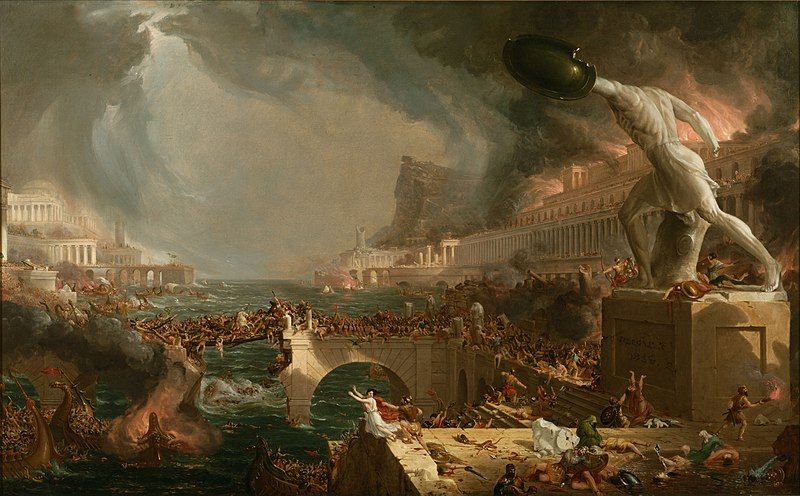

 Make Beautiful Choices