Binary thinking. Black and white thinking. All-or-nothing thinking. “False dichotomies.” Finally, us and them, friend and enemy. These are all names and phrases that point at the same inflexible attitude toward life; an attitude that only leads to conflict.
If it must truly be one or the other, either/or, then we are always engaged in a process of selecting one and rejecting the other. Tuning out the faults in what we choose, turning them up in what we reject.
Choices demand a story – here’s why this is good and that’s gotta go. Our stories are like the lines connecting the dots that form the constellations in the sky: imaginary lines drawn between distant and materially unrelated objects scattered through space. The reasoning may be airtight, the evidence ample, and the course of action decisive, even constructive. The results might even be entirely positive – from one perspective.
Logical analysis can only take us so far (to be clear, there are far too many of us who have yet to come that far), and there is more to the world.
Picture the Yin and Yang symbol: two halves, one white and one black. But what makes it special? The little bit of white in the black, the little bit of black in the white.
What does this mean?
It means that the dichotomies of the world are completely acknowledged. The world is filled with black and white distinctions: us and them, subject and object, male and female, day and night, young and old, rich and poor, life and death, predator and prey, for or against.
However, they are not perfectly segregated. What they are is integrated. Not diluted into indistinction and oblivion, but, rather, inseparable: just enough of each is present in the other that you can never have either in its entirety.
This could not be better illustrated than in chapter 11 of the Tao Te Ching:
Thirty spokes share the wheel’s hub;
It is the center hole that makes it useful.
Shape clay into a vessel;
It is the space within that makes it useful.
Cut doors and windows for a room;
It is the holes which make it useful.
Therefore profit comes from what is there;
Usefulness from what is not there.
This is the definitive example of Yin and Yang, because there can be no clearer distinction than form and void. Something and nothing. Substance and emptiness. The material that makes the cup cannot be called a cup until it frames the void with itself: its material function is inseparable from the balance of form and formlessness.
If this seems banal and even a bit unsophisticated, good: that demonstrates the extent to which form and void are integrated everywhere.
You can’t digest what’s in your stomach unless you leave some room: filling your stomach completely doesn’t promote health but undermines it.
You can make the most brilliant argument in the world but if you’re not paying attention to the person listening, it will all be wasted.
The best way to care for children is to leave just enough gaps in their care that they learn to care for themselves.
The way to make someone fall in love with you is to give them a chance to miss you.
What happens when you try to have 100% of something?
Total peace requires totalitarianism – something worthy of being destroyed in a war.
Total tolerance means saying yes to things that are unhealthy for the people extending tolerance – rendering the value of their tolerance null.
Total inclusion similarly destroys the value of being included – what is it worth to be included by people with no standards?
To be totally gentle and loving is to hand over soft, spoiled brats to an uncaring world for which they are hopelessly unprepared – does that sound loving to you?
To always be there for someone only erases the selfhood of both parties. Siamese twins are always there for each other – is that desirable?
Finally, pursuing a world without racism requires presuming racist intent of the majority ethnic population (either in sheer numbers or in socioeconomic dominance) – in other words, invidious discrimination on the basis of race.
It is not a matter of all or nothing – all is nothing. And, to make matters worse, nothing functions without some degree of Nothing.
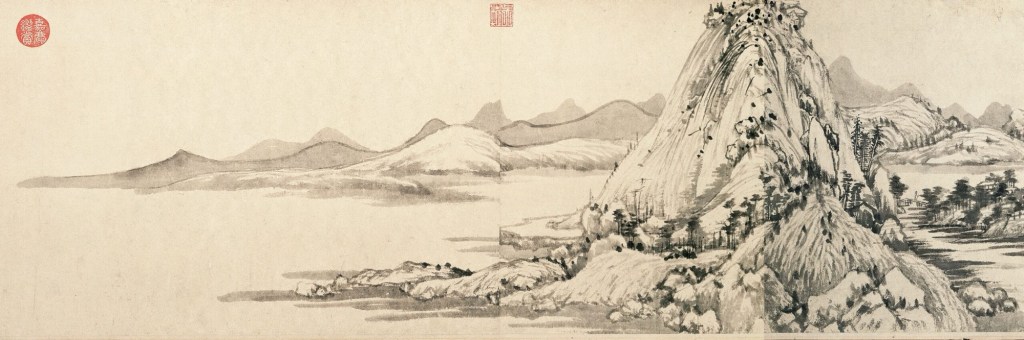
What is supposed to happen to your life if you take this idea to heart? An appreciation for simplicity that shows itself in everything you do; a cultivated tolerance for boredom; a measured and unhurried pace at all times.
The beauty of this chapter is the way it illustrates that you don’t have something until you have enough space for it to function properly. Instead of trying to fill up every hour of every day, instead of always having to be doing something, acquiring something, even learning something, what if you could do nothing, just here and there?
Not all the time, and not to the point of neglecting any of your responsibilities, but just to the point that you can actually just be, rather than constantly busying yourself with the work of becoming.
We might call this being present – it is, but Lao Tzu doesn’t tell us to be present. What he tells us is that usefulness comes from what is not there. The void is not an esoteric ”spiritual” concept: it is everywhere. In the empty cup, in the room you walk into, in the blankness between cogent thoughts, at the end of every sentence, in every functioning drain, and pervading every moment of dreamless sleep.
The esoteric meaning is that everything in your life will be more useful to you when it has enough space. Not too much space, not a life of emptiness and endless contemplation of nothing but thoughts about thoughts, but enough. Space has to be understood as that which makes room for things.
The things are, ultimately, what matter. Prosperity and abundance are good things. Possessions and conveniences are good things. Plenty of food and sleep and things to do are good things. They are, however, addictive. They can easily become ends unto themselves. It is entirely too easy to lose ourselves in the stimulus they provide and the sense of purpose their pursuit gives us. Judging by the age of the text, we can probably conclude these are eternal human struggles, which means that society cannot solve them for us: only the private cultivation of wisdom is sufficient.
A wise person consciously grants each and every element of his or her life the space it needs to function properly. Without this, we become tragic figures who have it all but benefit from it not at all.
Thank you for reading, talk to you soon.
-Jas
 Make Beautiful Choices